
Rodalquilar Guide
Gold-mine ruins and a desert beach in Andalusia
1 selected
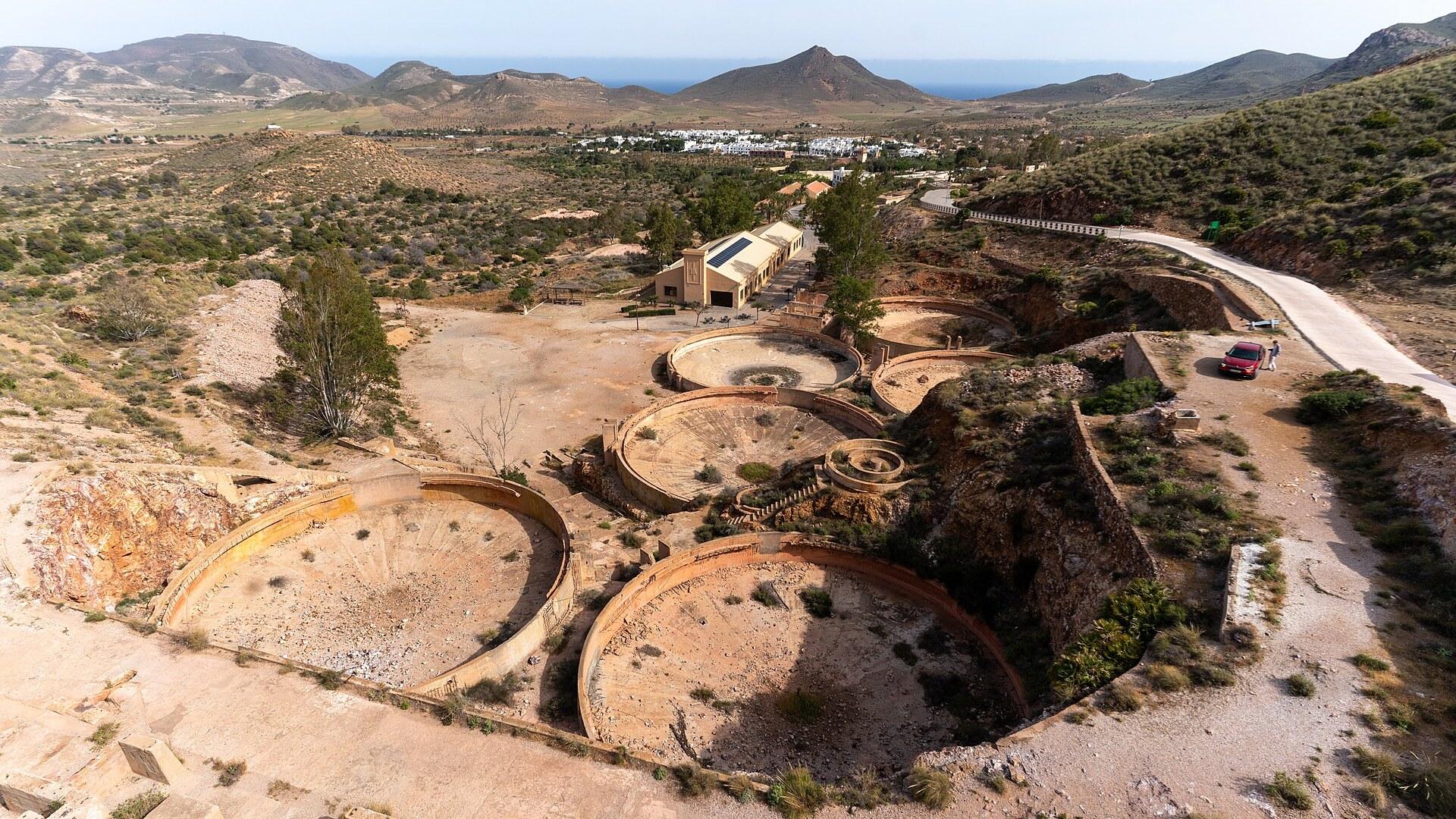
Rodalquilar is a former gold-mining village in the municipality of Níjar, Almería, Andalusia, Spain. It sits in the middle of Cabo de Gata-Níjar Natural Park, and several art galleries here show painting, photography, pottery and ceramics.
The Centro Geoturístico Casa de los Volcanes opened at the end of 2007 in the converted Casa P.A.F. of the old mining complex. Its displays on the mines and the geology of Cabo de Gata are in Spanish, and some are translated into English. The Sala de Exposiciones shows changing exhibitions of the Cabo de Gata Natural Park administration.
The El Albardinal Botanical Garden belongs to the Andalusian Network of Botanical and Mycological Gardens in Natural Areas. Semi-arid plants of eastern Andalusia grow there. The park's visitor centre for Rodalquilar occupies the former social centre of the mining village's workers, opposite the church, and holds an exhibition on geology and minerals.
The ruined mine buildings, with their crushing towers and decantation tanks, are open to free exploration. Restored red-brick miners' houses still stand in the village, and ruined red walls of houses date from the gold rush of the late 19th century. Past the mines you reach the ruined miners' hamlet of San Diego.
The Sendero Cerro del Cinto is an 11 km walking trail through the post-industrial landscape beyond the Rodalquilar mines, and walking it is recommended over driving the rough dirt road. The trail has two versions around the Cerro del Cinto hill. The longer route climbs to the highest point of the hill, while the shorter one runs through the Las Yeguas rambla at its foot. A fork in the Rambla de las Yeguas separates the two, and the left track follows the side of the rambla to the ruins of an old farmstead.
The trail begins beside the Sala de Exposiciones, with the Denver Plant on your left. Brooms, albardine, prickly pear, pines, cotton lavender, lentisk, carob and esparto grass grow along it. It follows old horse trails and the service roads of old farmsteads, passing stone-wall terraces called balates and farmstead ruins. In the area known as Playazo, a small track runs past old stone balates that support terraces once used for cultivation. An interpretive panel describes the landscape of the valley. The long version can run all the way around the Cerro del Mineral basins.
A Ruta Geológica walk starts at the Hoyazo de Níjar, goes down past the coral reefs of Cala del Cuervo and ends at the mines and museum of Rodalquilar. The Full Moon route runs from Las Negras to the Playazo in total darkness, for viewing constellations. The Caldera de Majada Redonda trail leads to the centre of an ancient volcano caldera.
San José and Las Negras both have several dive centres offering guided dives, kit hire, air fills and training courses, and kayaking and freediving are popular too. Most operators in the park also run boat trips to see the coastal geology from the sea and to visit inaccessible coves. Eco-tourism in the park includes bird watching, photography, geological field trips, diving and boat excursions. Cabo de Gata-Níjar Natural Park became a UNESCO Biosphere Reserve in 1997 and joined UNESCO's Global Geoparks Network in 2006. Las Salinas de Cabo de Gata are separated from the sea by a 400 m sand bar, form a Ramsar site and are still operational salt works.
Playazo de Rodalquilar is a fine-sand beach in the Almería desert, reached by a dirt path near the village. The San Ramón Battery and the Torre de los Alumbres, old defensive structures against pirate attacks, guard it. Playa el Playazo is a popular beach near Rodalquilar and usually has crystal-clear water, like many beaches in the middle and west of the park.
Los Genoveses is a beach over 1 km long, surrounded by vegetation and good for scuba diving, next to Cala de Mónsul. Cala San Pedro can be reached from Las Negras on foot in about 40 minutes to an hour, or by boat. Cala de Enmedio takes a half-hour trek on foot from Agua Amarga and has fine white sand and turquoise water. Playa de los Muertos, on the northern boundary of the park, is a naturist beach near a cement factory, with white gravel instead of fine sand.
Gold, ingots and a film set: the mining past of Rodalquilar
Rodalquilar's gold rush began in 1880, and a number of companies took part in the extraction. The mining reserves here have been worked by people for centuries. The story reaches back to the sixteenth century, when Spaniards and Genoese mined alum in the valley of El Playazo. Gold was discovered in 1883 at the Las Niñas mine, a few km from Rodalquilar, after the mine had been worked for silver-bearing lead ores. The gold rush drew firms and individuals from Spain, Europe and the Americas. From 1931 to 1936 the total gold output was 1,044 kg. Empresa Nacional Adaro processed the mineral from the Cerro del Cinto mines from 1956 at a plant in the village. The Planta Denver cyanidation plant ran from 1956 to 1966 as an Adaro subsidiary and handled 75% of all gold recovery in the history of Rodalquilar. Inside the plant, the mineral was weighed and emptied into hoppers. Conveyor belts carried it to grinding mills, where it was mixed with water into a fine paste. The paste then went through tanks and the gold was turned into liquid form. A gold-rich mixture ended in the precipitation building, and the ingots were obtained there. Adaro shut the mine in 1966; it briefly reopened in 1989 and then closed for good. The old Casa P.A.F. takes its name from Precipitado, Afino, Fundición, meaning precipitation, refining, foundry. The ruins of the Planta Denver served as a film set, including for Indiana Jones and the Last Crusade (1989). The Rodalquilar caldera measures 8 km east-west and 4 km north-south, and can be viewed from a single point. On the Cerro del Cinto trail, fences close off areas with uncovered galleries or mines, and wooden barriers protect the ruins of old mining buildings. The trail passes the La Felipa Rambla, which gives its name to one of the mines, and the well-preserved basins used for washing and decanting the mineral from the Abellán mines. Near the Denver Plant an information panel explains gold extraction and processing. A paved section ends the trail at the Casa de los Volcanes, where a large model shows the mining operations of Cerro del Cinto.
Rock mullet, red prawns and fried fish around Rodalquilar
Around Rodalquilar and across Cabo de Gata-Níjar Natural Park, the seafood to try includes rock mullet, squid, red prawns and sole from the Salinas del Cabo de Gata. San José has several restaurants and tapas bars. Isleta del Moro is a fishing village known for its fried fish, called pescaíto.
Reaching Rodalquilar from Almería, Málaga and the A-7
The Rodalquilar gold-mine trail starts at the Cabo de Gata-Níjar Natural Park administrative office in the municipality of Níjar, and Almería is the nearest main station for visitors. Alsa and Alsina Graells run regular bus services to the Rodalquilar area. Almería Airport is the closest airport to the Cabo de Gata, about 30 km from San José. Mostly low-cost airlines from the UK and northern Europe serve it, with some domestic flights by Iberia and Vueling. The airport has car hire, and municipal bus route 30 runs from it to the city centre and the bus/train station. San José is easily reached from Almería Airport and the A-7 autovia. Málaga Airport is 214 km from Almería city, and ALSA buses from Málaga bus station to Almería city take between 3 and 5 h. The A-7 highway links Almería with the Mediterranean coast, and the A-92 connects it with the rest of Andalusia and Madrid. Both roads are toll-free. The park begins just after the urbanisation of Retamar, a few km east of Almería airport, and ends just before the port of Carboneras.
Buses, hire cars and parking by the Rodalquilar trail
Rodalquilar has parking for twenty vehicles at the Natural Park Administrative Office, where there is also an informative panel. The M-203 bus serves the eastern settlements of the park, including Las Negras and Níjar, but as of March 2022 it ran only a few times a day. The M-202 bus serves Cabo de Gata village and some beaches and salinas in the southwest of the park every two hours, connecting them to Almería city via Retamar. Hiring a car makes a trip to the park more interesting, and all the usual operators are at Almería airport. Automatic cars should be booked in advance. The park has numerous 4x4 routes and tracks, but most people join organised trips. Renting a 4x4 for real off-roading is rare, since most rental vehicles are SUVs.
Mobile coverage in Almería city and free park entry
Rodalquilar visitors passing through Almería city find 4G coverage there from Orange and Vodafone, as of June 2022. Almería city also has 5G from MasMovil/Yoigo and Movistar as of June 2022. Cabo de Gata-Níjar Natural Park charges no fees or permits for entry.
Rodalquilar trail rules, heat and rubbish: practical answers
The landscape along the Rodalquilar trail is anthropised, with the marks of an old mining area with abandoned mines. What should I wear on the Rodalquilar trail? The trail has a stony section in the rambla, so appropriate footwear such as hiking boots is advised. Can I leave the marked trail? Walkers at Rodalquilar must not leave the trail because of the danger of falling into uncovered wells and mining shafts. Visitors are asked to respect private property, and plant collecting is not allowed. When is the park busiest? Tourism in Cabo de Gata-Níjar Natural Park peaks mainly in the spring and summer months. The park is one of the driest regions in Europe and is classed as sub-desert. How hot does it get? Cabo de Gata has a record high of 37.6 °C in July (2010-2025) and a mean daily maximum of 29.6 °C in August. Its mean daily minimum runs from 12.1 °C in January to 24.6 °C in August. Almería city has very mild winters and long, hot summers that often exceed 40 °C in the shade during July and August. How much sun and rain does the park get? Cabo de Gata has 119 tropical nights per year on average in summer, and the park has a hot desert climate (Köppen BWh). The park has about 2,900 h of sunshine per year, and July is the driest month at 0.1 mm of rain on average. Are there litter bins on the beaches? There are no litter bins at Playa de los Muertos, so visitors must take their rubbish with them.
FAQ
What is covered in the Rodalquilar guide?
Discover Rodalquilar, a former gold-mining village in Cabo de Gata-Níjar Natural Park, with its mine trail, volcano museum and the Playazo beach. It includes 1 recommendations across 1 gallery.
Next →How many places are in the Rodalquilar guide?
The Rodalquilar guide lists 1 places: 1 gallery.
Next →Where is Rodalquilar?
Rodalquilar is in Rodalquilar, Andalusia, Spain (36.8468, -2.0406).
Next →How do you get to Rodalquilar?
The Rodalquilar gold-mine trail starts at the Cabo de Gata-Níjar Natural Park administrative office in the municipality of Níjar, and Almería is the nearest main station for visitors. Alsa and Alsina Graells run regular bus services to the Rodalquilar area. Almería Airport is the closest airport to the Cabo de Gata…
Next →What should you eat in Rodalquilar?
Around Rodalquilar and across Cabo de Gata-Níjar Natural Park, the seafood to try includes rock mullet, squid, red prawns and sole from the Salinas del Cabo de Gata. San José has several restaurants and tapas bars. Isleta del Moro is a fishing village known for its fried fish, called pescaíto.
Next →Is there camping in Rodalquilar?
No camping listings in this pack yet — we do not invent venues. Entries will appear once verified.
Next →Can you rent a bike in Rodalquilar?
No bike rental listings in this pack yet. Verified shops will be added when available.
Next →What are recommended gallery in Rodalquilar?
Highlighted gallery in the Rodalquilar guide: Rodalquilar gold mine.
Next →Highlighted places
- Rodalquilar gold mine — The circular leaching tanks of the Rodalquilar gold mine, with the village and the hills of Cabo de Gata-Níjar Natural Park behind.
Explore on the map
Tap a pin to highlight its place card
All
1 spots
Recommended places
Gallery
1 · 1 selected
Rodalquilar gold mine
gallery
Related guides
Browse nearby destinations
Dúrcal Guide
Andalusia, Spain
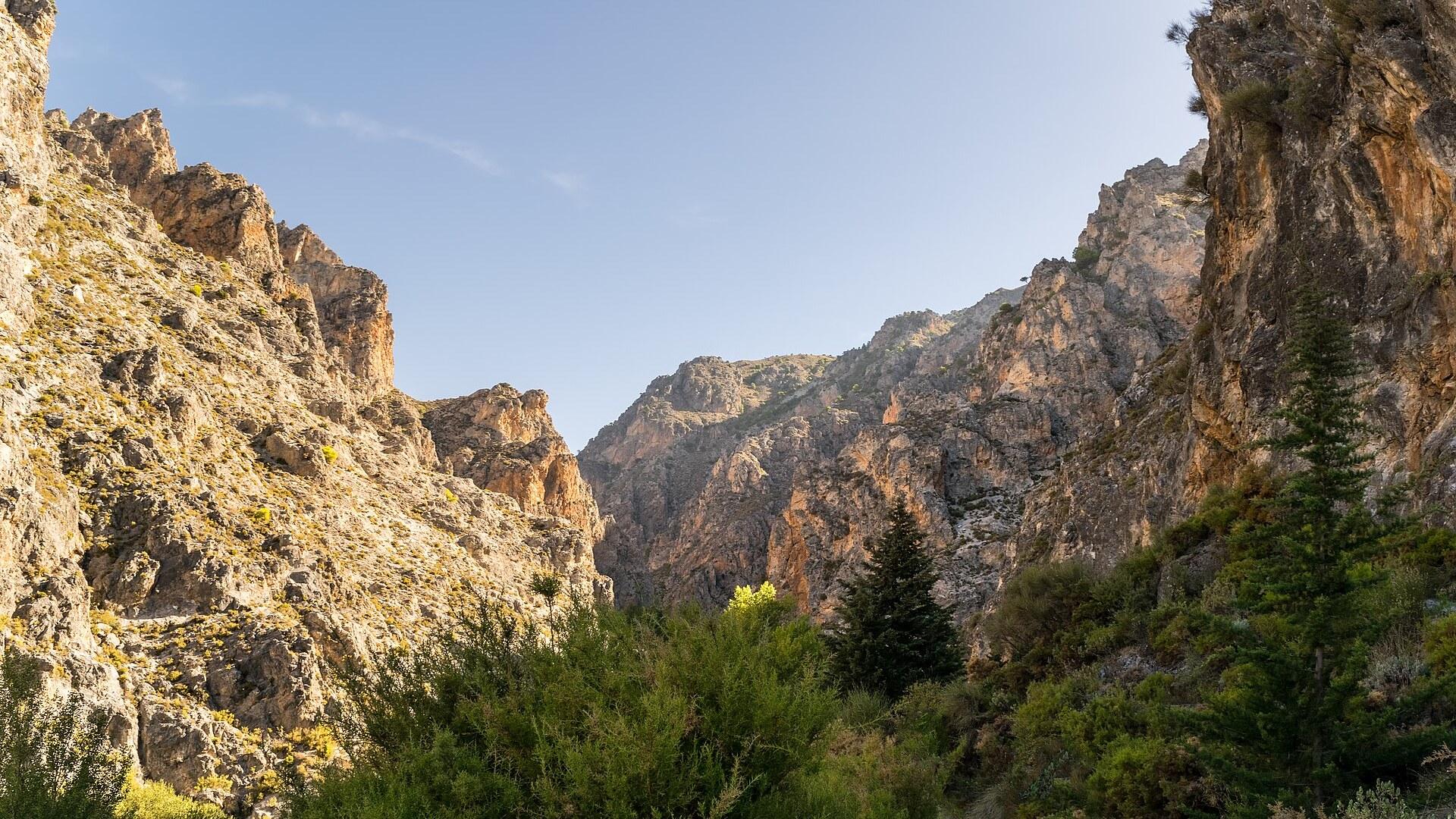
Walks along the Río Dúrcal in the Lecrín Valley
Gorafe Guide
Andalusia, Spain
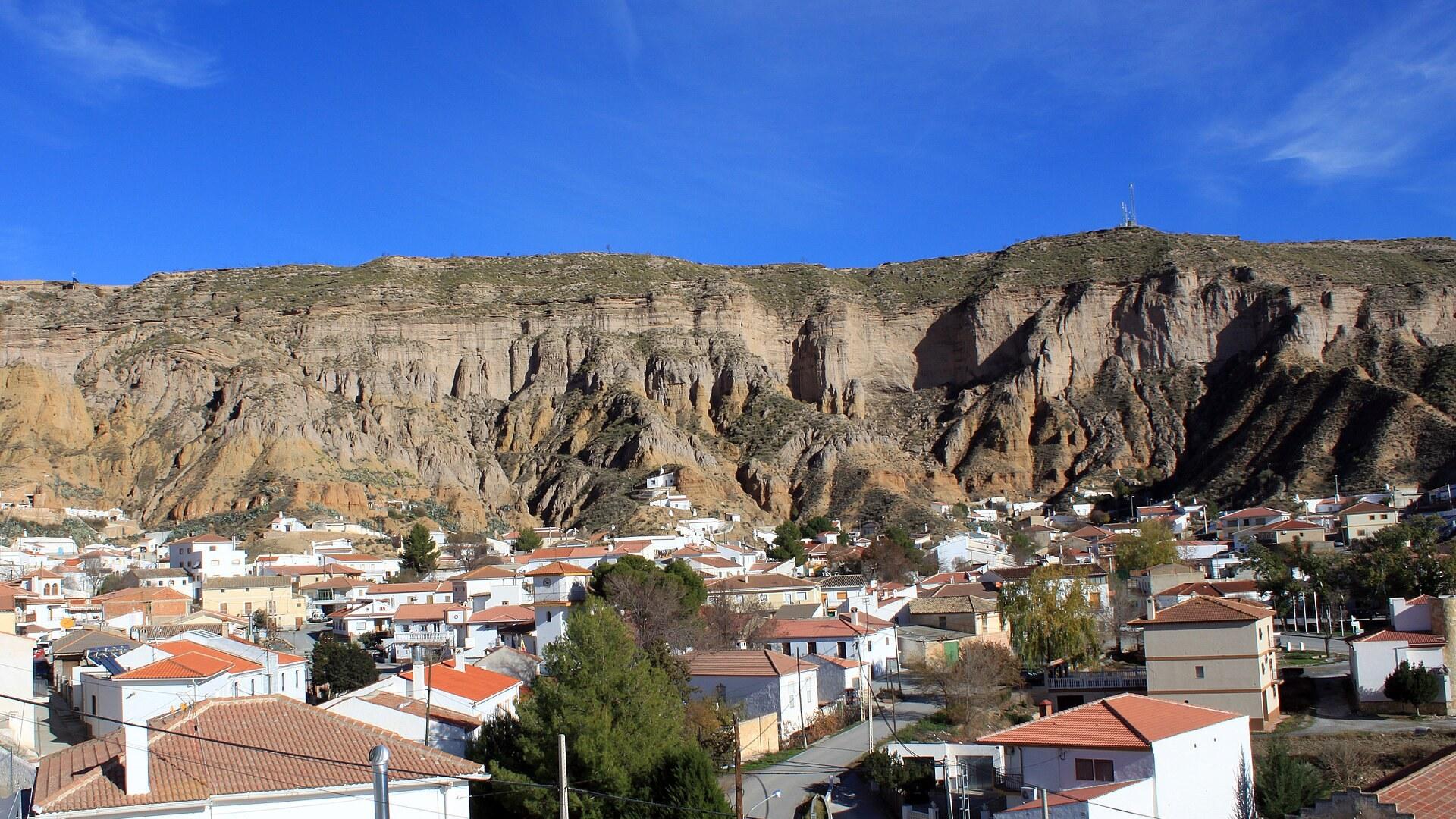
Dolmens, cave houses and a desert of badlands
Las Negras Guide
Andalusia, Spain
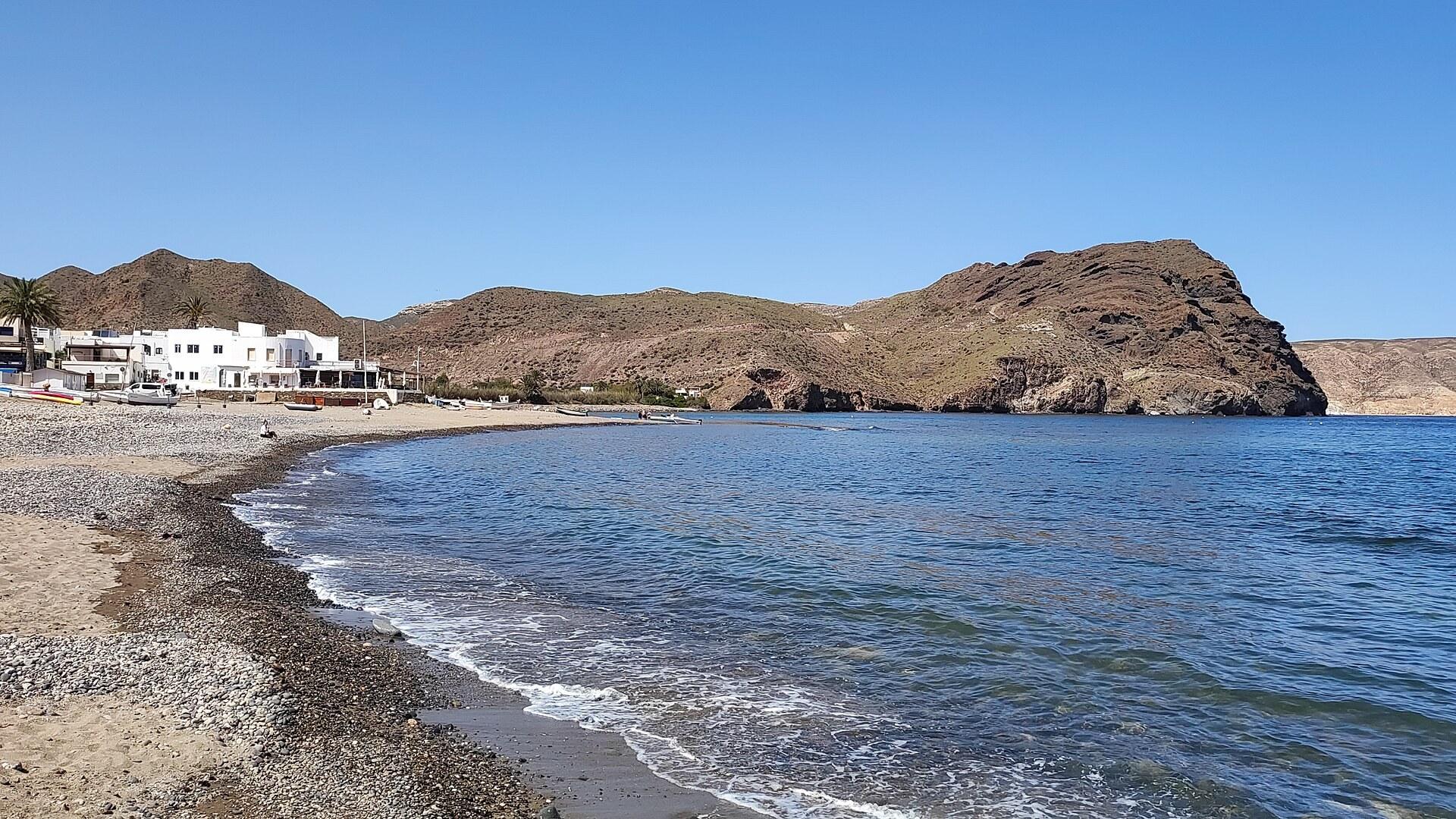
Seaside village with 1970s looks and coves toward Agua Amarga
Nigüelas Guide
Andalusia, Spain
The balcony of the Lecrín Valley
Sorbas Guide
Andalusia, Spain
A town of red clay above a sparkling gypsum underworld
Biniaraix Guide
Mallorca, Spain
Stone steps, olive terraces and a gorge above Sóller

Save these places to your list
Copy the spots you picked into your list — maps and notes included.