
Siavonga Guide
Zambian town on Lake Kariba, houseboats and the dam without the Falls crowd
4 selected
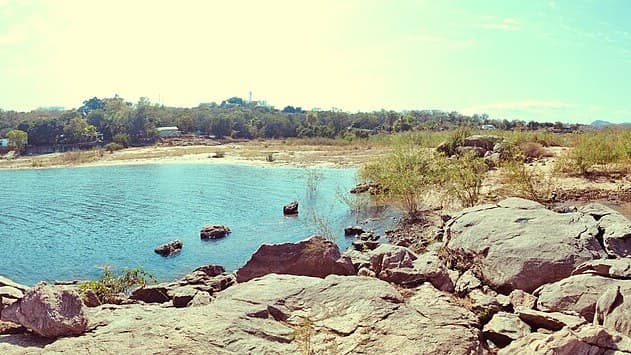
Siavonga is Zambia's lake town on the north shore of Kariba, in Southern Province near 16.54 S, 28.71 E. It is the Zambian base for houseboats, kapenta fishing, and trips to the dam wall, not Victoria Falls and not Kariba town on the Zimbabwe shore across the water.
Lake Kariba is the world's largest reservoir by volume: roughly 280 kilometres long, up to 100 metres deep, holding on the order of 185 cubic kilometres of water. The Kariba Dam closed the Zambezi at Kariba Gorge; construction ran from the mid-1950s and the lake filled between 1958 and 1963. The wall stands 128 metres high. Official opening was 16 May 1960. Exact length and volume figures vary by source; treat them as estimates.
The road from Lusaka takes about two and a half hours on good tarmac. Lusaka is the international door; there is no passenger railway or airport in Siavonga itself. The dam crest doubles as the border post into Zimbabwe and Kariba town on the other bank. Victoria Falls is a different road and a different crowd.
People come for a Lusaka weekend, a houseboat charter, or a look at the wall. The lakeshore Tonga (Batonga) were here long before the dam; more than 50,000, mostly Tonga, were relocated when the valley flooded, some by force, with families split between Zambia and Zimbabwe. Hippo and crocodile are the animals you actually see. Swimming in the open lake is dangerous. Birdlife is rich, and tigerfish, tilapia, nembwe, vundu and barbel are among more than fifty species.
One full day from Lusaka covers the drive, the wall, and a short boat if one is running. A second night earns its keep on a houseboat or with a fishing day. A third night in town without a boat is padding.
The town spreads along a hilly bank. Distances between lodges are longer than a plaza walk. You do not need a car to stand at a jetty; you do need one, or a lodge transfer, from Lusaka and for the wall. Heat from October to March eases with summer rain; April to September brings warm days and cool nights.
The lake, the wall, a houseboat without the Falls queue: yes. A safari park, a beach holiday, a laptop month: no. Do not confuse Siavonga with Kariba town. Mutanga uranium, about 31 kilometres north, is a mine project on paper, not a visit.
How a gorge became a lake town
Tonga people had farmed the Gwembe, now the Zambezi Valley, for centuries. Archaeology along the river points to habitation for at least 900 years, with a quieter century until the mid-1950s. In 1956 the Federal Government of Rhodesia and Nyasaland awarded the wall and power station to Impresit. André Coyne designed the arch. Construction ran from 1956 to 1960; the lake filled from 1958 to 1963. More than 50,000 people, mostly Tonga, were relocated. Accounts are blunt about force, thin compensation, and a tribe split between Zambia and Zimbabwe. Nyami Nyami, the river god, sits in that story: floods in 1957 and 1958 wrecked plant and roads, and the name Kariba is given as trap. Operation Noah moved thousands of animals, including 44 rhinoceros, as the water rose. Siavonga and Sinazongwe on the Zambian side, and Kariba, Binga and Mlibizi on the Zimbabwe side, grew with the displaced and with the new shore. Kapenta fishing, bream, and crocodile farms became the lake industries. The Mutanga uranium project, about 31 kilometres north, was acquired by GoviEx in 2016; production forecasts point toward 2027. That is a mine timeline, not a jetty.
Eating in Siavonga
Siavonga is not a restaurant town. What opens is lake food in the Zambian register: kapenta, bream, nshima, tea, maybe a grilled fish when a lodge kitchen is running. Kapenta is a staple high-protein catch. Crocodile tail appears on lodge menus as an export line, not as a street dish. Arrive hungry late on a thin Sunday and you will eat at a lodge that is still lit, or you will have brought food from Lusaka. If you go out on the water, take sealed water. There is no picnic culture on a crocodile shore.
How to get to Siavonga
The road from Lusaka is the way in, about two and a half hours on good roads. There is no passenger railway into town. Lusaka is the international door. A hired car or a coach seat is the usual tool. Check the live bus the week you travel. The dam wall is a border post into Zimbabwe and into Kariba town. That other shore lies about 365 kilometres from Harare, hilly, with animals on the night road. Crossing is a separate visa and a separate day. Victoria Falls is not on this lake road. There is no useful passenger airport in Siavonga. Lusaka's field is the arrival. Transfers exist when a lodge or a boat has booked them. Do not plan a scheduled flight onto the water.
Moving around Siavonga
The town is spread along the bank. Distances between lodges are longer than a plaza walk. You can walk a short stretch of shore in daylight. You do not need a bus to cross a single lodge. You do need a vehicle for the wall, for another bay, and for the road back to Lusaka. There is no metro and no tram. Hired cars and lodge transfers are the public mode. English and a little Tonga open a jetty. A printed name from 2010 may not match the lodge sign. If heat, hills, or a night road with animals are a problem, stay in after dark. The Zimbabwe shore has the same hippo and crocodile warnings. The flat ground is a jetty. The rest is a hillside dam town.
Money and staying connected
Zambia pays in kwacha (ZMW), not dollars at the ordinary till. Some lodges still quote in dollars. Bring kwacha from Lusaka, and a card that works. A small lake town is a poor place to discover that the only machine is empty. Nobody publishes a Siavonga daily budget. The line you cannot price from a European table is the houseboat and the fuel, which operators treat as a separate dry rate. Mobile coverage in town is usually usable. It thins on the water. Café Wi-Fi is not an office. Download an offline map in Lusaka. Plugs are Type C, Type D and Type G, 230 V. Emergency numbers in Zambia include 112 and 999; confirm the working code on the ground. Zambia keeps CAT, UTC+2. Drink sealed water. Do not treat the lake as a tap.
Weather, manners, and what goes wrong
The Zambezi Valley runs very hot from October to March, eased by summer rain; April to September has warm dry days and cool nights. That is the houseboat window most people use. October is the month that looks empty on a calendar and feels like a furnace on the wall. People live here. It is a Tonga shore town with lodges, not a set for a dam film. Ask before you photograph faces and ceremonies. Keep nights quiet on the water. Pay in kwacha unless a lodge has written another currency. Shoes off if you are invited in. The usual errors: treating Victoria Falls photographs as this shoreline. Swimming. Crossing to Kariba without papers. Pricing a houseboat from a European blog as a tariff. Drinking the lake. Walking the shore at night. Heat, crocodile, hippo, an empty phone on the Lusaka road, and a boat that never left the jetty are what you plan around. Check the transfer twice. The lake you came for is a reservoir with a border on the wall. That is the visit.
Siavonga Guide · 4 spots · Southern Province, Zambia
·Last updated:
·Curated by Shlau
Explore by category
Browse hotels, restaurants, and more in this guide
FAQ
What is covered in the Siavonga guide?
Siavonga in Zambia: Lake Kariba, the dam wall, houseboats, and the road from Lusaka. It includes 4 recommendations across 3 hotels, 1 gallery.
Next →How many places are in the Siavonga guide?
The Siavonga guide lists 4 places: 3 hotels, 1 gallery.
Next →Where is Siavonga?
Siavonga is in Southern Province, Zambia (-16.5365, 28.7102).
Next →How do you get to Siavonga?
The road from Lusaka is the way in, about two and a half hours on good roads. There is no passenger railway into town. Lusaka is the international door. A hired car or a coach seat is the usual tool. Check the live bus the week you travel. The dam wall is a border post into Zimbabwe and into Kariba town. That other…
Next →What should you eat in Siavonga?
Siavonga is not a restaurant town. What opens is lake food in the Zambian register: kapenta, bream, nshima, tea, maybe a grilled fish when a lodge kitchen is running. Kapenta is a staple high-protein catch. Crocodile tail appears on lodge menus as an export line, not as a street dish. Arrive hungry late on a thin S…
Next →Is there camping in Siavonga?
No camping listings in this pack yet — we do not invent venues. Entries will appear once verified.
Next →Can you rent a bike in Siavonga?
No bike rental listings in this pack yet. Verified shops will be added when available.
Next →What are recommended hotels in Siavonga?
Highlighted hotels in the Siavonga guide: Eagles Rest; Lake Safari Lodge; Lake Kariba Inns.
Next →Highlighted places
- Lake Kariba from Siavonga — North shore of the reservoir, Southern Province.
- Eagles Rest — The hotel offers numerous amenities to ensure a comfortable stay for its guests. Wireless internet access is available in public areas at no extra charge. Additionally, there is…
- Lake Safari Lodge — Lake Safari Lodge is located near Lusaka Airport (LUN). The hotel offers amenities such as a currency exchange service, baggage storage, and a cash machine to meet guests'…
- Lake Kariba Inns — The hotel features a lift, a baggage storage service, and a currency exchange service. Wireless internet access allows guests to stay connected during their stay. Additionally, there is…
Explore on the map
Tap a pin to highlight its place card
All
1 spots
Recommended places
Hotels
3 · 3 selected · View all Hotels
- hotels
Eagles Rest
Eagles Rest is a hotel offering accommodation in Siavonga. It provides various services including a restaurant, bar, and conference room for its guests.
- hotels
Lake Safari Lodge
Lake Safari Lodge offers comfortable accommodation in Siavonga. The property caters to guests' needs with a variety of amenities.
- hotels
Lake Kariba Inns
Lake Kariba Inns welcomes guests in Siavonga, offering a range of amenities.
Gallery
1 · 1 selected
Lake Kariba from Siavonga
gallery
Related guides
Browse nearby destinations
Adrasan
Antalya, TR
A long bay south of Antalya, quieter than the big resort towns
Air Batang
Pahang, Malaysia
A west-coast dive village on Tioman, not Tekek and not Juara
Akyaka
Muğla, Türkiye
A Cittaslow village at the eastern end of Gökova Bay
Aralsk Guide
Kyzylorda, Kazakhstan
Former Aral Sea port in Kyzylorda Region, now a rail stop on dry ground
Atouguia da Baleia
Leiria, Portugal
Older Peniche parish: church, castle scraps, Consolação on the sand
Baisha
Yunnan, China
Naxi town 12 km north of Lijiang Old Town, quieter than Dayan

Save these places to your list
Copy the spots you picked into your list — maps and notes included.