
Aralsk Guide
Former Aral Sea port in Kyzylorda Region, now a rail stop on dry ground
3 selected
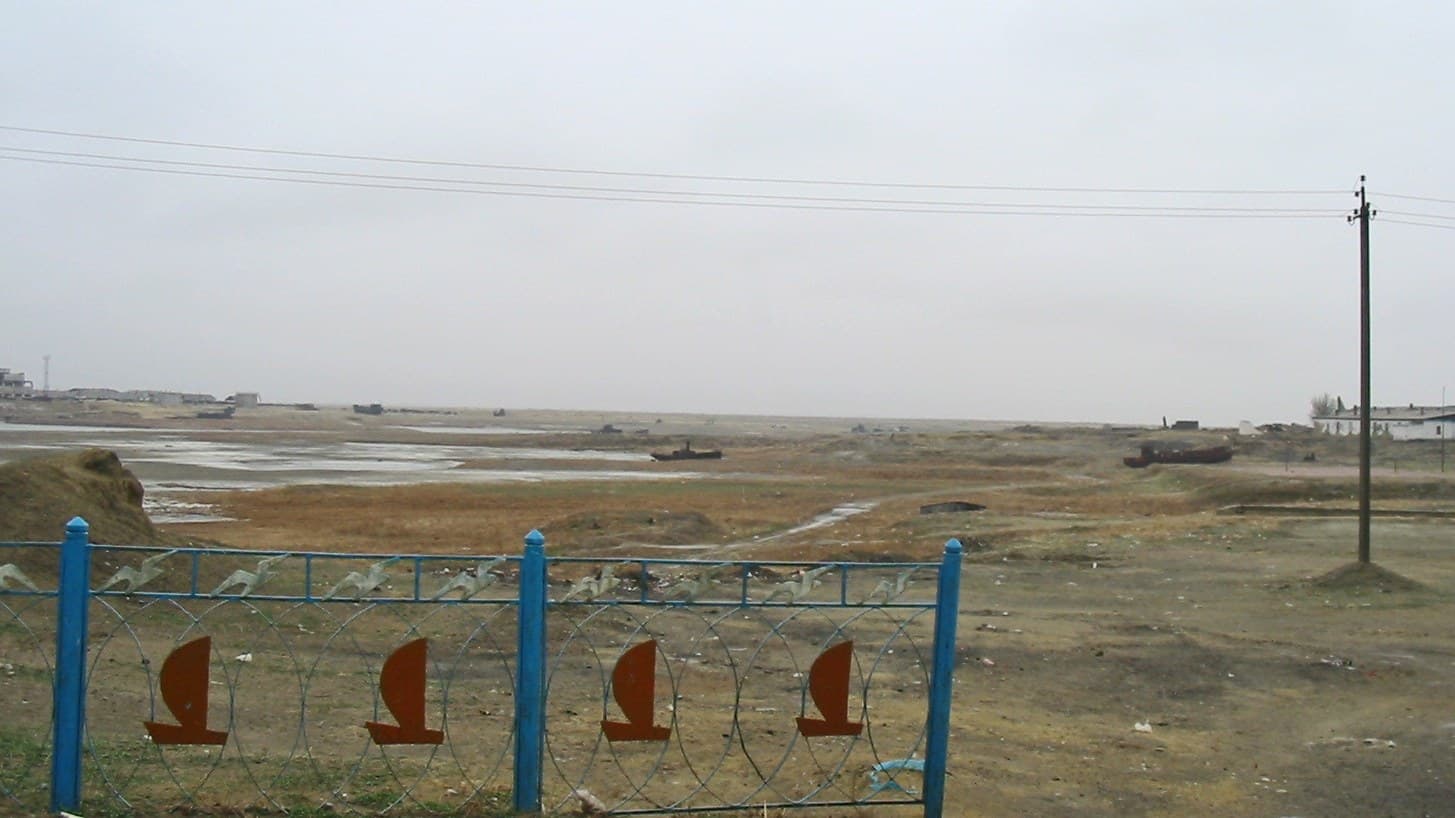
Aralsk is a district town of about 36,000 people in Kyzylorda Region, south-west Kazakhstan. In Kazakh the town is Aral. In Russian it is still Aralsk, and most English tickets and older maps keep that name. It sits on the Trans-Aral railway, on ground that used to be the edge of the Aral Sea.
This was once a fishing port. From the 1960s the Amu Darya and the Syr Darya were diverted for irrigation, mostly cotton, and the water pulled away. The harbour dried. From town you still cannot see the sea. Before the Kokaral dam the gap was about 100 kilometres. The dam, roughly 12 kilometres long, was finished in August 2005 with World Bank support. It holds the North Aral, the Small Sea, and leaves the south effectively written off. Later figures for the remaining distance disagree: 40 kilometres in 2007, later 20 or 12. Treat the shoreline as a moving number. It is not a beach you walk to from the station.
Most people who stop here come for the train, a night in a small Kazakh district centre, a walk onto the old harbour and the salt crust beyond it, and sometimes a hired four-wheel-drive toward remaining water or farther hulks. Dense ship-cemetery photographs that circulate online are usually somewhere else, often Moynaq in Uzbekistan, or older frames of wrecks that locals have since cut for metal. Nightlife, a swimming week, a string of museums, and all-day café power belong in Almaty or Astana, not here.
One full day covers the station, the two main streets, the dry harbour, and a walk onto the seabed if the weather allows. A second day makes sense only if you have already arranged a vehicle for the Small Aral or a remaining graveyard of hulls. A third night is usually padding. The costly and uncertain line is the vehicle, not a restaurant crawl.
The town is walkable. The old harbour sits to the south along Makhataeva; the station sits to the north on Abilhayir Han, once Gorky and still named that way in older notes. From the southern end the station is about a fifteen-minute walk. Taxis exist and are rarely necessary. There is no metro, no tram, and no useful passenger airport. A Soviet field northwest of town once served Kantubek on Vozrozhdeniya Island and, at times, Baikonur; it is not a reliable way to arrive.
Heat, dust, and thin food choices are the practical limits. The steppe town goes quiet at night. Solo travel works if you can read a Russian menu and a ticket window. Couples looking for a harbour evening will find a former harbour and a wind.
Come for the harbour, the absence of water, and the train. Do not come for a photogenic ship-graveyard holiday, a beach week, or a month at a laptop. You do not need a car inside town. Beyond the walkable crust you need a plan and cash.
Do not confuse this Aralsk with Fort Aralsk, later Kazalinsk, now Aiteke Bi, about 120 kilometres away on the Syr Darya. That was a nineteenth-century Russian fort. Do not confuse the hulks here with Moynaq. Same sea, different country, different photographs.
History
A village called Alty-Kuduk, Six Wells, sat on the southern ground as early as 1817. It is a railway passing-track now. From the 1870s the place was recorded as the Aralsky settlement. What made a town was the Orenburg to Tashkent railway, built from 1899 to 1905. The station opened in 1905 and is still the reason most people arrive. Official histories date Aralsk from that year. Russian merchants organised fishing companies in the same season. Shipyards followed. After the revolution the halt called Aralskoye more, Aral Sea, took the name Aralsk. In 1938 it became a town inside the new Kzyl-Orda oblast of the Kazakh SSR. For much of the twentieth century it was the fishing centre on this shore. The peak sat in the 1970s; the collapse followed the falling water. By 1980 about 700 professional fishermen remained from a former 60,000. The cannery imported fish from the Baltic and the Pacific, then sent tins back across the country. It closed in 1997. Young people left for Baikonur, Kyzylorda, and cities farther on. A local dike in the 1990s had some effect on the North Aral and then failed in a sandstorm. Kokaral, finished in August 2005, is the structure that held. Some fish came back. Some boat work came back. Plans to raise the dam exist on paper. They are not water already in the harbour. In 1971 a weaponised smallpox outbreak in Aralsk sickened ten people and killed three. About 50,000 residents were vaccinated in under two weeks. The town was sealed. The source was a biological weapons test site nearby. Vozrozhdeniya Island sits in that same story. Closed military settlements at Aralsk-5, Aralsk-6 and Aralsk-8 emptied after 1992. They are ruins, not a second itinerary.
Eating
What opens follows a small Kazakh district pattern: dough, grilled meat, bread, tea, sometimes soup. Menus, when they exist, are in Russian. West of the main square, past the tracks, there is a fruit and vegetable market and small shops for staples. Arrive hungry late on a quiet evening and you may find little open. Carry sealed bottled water. If you leave town toward the dry bed, take food with you. There is no reliable shade on the salt crust.
Getting there
You arrive by train. Aralsk sits on the Trans-Aral line from Orenburg toward Tashkent, run here by Kazakhstan Temir Zholy. Buy the class you want. Kupe is four berths and a door. Third class is six berths and no door; on a long Kazakh ride you meet people, and you do not rest much. Check live times on KTZ the week you travel. A blog timetable is not a clock. Kyzylorda is the closest major city, about twelve hours by train on older practical notes. Astana is about two days. Almaty is a long overnight. Mapping sites put Kyzylorda on the order of 370 kilometres as the crow flies, Aktobe around 500, Baikonur under 200, Almaty well over a thousand. Those are distances on a map, not ticket hours. There is no useful passenger airport. The old field northwest of town is not an arrival plan. Baikonur is a neighbour in geography and Soviet memory, not a civilian door. Road approaches exist; mobile signal on those highways is often weak or gone. Fill the tank and the water before you leave a larger city.
Getting around
The town is small enough to walk. Two streets do most of the work: Makhataeva toward the old harbour, Abilhayir Han toward the station. You do not need a bus to cross Aralsk. You do need a vehicle, almost always a hired four-wheel-drive with a driver who knows the bed, if you want the remaining North Aral or hulks farther out than the walk from the quay. Some wrecks lie on the dry ground below the old harbour and can be reached on foot when the wind allows. Farther graveyards have been stripped. What is left is often a ribcage, not the photograph you saved. Taxis exist without a capital-city rank. There is no metro and no tram. Russian opens a car door and a ticket window. Kazakh is the language of the place. A printed Cyrillic street name from 2010 may not match last year's sign. If heat, loose salt, or a whiteout of dust is a problem, the walk onto the bed is already hard. The quay is the flat ground where people still stand. The rest is a district town that ends in a desert that used to be water.
Money and connection
In Kazakhstan you pay in tenge (KZT), not dollars or rubles at the till. Bring cash from Almaty, Astana, or Kyzylorda. A town of this size is a poor place to discover that the only ATM is empty and the card terminal does not work. Nobody publishes a useful Aralsk daily budget. The line you cannot price from a European table is the hired vehicle onto the bed. Everything else is small-town Central Asia: cheaper where residents eat, dearer if you expected a tourist street. Mobile 4G in town is often patchy across Kazakh carriers, and the approach highways can have no signal at all. Café Wi-Fi is weak. Download an offline map in the last city with a stable connection. Kazakhstan keeps a single time, UTC+5, after the 2024 unification. Plugs are Type C and Type F, 220 V. Emergency number 112; 101 fire, 102 police, 103 ambulance are still used. Postcode 120100. eSIM behaves like the rest of the country when there is a tower, and like nothing when there is not. Do not drink the tap. Buy sealed water in the larger city and again in town.
When to go
Aralsk has a cold desert climate, Köppen BWk, with about 130 millimetres of rain a year. Winter runs from mid-November to mid-March: days often -5 to -10 C, nights -20 to -25, with a recorded minimum of -37.9. Summer, May into mid-September, is hot and dry, often +30 to +35 C by day, with a recorded maximum of +44.8. Dry wind lifts dust and sand. Storm-force winds of 15 metres per second or more are counted on about 45 days a year. Late April, May, or September hurt less if you came to walk. July looks fine on a calendar and feels like a furnace with grit. The dried bed gives up salt, dust, and residues from years of irrigation chemicals. Possible materials once stored on Vozrozhdeniya belong to that same wider story; they are not a reason to hike the island. Keep windows shut in a storm, cover your mouth, and drink bottled water. The 1971 outbreak is history. The dust is not. People live here. It is a district centre with schools and a market, not a disaster-film set. Ask before you photograph faces. Keep evenings quiet. Russian or Kazakh at the till. Shoes off if you are invited in. Pay in tenge. The usual mistakes: treating Moynaq photographs as a promise of what sits behind the station; mixing this town with Fort Aralsk, Kazalinsk, or Aiteke Bi; arriving without cash; drinking the tap; walking onto the bed at midday in July without water; flying a drone over people who did not ask; pricing a jeep from a European blog as if the quote were a tariff. Plan around heat, dust in the lungs, an empty phone on the highway, and a missed train. Check KTZ twice. Carry a paper copy of the ticket. The sea you came for may still be a drive, and the hulks may be thinner than the picture.
FAQ
What is covered in the Aralsk guide?
Visit Aralsk in Kazakhstan: the dry harbour, Kokaral and the North Aral, how the train works, and why the ship photographs usually belong somewhere else. Updated 2026. It includes 3 recommendations across 2 hotels, 1 gallery.
Next →How many places are in the Aralsk guide?
The Aralsk guide lists 3 places: 2 hotels, 1 gallery.
Next →Where is Aralsk?
Aralsk is in Kyzylorda, Kazakhstan (46.7980, 61.6612).
Next →How do you get to Aralsk?
You arrive by train. Aralsk sits on the Trans-Aral line from Orenburg toward Tashkent, run here by Kazakhstan Temir Zholy. Buy the class you want. Kupe is four berths and a door. Third class is six berths and no door; on a long Kazakh ride you meet people, and you do not rest much. Check live times on KTZ the week y…
Next →What should you eat in Aralsk?
What opens follows a small Kazakh district pattern: dough, grilled meat, bread, tea, sometimes soup. Menus, when they exist, are in Russian. West of the main square, past the tracks, there is a fruit and vegetable market and small shops for staples. Arrive hungry late on a quiet evening and you may find little open…
Next →Is there camping in Aralsk?
No camping listings in this pack yet — we do not invent venues. Entries will appear once verified.
Next →Can you rent a bike in Aralsk?
No bike rental listings in this pack yet. Verified shops will be added when available.
Next →What are recommended hotels in Aralsk?
Highlighted hotels in the Aralsk guide: Keruen Saraiy; Aral Hotel.
Next →Highlighted places
- Former harbour, Aralsk — Dry waterfront photographed in spring 2003, Kyzylorda Region.
- Keruen Saraiy — The hotel offers services such as a restaurant and a coin-operated laundry for guests. With complimentary wireless internet access, visitors can browse the web and check their emails.…
- Aral Hotel — Aral Hotel provides guests with amenities such as a lift, wireless internet, and a secure safe for valuables. The hotel features a restaurant and offers 24-hour room service.…
Explore on the map
Tap a pin to highlight its place card
All
1 spots
Recommended places
Hotels
2 · 2 selected
- hotels
Keruen Saraiy
Keruen Saraiy is a hotel offering accommodation in Aralsk. Guests can enjoy amenities such as free wireless internet and parking.
- hotels
Aral Hotel
Aral Hotel offers comfortable accommodation in Aralsk. The property is equipped with various amenities.
Gallery
1 · 1 selected
Former harbour, Aralsk
gallery
Related guides
Browse nearby destinations
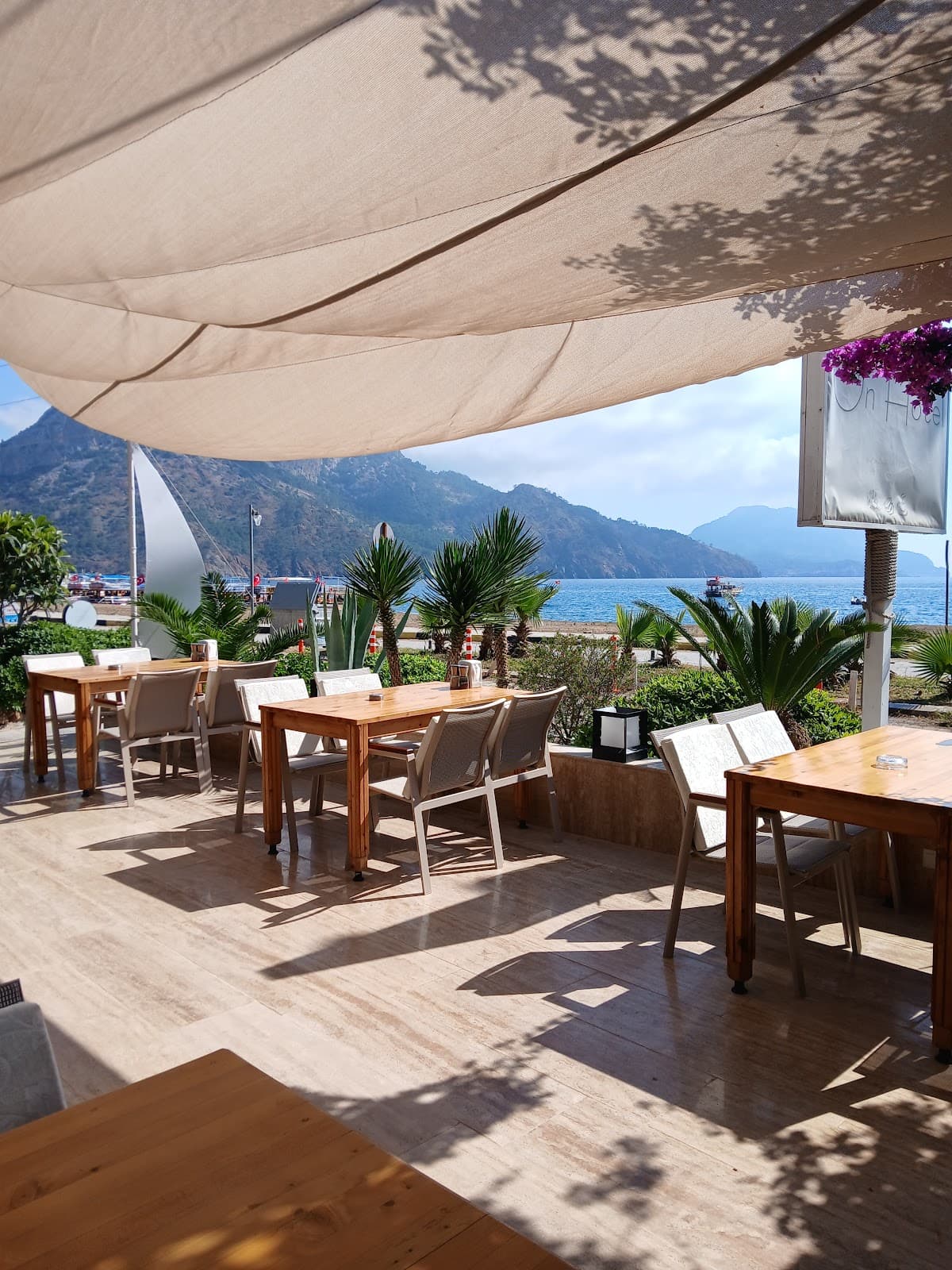
Adrasan
Antalya, TR
A long bay south of Antalya, quieter than the big resort towns
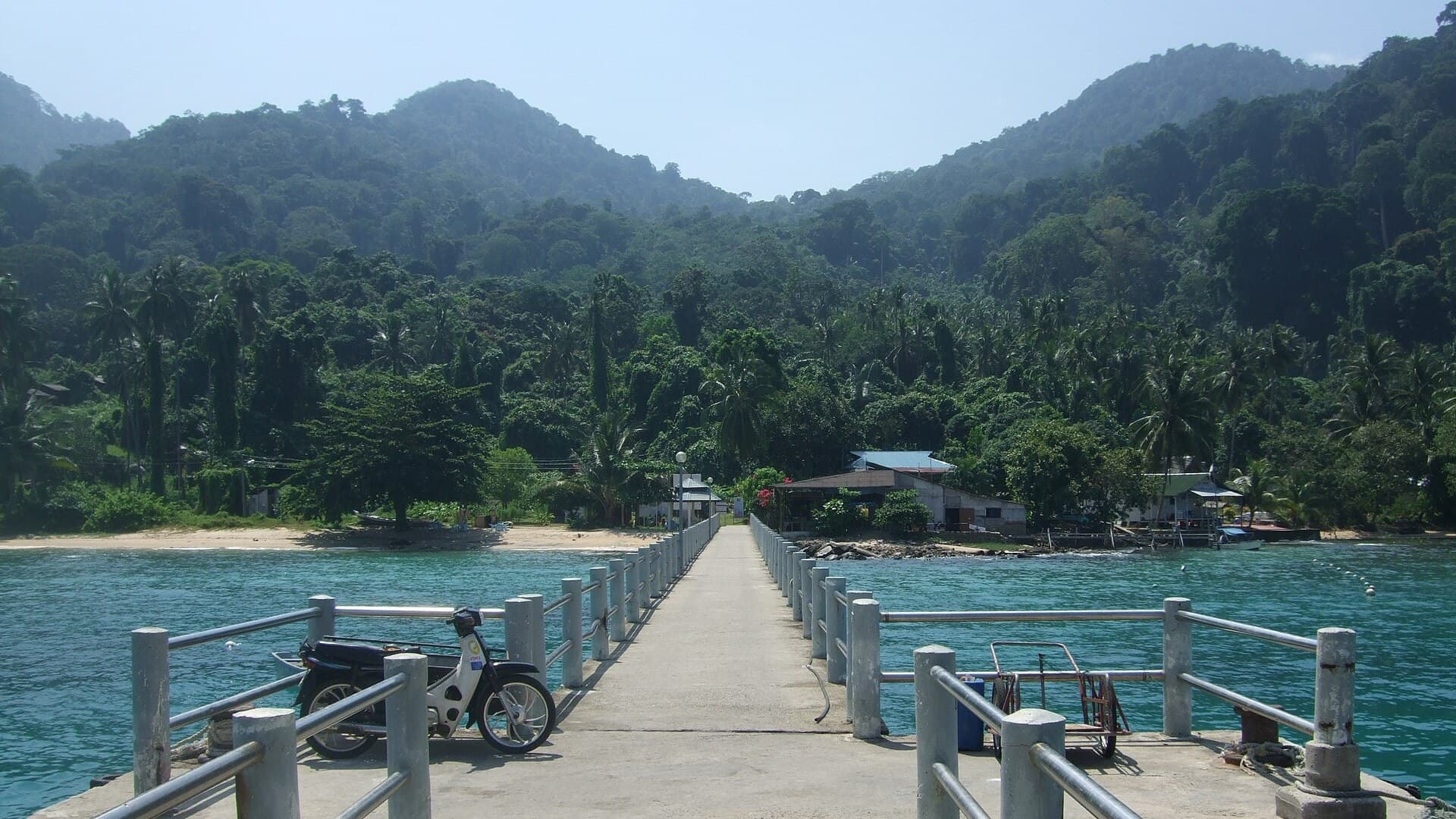
Air Batang
Pahang, Malaysia
A west-coast dive village on Tioman, not Tekek and not Juara
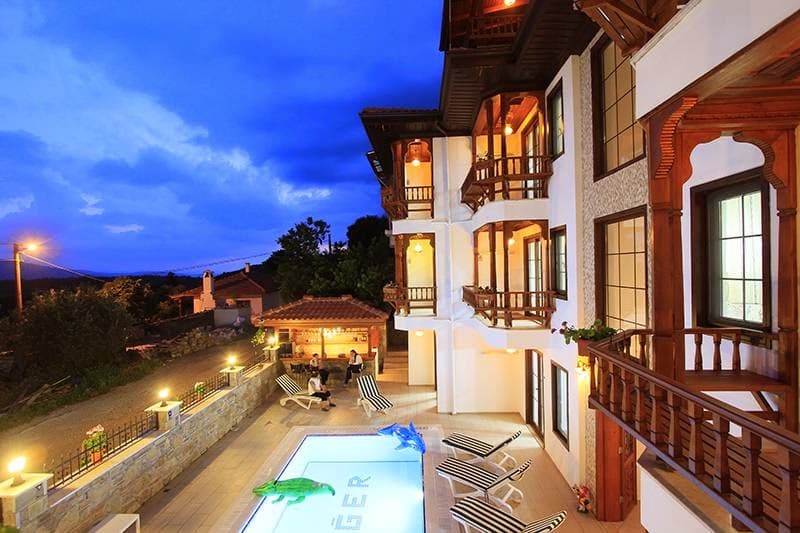
Akyaka
Muğla, Türkiye
A Cittaslow village at the eastern end of Gökova Bay
Atouguia da Baleia
Leiria, Portugal
Older Peniche parish: church, castle scraps, Consolação on the sand
Baisha
Yunnan, China
Naxi town 12 km north of Lijiang Old Town, quieter than Dayan
Banswara Guide
Rajasthan, India
Vagad lakes and the Mahi, a day from Udaipur

Save these places to your list
Copy the spots you picked into your list — maps and notes included.