
Pele Island Guide
Four villages, white beaches and a protected reef
1 selected
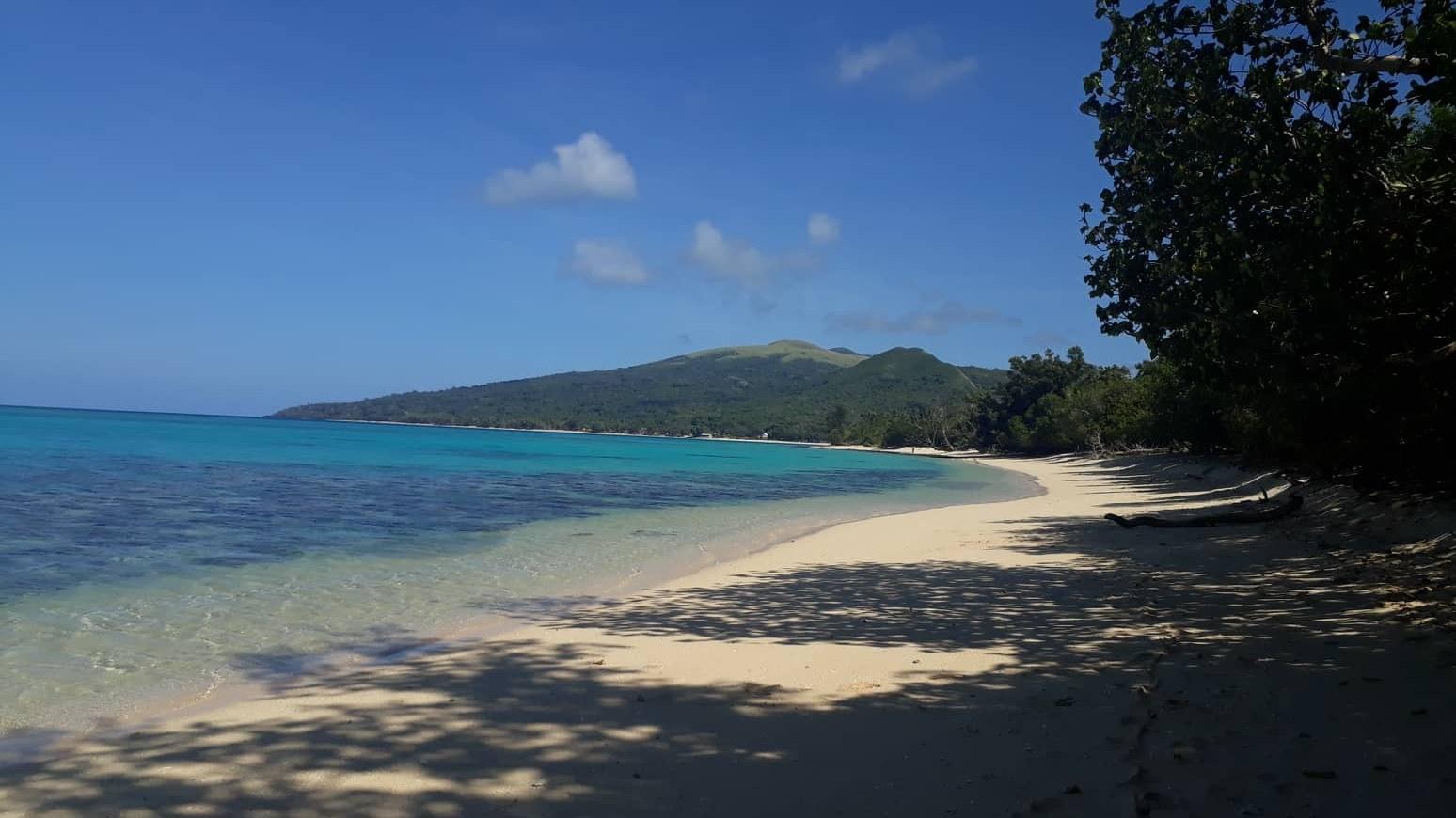
Pele Island lies in Shefa Province, Vanuatu, just north of Efate. Four villages share the island: Worsiviu, Worearu, Piliura and Launamoa. Pele belongs to the Shepherd Islands, which make up the northern part of Shefa next to Efate and Port Vila. Pele and Nguna are described as places for authentic village life, pristine beaches, hiking and snorkelling.
White sandy beaches are found at Piliura, Worearu, Laonamoa and Sake. At Worearu village the beach looks across to Nguna Island in the background. Much of Pele Island is extremely steep, and rocks stop you from walking along the coast all the way round.
Pele Island is part of the Nguna-Pele Marine Protected Area, a popular diving location in Vanuatu. In Piliura village you find the Nguna-Pele Marine Protection Agency, which mounts an exhibition and sells T-shirts. Guided kayaking from Pele helps visitors find the best snorkelling spots around the island.
Pele Island is also a day-tour destination from Port Vila hotels. The tour includes a rural village visit, a beach stop and kayaking to snorkelling spots with a local guide. Visitors can instead stay in a traditional island bungalow, only a short boat ride from Efate, to experience village island life. Yachts are available for day and overnight charters to Pele Island, both from Emua on Efate and from Nguna.
Nguna Island lies off the north coast of Efate in Undine Bay, with Pele to its east and Moso Island to its west. Two extinct volcano craters dominate Nguna, and hiking the extinct volcano is one of its activities. The Sleeping Volcano on Nguna, next to Pele, is a summit hike with views. Nguna also offers tours such as diving the Nguna-Pele Marine Protected Area, turtle tagging and tree house climbing.
On Nguna, accommodation is concentrated in Taloa village in the south, with some ten bungalows and guest houses. Further stays exist in the other villages. Efate is the tourism hub of Vanuatu, home to Port Vila and most resorts.
Reef protection and volcano neighbours around Pele Island
The Nguna-Pele Marine Protected Area was established in 2003 to conserve and protect the fragile reef around Pele Island and Nguna. Sixteen communities on Nguna and Pele work together to keep up several small marine and land closures, which area chiefs, village councils and local NGOs set up. Nguna, Pele and Emao are stratovolcanoes close to Efate, and they may form the rim of a volcanic caldera to their north. Two extinct volcano craters split Nguna, and its highest point is the peak of Mount Taputoara at 593 m. Thirteen villages stand on the north, east and south sides of Nguna, while west Nguna is largely uninhabited. Songs of the Shefa string bands, heard on Nguna and Pele, often tell local legends, historical events and everyday life. Music is part of daily life on both islands, and the bands play guitars, ukuleles and improvised percussion such as wooden boxes or coconut shells.
Island food and markets on the Efate side of Pele Island
Pele Island sits north of Efate, and on Efate outside Port Vila most people live traditionally, cooking island food known as aelan kakae and swimming at the beach. Port Vila on Efate has both British and French cuisines readily available, along with Chinese eateries and the Mummas Market downtown.
From Port Vila to Emua Wharf and across to Pele Island
Pele Island can be visited daily by boat from the Paonangisu area, close to the town of Emua on the north coast of Efate. Boats to Pele and Nguna also leave from Emua Wharf, a village on the north coast of Efate about 1 h by road from Port Vila. Most visitors reach Vanuatu by plane or cruise ship and arrive in Port Vila. Bauerfield International Airport serves Efate and Port Vila, with flights to Brisbane, Sydney, Nadi, Honiara and Nouméa. Brisbane is a flight of 2½ h from Vanuatu. Almost all international visitors land at Bauerfield, just outside Port Vila, and then head north to Emua for Pele or Nguna. From Port Vila you can get to Emua Wharf by taxi, private transfer or rental car before boarding a boat to Pele or Nguna. The paved ring road around Efate is 140 km long, and driving it from Port Vila takes 2-3 h. The boat ride between Emua Wharf and Pele or Nguna takes around 20 min. Local operators run private boats from Emua Wharf to both islands. A shared taxi boat leaves only once it is full, so allow waiting time.
Roads on Efate, boats to Pele and steep ground on the island
Much of Pele Island is extremely steep, and rocks block any walk along its coast, while Efate across the water has no public transport. To reach Emua from Port Vila you need to rent a car, charter a taxi or join a tour. Renting a car is the most flexible way to get around Efate, with driving mostly on the right. Foreign licences are accepted in Vanuatu for up to 3 months, and after that you need a Vanuatu licence. Roads on Efate and across Vanuatu have plenty of potholes, pedestrians, pigs and chickens. Hiring a taxi for the day costs not much more than driving yourself. Public buses in Vanuatu are shared taxis that run only in and around Port Vila and Luganville, and there are no long-distance buses. Efate is the transport hub: domestic flights leave Port Vila for Tanna, Santo and outer islands, and boats serve the closer islands on the north and west coasts. Hiking to the summit of Nguna passes through several villages, so a guide or local operator is essential for the climb.
Cash, ATMs and banks before you leave Port Vila
The small islands around Efate, Pele Island and Nguna among them, often lack ATMs and banking services, so bring enough cash from Port Vila for excursions, food and souvenirs. ATMs in Vanuatu are found in Port Vila and Luganville, which is why visitors heading to Pele and Nguna should withdraw cash in Port Vila before going to Emua. The vatu (VUV), written VT, is the currency of Vanuatu. It is very hard to exchange outside the country, so change only what you need. Many businesses in Port Vila accept credit and debit cards but few do elsewhere in Vanuatu, and a processing surcharge of 3-5% is expected. National Bank of Vanuatu has a branch at the airport of Port Vila on Efate, open for all flight arrivals. The main banks in Vanuatu are National Bank of Vanuatu (NBV), Bank of the South Pacific (BSP), BRED and ANZ. Outside Shefa and parts of Sanma, shops and ATMs become scarcer, so carry cash when visiting outer islands from Port Vila. Outer-island accommodation, as on Pele and Nguna, tends to be simple bungalows with fewer shops, so pack what you need from Port Vila.
Customs, weather and planning for Pele Island
On the islands around Efate such as Pele and Nguna, respect local customs and always ask permission before taking photos in the villages. Income from tourism on Pele Island is distributed by the Village Tourism Committee and supports aims such as village water supply projects. When do most tourists visit Vanuatu? Tourism in Vanuatu peaks from July to December, while January to June is quietest, with discounted airlines and accommodation. When do cyclones happen? Cyclones in Vanuatu appear on average every couple of years from December to March, usually with plenty of warning. Yachties commonly avoid Vanuatu waters from November through April. How warm and wet is it? Port Vila on Efate can expect 27°C in July to 30°C in January, with nights dropping to 12°C. Rainfall around Vanuatu is about 300 mm per month from January to April and around 200 mm per month for the rest of the year. What do I need to enter Vanuatu? You need a passport valid for 6 months on arrival, an onward ticket and confirmed accommodation. The initial stay allowed is up to 30 days. Which languages are spoken? Vanuatu has three official languages: English, French and Bislama. Bislama is the only one understood by everybody in the country. Do I need to book a boat? Some islands around Efate, including Pele and Nguna, need advance boat reservations or arrangements with local guides. In Vanuatu's outer provinces, travel with a local host or guide and build in spare days, because boat transport depends on weather. Are there natural hazards? Like most of Vanuatu, Efate is at risk of both earthquakes and cyclones. A large earthquake in December 2024 killed 19 people and damaged nearly all houses on Efate.
FAQ
What is covered in the Pele Island guide?
Discover Pele Island in Shefa, Vanuatu: boats from Emua Wharf, white sandy beaches, reef snorkelling and bungalow stays. Plan your trip north of Efate. It includes 1 recommendations across 1 gallery.
Next →How many places are in the Pele Island guide?
The Pele Island guide lists 1 places: 1 gallery.
Next →Where is Pele Island?
Pele Island is in Pele Island, Shefa, Vanuatu (-17.4931, 168.4069).
Next →How do you get to Pele Island?
Pele Island can be visited daily by boat from the Paonangisu area, close to the town of Emua on the north coast of Efate. Boats to Pele and Nguna also leave from Emua Wharf, a village on the north coast of Efate about 1 h by road from Port Vila. Most visitors reach Vanuatu by plane or cruise ship and arrive in Port…
Next →What should you eat in Pele Island?
Pele Island sits north of Efate, and on Efate outside Port Vila most people live traditionally, cooking island food known as aelan kakae and swimming at the beach. Port Vila on Efate has both British and French cuisines readily available, along with Chinese eateries and the Mummas Market downtown.
Next →Is there camping in Pele Island?
No camping listings in this pack yet — we do not invent venues. Entries will appear once verified.
Next →Can you rent a bike in Pele Island?
No bike rental listings in this pack yet. Verified shops will be added when available.
Next →What are recommended gallery in Pele Island?
Highlighted gallery in the Pele Island guide: Werearu beach on Pele Island.
Next →Highlighted places
- Werearu beach on Pele Island — A white-sand beach with a turquoise lagoon at Werearu on Pele Island, with green hills in the distance.
Explore on the map
Tap a pin to highlight its place card
All
1 spots
Recommended places
Gallery
1 · 1 selected
Werearu beach on Pele Island
gallery
Related guides
Browse nearby destinations
Aneityum Guide
Tafea, Vanuatu
Beaches, reef and quiet in Vanuatu's far south
Adrasan
Antalya, TR
A pine-backed bay where the days move slowly
Air Batang
Pahang, Malaysia
A car-free Tioman village for divers and walkers
Akyaka
Muğla, Türkiye
Azmak boats, kitesurf wind and wooden balconies
Angastaco Guide
Salta, Argentina
Torrontés wine and red hills in Salta's Calchaquí valley
Aralsk Guide
Kyzylorda, Kazakhstan
The sea left, the ships stayed

Save these places to your list
Copy the spots you picked into your list — maps and notes included.