
Molinos Guide
Adobe lanes, a colonial church and vicuña wool
1 selected
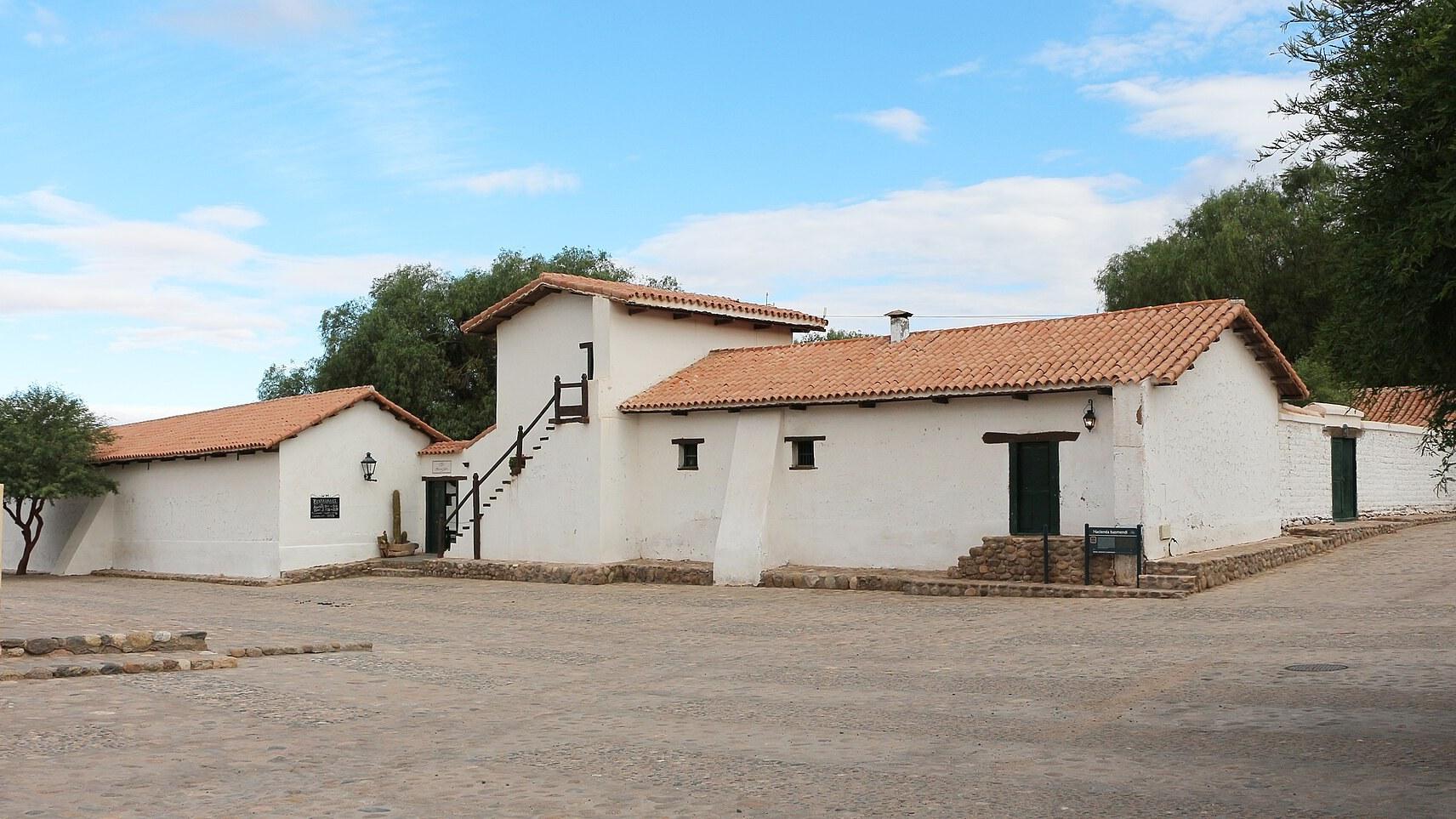
Molinos is a village in the Valles Calchaquíes of Salta Province, in northwest Argentina, with old houses surrounded by mountains. Cobblestone streets and adobe house facades give it its look. Ruta 40, the longest route in Argentina, runs through the village on its way across the Valles Calchaquíes and the Puna region of Salta. Molinos seems frozen in time, and the Ruta del Vino here has the highest vineyards in the world, at 2700 m.
The Iglesia de San Pedro Nolasco is a National Historic Monument of colonial architecture with Cuzco influences. Its facade has a large arch and two side towers, with a balcony over the door, and a wall with pinnacles encloses the atrium. The altarpiece and chapels hold religious images from the 17th to 19th centuries, among them San Francisco de Asís, Santo Domingo de Guzmán and a Nazareno.
Across from the church stands the Hacienda de Molinos, today the hostel of Molinos. The Centro de Interpretación Casa Indalecio Gómez is dedicated to the geography and culture of the Valles Calchaquíes, and its project El patrimonio tiene oficio teaches traditional trades to local people. A protected landscape area, Paisaje protegido río Molinos, naturaleza para el futuro, was declared in 2009. It runs from Route 40 to the edge of the village and the barrancas of the Molinos river. Salta province set it up together with the fundación Naturaleza para el Futuro (FuNaFu) and the municipality of Molinos.
The Coquena is a vicuña breeding centre in semi-captivity, and you can buy loom-made garments at the Asociación de Artesanos San Pedro Nolasco de Molinos. Blankets, ponchos and barracanes are woven at both. You can also meet loom artisans, visit a cooperative that makes handicrafts from vicuña wool, and tour local wineries for high-altitude wines.
A marked path climbs the Cerro Overo above Molinos to the summit cross, with views over the whole region. Ruins stand 8 km from the village, built by people known for pottery, textiles, woodwork and basketry. The Ruinas de El Churcal are among the attractions of the municipality. Colomé, 20 km from the village of Molinos, offers a winery visit and the private James Turrell Museum, known as the museum of light.
Puna plants such as tola, rica-rica and muña muña grow around Molinos, and the wildlife includes llamas, guanacos, vicuñas, foxes and condors. Molinos has a reserve zone for the endangered vicuña, and the cardón cactus is the emblem of the region.
The Festival Nacional del Poncho, Doma y Folklore combines traditional music and gaucho demonstrations, with folk music, night horse-breaking (doma) and cultural expressions on the programme. On the Saturday afternoon the main square of Molinos fills with folk dancing. The 2017 lineup included Los Huayra, Los Teucos, Guitarreros, Los Izquierdos de la Cueva, Los Carabajal and Los Cuatro de Salta.
Isasmendi roots, adobe lanes and a church from 1639
Molinos grew in the 17th century from a finca owned by don Tomás de Escobar, and its encomienda began at the confluence of the Humanao and Luracatao rivers. The Hacienda de los Isasmendi and the oratory opposite it are the oldest buildings in the village, both on the right bank of the Molinos river. Humans have lived in the Calchaquí valleys for at least 8000 years, and the Inca conquered them between 1470 and 1480. The Iglesia de San Pedro Nolasco was built in 1639 and keeps the mummified remains of Nicolás Severo de Isasmendi, the last royalist governor of the Intendencia de Salta del Tucumán. A restoration followed in 1780, and major repairs at the end of the 19th century came when it became a parish church. A narrow nave leads to a short presbytery. The walls are adobe on stone foundations, and the roof is cardón wood boards under Spanish tiles. Commerce boomed in the 18th and 19th centuries, when Molinos was an obligatory stop on the route to Chile. The historic centre has homogeneous adobe buildings, and houses from the 18th century with a double corner door stand out. The whole Poblado de Molinos is a National Historic Monument. San Pedro Nolasco is the patron saint of the village, and his feast is held on 2 February. Indalecio Gómez, a Salta politician active nationally from 1880 to 1920, lived in the house that now holds the Centro de Interpretación in Molinos. Between 2004 and 2007 the streets were repaved with interlocking cobblestones, and the facades were restored with funding from the BID.
Empanadas, humitas and Torrontés around Molinos
Food in Molinos runs to popular Salta dishes: empanadas, tamales, maíz mote and charqui, which is sun-dried meat, plus anís and sweets made with ancestral techniques. During the Molinos festival, stalls and fondas at the grounds serve empanadas, humitas, locro, lomitos and choripanes. Locro norteño and empanadas salteñas go well with Torrontés from the Calchaquí valleys. That wine has aromas of roses and white peaches and tastes of orange peel and fruit salad, though it is dry. Other towns add their own snacks. Cachi has a food stand on the southeastern corner of Plaza 9 de Julio that sells empanadas. In Cafayate, traditional empanadas, tamales and humitas are easy to find, and ice cream made from local wines turns up along Ruta Nacional 40. In Salta city, El Buen Gusto Empanadas is a traditional small restaurant for empanadas. Order in advance there, since only a limited number are cooked.
Reaching Molinos from Salta through Cachi
Molinos can be reached from Salta city by routes 68, 33 and 40 through Cachi, with an estimated travel time of 5 h. The village lies on Ruta Nacional 40, beside the Luracatao river. The road from Salta to Cachi, on the way to Molinos, is bitumen and takes about 4 h. Floods or rockfall after rain can still close it. Buses to Cachi leave Salta a couple of times a day, and several Salta companies run day tours to Cachi. Salta's Martín Miguel de Güemes International Airport is the usual gateway to the Calchaquí Valleys. Bus 8A runs between the airport and the downtown bus terminal. Cafayate is the other direction. Buses from Salta to Cafayate take about 4 h with FlechaBus, with six departures a day. Shared cars take about 3 h and leave in front of the Teleferico. The road from Cafayate to Cachi is a dirt road usually passable by 2WD, and it is about a four hour drive. Some local buses run on it, but no through buses.
Walks, bikes and valley roads around Molinos
The Cerro Overo at Molinos is ideal for walks and outdoor activities, while the Calchaquí Valleys as a whole are best toured in vehicles adapted to the roads and landscapes of the region. The Ruta del Vino de Altura crosses Molinos, San Carlos, Seclantás and Cachi along Routes 68 and 40. In Seclantás, the Camino de los Artesanos lets visitors find traditional ponchos, mantas and fajas woven from sheep or llama wool. Cafayate can be explored on foot, and several places hire bicycles to explore the vicinity. The Cuesta del Obispo can be descended by bike, as recommended to adventure lovers in the Calchaquí Valleys. Cafayate has the Museo de la Vid y el Vino and Las 7 Cascadas del Rio Colorado, a waterfall hike 10 min southwest of town that requires a guide for non-locals. The Quebrada de Cafayate (Quebrada de las Conchas) lies 90 km southwest of Salta city, was declared a managed nature reserve in 1995, and covers 25,784 ha along National Route 68. Los Cardones National Park protects the giant cactus species typical of the Calchaquí Valleys, and Cachi is known for its giant cactuses and peaks. Cachi's Plaza 9 de Julio is a shady town square with much less vehicular traffic than larger towns. The Quebrada de las Flechas has formations that point to the sky, and its colors change with the time and daylight. In Salta city, SUBE cards do not work on SAETA buses, which need their own transit card. Taxis there are reliable and use the meter.
Fuel and groceries on the road to Molinos
Drivers heading for Molinos will find a YPF petrol station in Cachi, close to Ruta Nacional 40. Cachi also has a grocery store on the northwest corner of Plaza 9 de Julio.
Festival dates, packing and road checks for Molinos
The Festival Nacional del Poncho, Doma y Folklore is held in Molinos at the end of January each year, and the recommended length of stay in Molinos is 1 to 2 days. What should I pack for Molinos? Bring warm clothes suited to temperature changes, a windbreaker and sunscreen. The climate is dry and windy. How long should I stay? Molinos is recommended for 1 to 2 days. The Calchaquí Valley as a whole is recommended for 8 to 10 days. When is the poncho festival? It falls at the end of January each year. The 41st edition was announced for 30 and 31 January at the Escenario Juan Carlos Dávalos on the municipal ground. Which grapes grow on the wine route? Molinos is on the Salta high-altitude wine route, where varieties include Torrontés, Cabernet Sauvignon, Malbec, Tannat, Bonarda, Syrah, Barbera and Tempranillo. Where can I check road conditions? The Cafayate tourist information office on the western side of the central plaza has up to the hour information about road conditions. Roads are often flooded or closed by rockfall in the rainy summer season. Cachi has a tourist information office in the main square. Where should I stay? Officially licensed accommodation is recommended for a safe and quality stay in the Salta province.
FAQ
What is covered in the Molinos guide?
Discover Molinos in Salta, Argentina: a colonial church, vicuña weaving, high-altitude wines and a poncho festival each January. Plan 1 to 2 days here. It includes 1 recommendations across 1 gallery.
Next →How many places are in the Molinos guide?
The Molinos guide lists 1 places: 1 gallery.
Next →Where is Molinos?
Molinos is in Molinos, Salta, Argentina (-25.4389, -66.2931).
Next →How do you get to Molinos?
Molinos can be reached from Salta city by routes 68, 33 and 40 through Cachi, with an estimated travel time of 5 h. The village lies on Ruta Nacional 40, beside the Luracatao river. The road from Salta to Cachi, on the way to Molinos, is bitumen and takes about 4 h. Floods or rockfall after rain can still close it.…
Next →What should you eat in Molinos?
Food in Molinos runs to popular Salta dishes: empanadas, tamales, maíz mote and charqui, which is sun-dried meat, plus anís and sweets made with ancestral techniques. During the Molinos festival, stalls and fondas at the grounds serve empanadas, humitas, locro, lomitos and choripanes. Locro norteño and empanadas s…
Next →Is there camping in Molinos?
No camping listings in this pack yet — we do not invent venues. Entries will appear once verified.
Next →Can you rent a bike in Molinos?
No bike rental listings in this pack yet. Verified shops will be added when available.
Next →What are recommended gallery in Molinos?
Highlighted gallery in the Molinos guide: Hacienda de Molinos.
Next →Highlighted places
- Hacienda de Molinos — The whitewashed Hacienda de Molinos with its tiled roofs, opposite the church of San Pedro Nolasco.
Explore on the map
Tap a pin to highlight its place card
All
1 spots
Recommended places
Gallery
1 · 1 selected
Hacienda de Molinos
gallery
Related guides
Browse nearby destinations
Angastaco Guide
Salta, Argentina
Torrontés wine and red hills in Salta's Calchaquí valley
Seclantás Guide
Salta, Argentina
Looms, adobe lanes and valley views in Salta
Uquía Guide
Jujuy, Argentina
Adobe chapel, carnival devils and coloured mountains
Adrasan
Antalya, TR
A pine-backed bay where the days move slowly
Air Batang
Pahang, Malaysia
A car-free Tioman village for divers and walkers
Akyaka
Muğla, Türkiye
Azmak boats, kitesurf wind and wooden balconies

Save these places to your list
Copy the spots you picked into your list — maps and notes included.