
Koronisia Guide
A fishing island on a sandbar in the Ambracian Gulf
1 selected
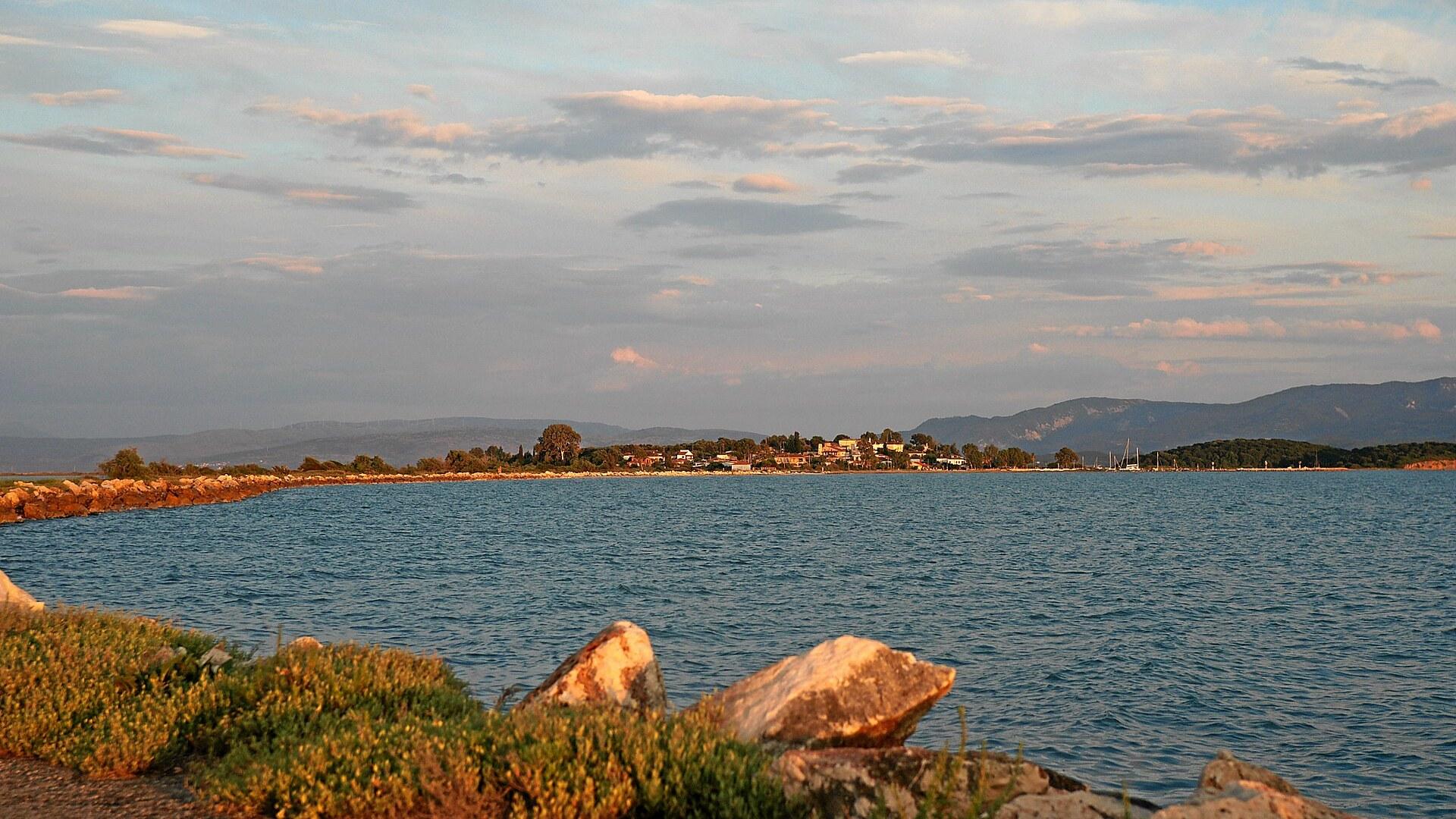
Koronisia sits in the Ambracian Gulf in Epirus, Greece, on a low limestone islet that rises no more than 5 m above the water. It is the largest island in the gulf and the only one where people live. The village has two churches and the ruins of a fortress, and nothing about it hurries you.
The way in sets the mood. A sandbar about 6 km long, carrying an asphalt road, runs from Cape Salaora across the water to the island, with lagoon on either side. A second sandbar, about 4 km long, leads north-east to the Arachthos delta. Koronisia is also tied by sandbars to its two neighbours, Pethameno and Peranisi, and together the three enclose the small Sakouletsi lagoon.
The wetland around the village is a protected area for nature and birds. It covers the Logarou lagoon to the north, the largest in the Ambracian Gulf, and the Arachthos delta. Waterbirds dominate: Dalmatian pelicans, and several herons including the purple heron. Walk out along the sandbar road and look at the water on both sides.
South of Koronisia lie seven small islets called Korakonisia, the Raven Islands, which is the name the island itself originally bore. The largest, Vouvalos, wraps a micro-lagoon of its own 2 km south of the village.
The beaches are narrow, and because the water is shallow they work well for children. In summer you can swim near the harbour and at Paralia Phrachtis. The small fishing harbour lies in the south-west of the island, and the inhabitants still fish from it.
Tourism has become the second pillar of the local economy, yet evenings stay quiet. Pick a table, watch the light on the gulf, and save the footpath up the hill at Cape Salaora for a clear morning.
Koronisia's Byzantine Church, Monastery Well and Koulia Fortress
Koronisia keeps its past in a Late Byzantine church from the end of the 10th century, the well of a vanished monastery and a restored fortress called Koulia. The three-aisled church of the Virgin Mary, known as Panagia Koronisias, now serves as the parish church. A monastery around it was first mentioned in writing in 1193 and abandoned in 1918. The building you see is the result of repeated work. It was rebuilt several times, notably around 1670, around 1870 and in the 20th century. In the village there is also a small chapel dedicated to Saint Onuphrios of Preveza, who worked here in the late 18th century and is said to have built the bell tower in front of the church. The well of the former monastery is still preserved. Climb to the church terrace first. The harbour lies below you and the Ambracian Gulf opens out beyond it, which is the best way to understand how small and exposed the island is. The younger layer sits in the south of the island. Koulia is a small fortress built to the same design as the Laskara fortress east of Preveza, from the early 19th century under Ali Pasha Tepelena. It has been extensively restored and now serves as a cultural centre, so it is more than a ruin to photograph. Give the church and its terrace one stretch of the day and the fortress another.
Fresh Shrimp and Fish at Pastedas and Myrtaria
Koronisia has two restaurants, Pastedas Fish Restaurant and Myrtaria, and the menu in both leans on the sea. That suits an island whose inhabitants still fish. Pastedas Fish Restaurant is the recommended fish taverna, known for excellent shrimp from the Amvrakikos Gulf and a selection of freshly caught fish. Order the shrimp first, then ask which fish came in fresh; that is the whole reason to eat here. Myrtaria serves seafood and Mediterranean cooking and sits in the middle to upper price bracket. If one place is full, walk to the other, because no further restaurants are listed for the island. With only these two tables to choose from, a long lunch or dinner at one of them becomes a fixed part of the day. Seafood restaurants and boat tours are also listed for the area nearby, so you can combine a meal with time on the water.
Reaching Koronisia from Arta, Preveza and Ioannina
You reach Koronisia by private vehicle over an asphalt road, about 17 km south of the town of Arta. The nearest airport is Aktion (PVK) near Preveza, about 60 km from Arta. Ioannina airport (IOA), served from Athens, is the alternative. Either way, plan on having your own vehicle for the last stretch, because that is how the island is reached. The final approach is the best part. A sandbar about 6 km long, with the asphalt road on top, links Cape Salaora in the north-west to the island. A second sandbar, about 4 km long, connects Koronisia north-east to the Arachthos delta. Both leave water and lagoon on either side of the car. Do not count on the sea as a way in. The fishing harbour of Koronisia serves only local business, and there are no ferry connections.
Walking Koronisia: From the Harbour to Koulia
Koronisia, with its village, harbour and fortress, is explored on foot, and the island itself is the only walk you need. Start at the fishing harbour in the south-west and move through the village to Panagia Koronisias and the terrace beside it. From there the Koulia fortress, in the south, is the natural next stop, and it is the only place on the island that now works as a cultural centre. Further out, Vouvalos and the other Korakonisia islets lie south of the village, with Vouvalos 2 km away. You can look across to them from the shore. On the mainland end of the sandbar road, the footpath up the hill at Cape Salaora is worth a stop on your way in or out. Boat tours are listed for the area, which is the other way to see the lagoons and islets.
No Shops on the Island: Supplies and Cash for Koronisia
There are no shops on the island of Koronisia, so whatever you need for the stay has to come with you or be bought before you cross the sandbar. The nearest town is Arta, about 17 km to the north. Treat it as your last stop for anything you cannot do without, and take the 6 km sandbar road in with a full bag rather than planning an errand on the island. On the island itself, spending is simple. Pastedas Fish Restaurant and Myrtaria are the two places to pay for a meal, and Myrtaria sits in the middle to upper price bracket. Keep that in mind when you decide how much to carry with you.
Practical Answers Before You Go to Koronisia
Koronisia works best as a slow stop rather than a checklist. These answers cover the questions that come up most before you go. Is Koronisia good for children? Yes. The water around the island is shallow, so the narrow beaches suit families with children. Where can you swim? In summer you can swim at the narrow beaches near the harbour and at Paralia Phrachtis. The harbour is in the south-west of the island. What is the evening like? Koronisia is quiet at night. Plan a dinner at Pastedas Fish Restaurant or Myrtaria and an early night rather than a late one. Which birds can you expect to see? The wetland is a protected area for nature and birds, centred on Koronisia and covering the Logarou lagoon and the Arachthos delta. Waterbirds dominate, including Dalmatian pelicans and several herons such as the purple heron. Is there anything to see beyond the village? Yes. The Korakonisia islets lie south of the island, and the largest, Vouvalos, holds a micro-lagoon of its own 2 km from the village. A footpath climbs the hill at Cape Salaora, which is worth the effort.
FAQ
What is covered in the Koronisia guide?
Discover Koronisia, a fishing island in Epirus reached by a 6 km sandbar road, with a Byzantine church, a fortress, lagoons full of birds and fresh shrimp. It includes 1 recommendations across 1 gallery.
Next →How many places are in the Koronisia guide?
The Koronisia guide lists 1 places: 1 gallery.
Next →Where is Koronisia?
Koronisia is in Koronisia, Epirus, Greece (39.0110, 20.9201).
Next →How do you get to Koronisia?
You reach Koronisia by private vehicle over an asphalt road, about 17 km south of the town of Arta. The nearest airport is Aktion (PVK) near Preveza, about 60 km from Arta. Ioannina airport (IOA), served from Athens, is the alternative. Either way, plan on having your own vehicle for the last stretch, because that…
Next →What should you eat in Koronisia?
Koronisia has two restaurants, Pastedas Fish Restaurant and Myrtaria, and the menu in both leans on the sea. That suits an island whose inhabitants still fish. Pastedas Fish Restaurant is the recommended fish taverna, known for excellent shrimp from the Amvrakikos Gulf and a selection of freshly caught fish. Order…
Next →Is there camping in Koronisia?
No camping listings in this pack yet — we do not invent venues. Entries will appear once verified.
Next →Can you rent a bike in Koronisia?
No bike rental listings in this pack yet. Verified shops will be added when available.
Next →What are recommended gallery in Koronisia?
Highlighted gallery in the Koronisia guide: Koronisia across the Ambracian Gulf.
Next →Highlighted places
- Koronisia across the Ambracian Gulf — The low islet village of Koronisia seen across the Ambracian Gulf at sunset.
Explore on the map
Tap a pin to highlight its place card
All
1 spots
Recommended places
Gallery
1 · 1 selected
Koronisia across the Ambracian Gulf
gallery
Related guides
Browse nearby destinations

Litochoro Guide
Central Macedonia, Greece
The friendly doorway to Mount Olympus
Pyrgadikia Guide
Central Macedonia, Greece
Fishing harbour on the Singitic Gulf, facing Mount Athos
Serifos Guide
South Aegean, Greece
Iron mountains, a white hilltop town and bays you walk to
Sifnos Guide
South Aegean, Greece
Whitewashed villages, quiet coves and a cliff-top old capital
Adrasan
Antalya, TR
A pine-backed bay where the days move slowly
Air Batang
Pahang, Malaysia
A car-free Tioman village for divers and walkers

Save these places to your list
Copy the spots you picked into your list — maps and notes included.