
Locmariaquer Guide
Megaliths, oysters and the mouth of the Gulf
1 selected
Locmariaquer, in Brittany, France, sits on a small peninsula where the Gulf of Morbihan opens into the Atlantic. The harbour is small and the pace follows it. The peninsula belongs to the Regional Nature Park Golfe du Morbihan, and French holidaymakers have come to this corner of southern Brittany since before the Second World War for its steady climate, its bays and its sandy beaches. Tourism has grown in importance around the village since the 1960s.
Most visitors come for the stones. Carnac is only 12 km away and draws the coach tours, while one reviewer found the megalith site at Locmariaquer quiet by comparison and another calls it less frequented than the Carnac alignments. If you want both, Carnac keeps the famous rows of Le Menec, Kerlescan and Kermario, plus a prehistory museum in its centre.
Head out to Pointe de Kerpenhir next, where the Atlantic enters the gulf. A large statue of Madonna and Child stands there, tied to a legend in which she warned sailors of a storm. Reviewers praise the view across the gulf and over the town centre.
The little beach at the harbour is not really for swimming, so go south or west instead. Plage de Locmariaquer is a longer sandy stretch in the south with parking, public toilets and a campsite, and it runs into Plage de la Falaise. Reviewers describe the Falaise as a long family beach with dunes behind a large municipal campsite and a path where you still find shade. From there you see the islands of Houat and Belle Île. Plage de St. Pierre, near the village of Saint-Pierre Lopérec, is another sandy choice in the far southwest.
Smaller tombs sit around the village too. Mané Lud holds a single tomb and a group tomb that you can enter with a torch, and Mané er Hroëck is a mound where a person of high rank was buried with grave goods. Mané er Hroëck can also be visited with a torch.
On the water, the area is considered good for anglers. Nearby operators offer fishing guiding, diving with Centre de plongée H2JO, catamaran trips and sailing through the Société Nautique de Locmariaquer.
Broken menhir and dolmens: the stone story of Locmariaquer
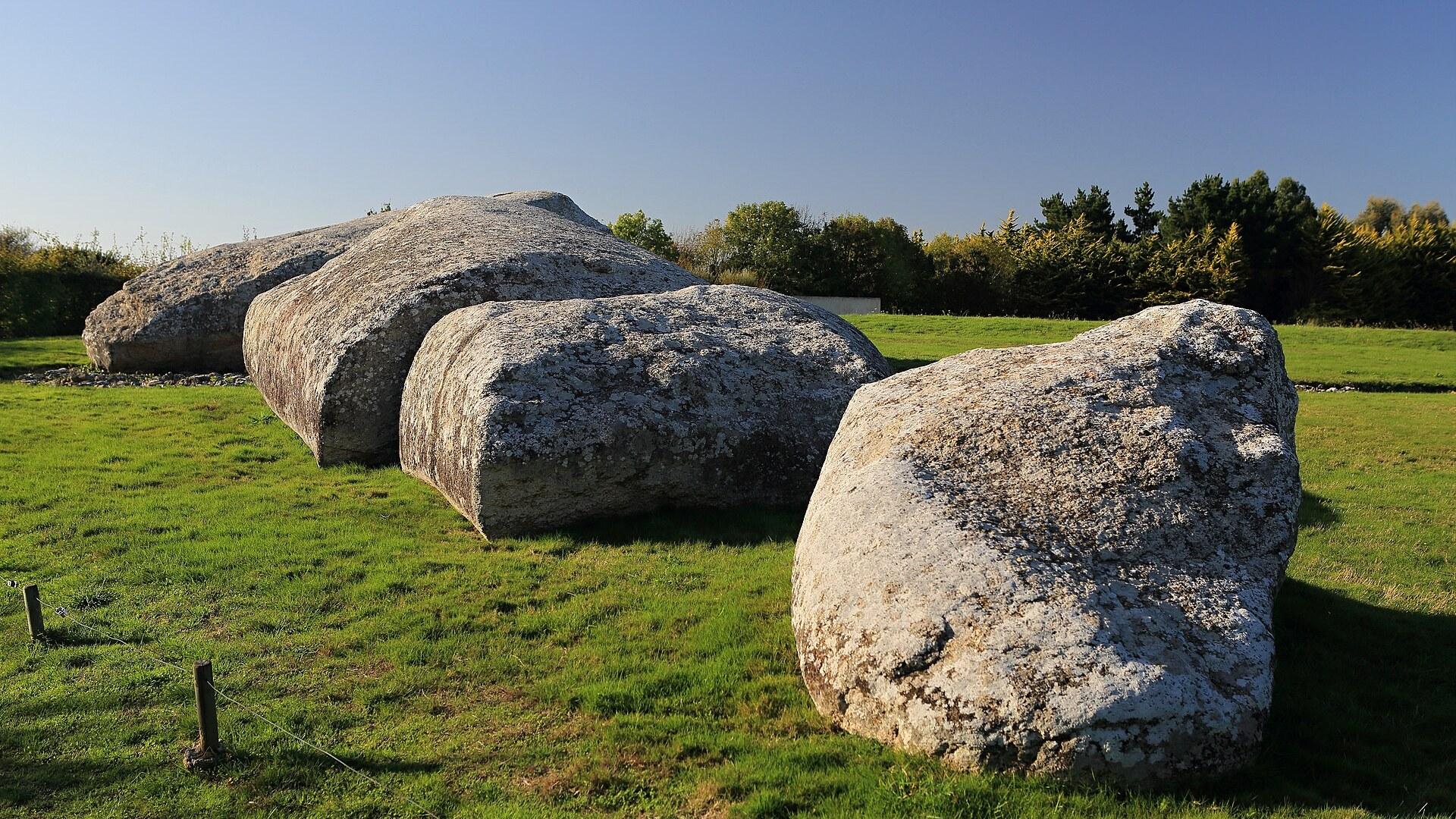
Locmariaquer holds some of the most significant Neolithic remains in Europe, centred on the Broken Menhir of Er Grah and, right beside it, the Table des Marchands dolmen with its carvings. The megalith site groups three monuments: the Grand Menhir Brisé, the Dolmen de la Table des Marchand and the Tumulus d'Er Grah. Tripadvisor's listing dates them between 4700 and 3800 BC, while German Wikipedia gives around 4200 BC, so the dating depends on who you ask. The menhir is described as the largest single block of stone moved and raised by Neolithic people. It now lies in 4 pieces, and why it fell is unclear: accident, deliberate toppling and an earthquake all get mentioned. Go into the Table des Marchands. A gallery leads to an underground burial chamber with some engraved walls, and together with the tumulus it gives an insight into ancient funeral rites. German Wikipedia adds that older great menhirs in the area were probably toppled on purpose and reused as capstones in dolmens such as Er Grah, Mané Lud, Mané Retual and Table des Marchand. Take a proper flashlight, because reviewers say phone lights are too weak. Later layers are thinner. Sparse Roman remains of a theatre, aqueduct and baths turned up in excavations at the end of the 19th century and were mostly buried again. The state bought the megalithic monuments in 1882 and listed them in 1889, and Zacharie Le Rouzic excavated here several times in the early 20th century. The Chapelle Saint-Michel stands on the foundations of a small Roman temple, and Notre-Dame de Kerdro dates from the 11th or 12th century. Its Romanesque transept and apse are listed, and twelve stained-glass windows from 1960 are admired for their sobriety and brightness. At Kerpenhir, the granite Virgin of 1962 replaced a statue from 1883 that the Germans destroyed with the fort in World War II. The writer Zénaïde Fleuriot made her home in Locmariaquer in the nineteenth century and idealised it in her novels.
Oysters, market days and bakeries in Locmariaquer
Locmariaquer is oyster country: it has become one of the most important oyster-producing areas in France and is known for its giant Belon oysters, even though the port itself is small. The Romans knew the natural flat oyster beds, but farming here began only in the late 19th century, with the first concessions on the Auray River issued in 1882. In 1973 and 1974 parasites decimated the flat oysters of the gulf, and Japanese-origin Crassostrea gigas took their place. Pacific oysters are now farmed in the gulf and the Saint-Philibert river, while flat oysters grow mainly in Quiberon Bay. About thirty small farms remain, and they sell to wholesalers, retailers or directly to consumers. Reviewers talk of tasting oysters by the water and an authentic oyster experience. For lunch, one harbour spot serves crepes and suits an afternoon break. Others mention good honest French provincial cooking with Sunday lunch, a burger, and beer with a sea view. The restaurant in the campground is simple, fast and efficient. Market day is Tuesday and Saturday in the centre. The Spar supermarket is open Tuesday to Saturday, 8:00 to 12:30 and 14:45 to 19:30. Among the bakeries, Boulangerie Anthony Pontgelard Artisan Pâtissier sells sandwich formulas that work as a hiking snack, and Boulangerie - Pâtisserie Bretonne L'atelier Du Pain is the other name to know. Stock up before the megalith site, which has nowhere to buy food or drink.
Reaching Locmariaquer: the Auray train and the Port Navalo ferry
Locmariaquer has no rail connection, so the usual route is a TGV to Auray, about 3 h from Paris Gare Montparnasse, and then a bus. Flying is more awkward. The nearest airport is Lorient, but there are no direct flights from German-speaking countries, so you have to change in Paris. If your plane lands in Paris anyway, the train from Gare Montparnasse is the other way to go. Drivers coming from Germany can take the motorway to Rennes and then follow the expressway-standard national roads N166 and N165 to Auray. Auray is also where the bus starts for the last stretch, so the town matters whichever way you travel. Because there is no train to Locmariaquer itself, check the bus connection in Auray before you book your TGV arrival time. A ferry runs from Port Navalo on the Rhuys peninsula to Locmariaquer and lands at the ferry pier in the Le Guilvin district. That is the route to look at if you are on the other side of the gulf mouth. Since you pass Auray anyway, the historic town deserves some time, and Vannes is another excursion German Wikivoyage suggests.
Bikes, boats and short walks around Locmariaquer
Locmariaquer is well equipped for biking, according to one reviewer: you can ride along the coast safely, there are few cars and parking is easy. The Dolmen of Kercadoret lies 4 km northwest of the village and is small but impressive, which makes it a good target for a ride. The Pierres Plates passage grave is south of the village, above Plage de la Falaise, where you can walk along the beach or take the path and still find shade. The water is the other way to move. Several operators run boat tours of the Gulf of Morbihan from Locmariaquer. Vedettes d'Angélus offers trips from 1 h 20 min up to 8 h 30 min, so you can choose between a short outing and a full day. Le Passeur des Îles sails to Port Navalo and to the Île de Gavrinis, and ILOCAP runs intimate, tailor-made cruises. La Corniche de Port-Navalo is a coastal cruise from the Port Navalo side. Gavrinis can also be reached by boat from Larmor-Baden on the eastern shore of the gulf, which is useful if you are approaching from that direction.
Money in Locmariaquer: what is free and where you pay
In Locmariaquer a good part of what you came for needs no ticket, and knowing which part saves you from guessing at the gate. The Dolmen du Mané Lud is free to visit, according to reviewers, and so is the Pierres Plates megalithic site above Plage de la Falaise. A free guided tour at 15:00 at the megalith site was praised by one reviewer, who also describes a visitor centre with a shop selling books and postcards. The Table des Marchands and the other monuments of the megalith site itself are the part with an admission charge, and minors under 18 get in free. Other spending goes to the table and the water. Oysters are sold directly by the farms to consumers, restaurants and bakeries take their share, and boat tours vary with the length you pick, from 1 h 20 min to 8 h 30 min. Prices are in euros, as everywhere in France. Since the megalith site has no food or drink, spend a little at a bakery first. Several of the best things here, such as the beaches and the view from Kerpenhir, ask for nothing but time.
Practical tips for Locmariaquer: hours, torches and festivals
Locmariaquer rewards a little planning, mostly because the megalith site keeps seasonal hours, has nowhere to buy a drink or a snack, and sends you into dark chambers. When is the megalith site open? Roughly 10:00 to 18:00 in May and June, a bit later in July and August, and from September to April 10:00 to 12:30 and 14:00 to 17:15. Last admission is 30 min before closing. Published summer closing times differ slightly, 18:30 in one place and 19:00 in another, so confirm the current hours before you set out. Is it closed on any days? The listing says the site is closed on 1 January, 1 May and 25 December. Minors under 18 enter free. What should I bring? A proper flashlight for the Table des Marchands chamber, plus a pocket torch for Pierres Plates, Mané Lud and Mané er Hroëck, which can be visited too. The Mané Lud signposts are poor, and the entrance is revealed by a modern staircase. Bring a picnic as well. Is there anything to learn before going in? The visitor centre shows an introductory film with headsets in several languages. One reviewer praised a free guided tour at 15:00, so ask there whether it runs on your day. Are there local festivals? The Saint Gildas chapel, north of the town, holds a Pardon and a Fest Noz on the last Sunday of June. The chapel built in 1772 can be visited in summer and during its Pardon on the first Sunday of July.
FAQ
What is covered in the Locmariaquer guide?
Discover Locmariaquer in Brittany: a quiet megalith site, oyster farms, sandy beaches and boats into the Gulf of Morbihan. Plan your trip with local tips. It includes 1 recommendations across 1 gallery.
Next →How many places are in the Locmariaquer guide?
The Locmariaquer guide lists 1 places: 1 gallery.
Next →Where is Locmariaquer?
Locmariaquer is in Locmariaquer, Brittany, France (47.5700, -2.9442).
Next →How do you get to Locmariaquer?
Locmariaquer has no rail connection, so the usual route is a TGV to Auray, about 3 h from Paris Gare Montparnasse, and then a bus. Flying is more awkward. The nearest airport is Lorient, but there are no direct flights from German-speaking countries, so you have to change in Paris. If your plane lands in Paris anyw…
Next →What should you eat in Locmariaquer?
Locmariaquer is oyster country: it has become one of the most important oyster-producing areas in France and is known for its giant Belon oysters, even though the port itself is small. The Romans knew the natural flat oyster beds, but farming here began only in the late 19th century, with the first concessions on t…
Next →Is there camping in Locmariaquer?
No camping listings in this pack yet — we do not invent venues. Entries will appear once verified.
Next →Can you rent a bike in Locmariaquer?
No bike rental listings in this pack yet. Verified shops will be added when available.
Next →What are recommended gallery in Locmariaquer?
Highlighted gallery in the Locmariaquer guide: Grand Menhir Brisé.
Next →Highlighted places
- Grand Menhir Brisé — The broken menhir at the Locmariaquer megalith site, Morbihan, Brittany.
Explore on the map
Tap a pin to highlight its place card
All
1 spots
Recommended places
Gallery
1 · 1 selected
Grand Menhir Brisé
gallery
Related guides
Browse nearby destinations
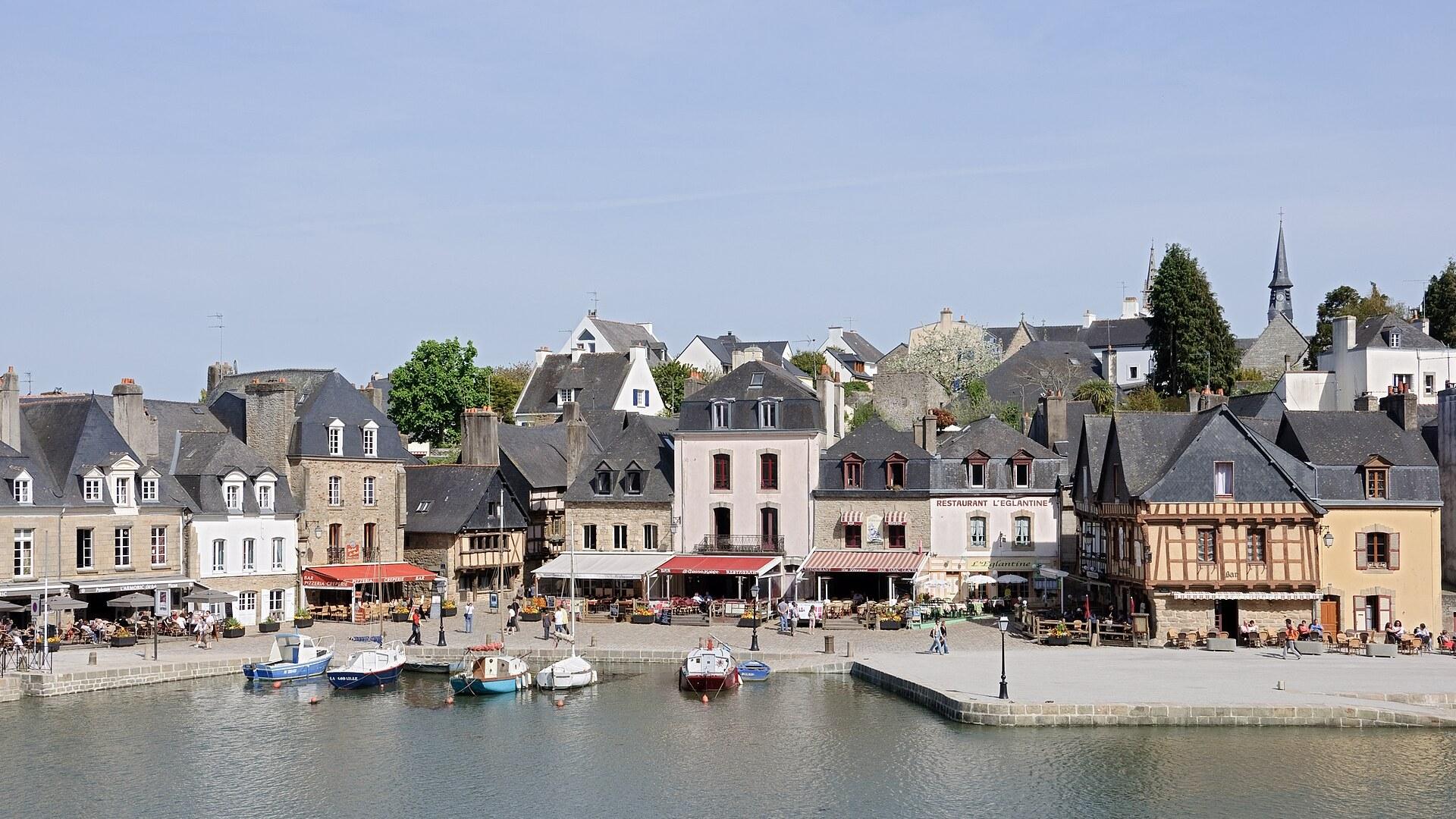
Auray Guide
Brittany, France
Two towns on one river, joined by a stone bridge
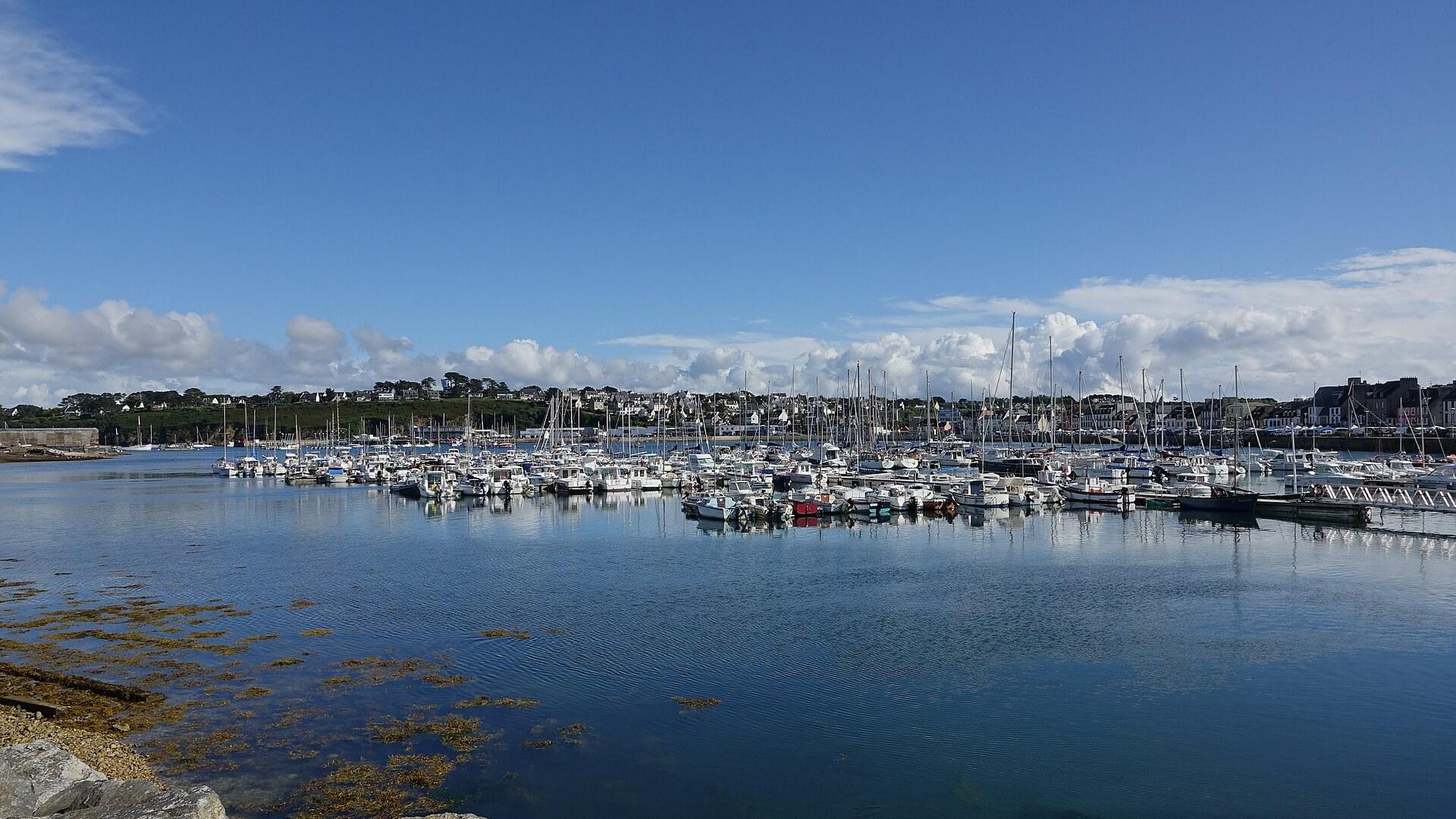
Camaret-sur-Mer Guide
Brittany, France
Fishing harbour, tower and sea stacks at Brittany's western tip
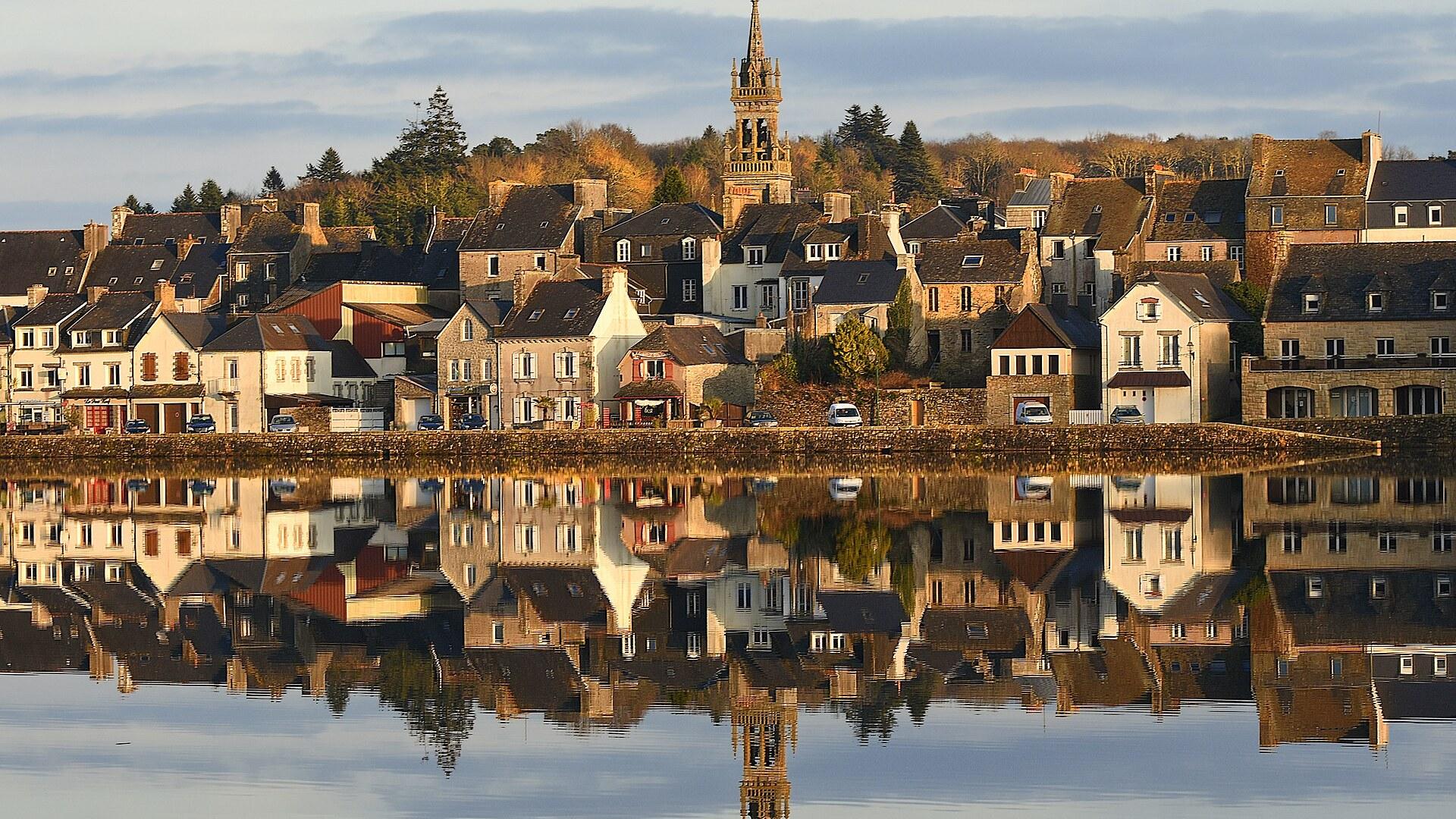
Huelgoat Guide
Brittany, France
Mossy boulders, a rocking stone and a lake in Brittany
Larmor-Baden Guide
Brittany, France
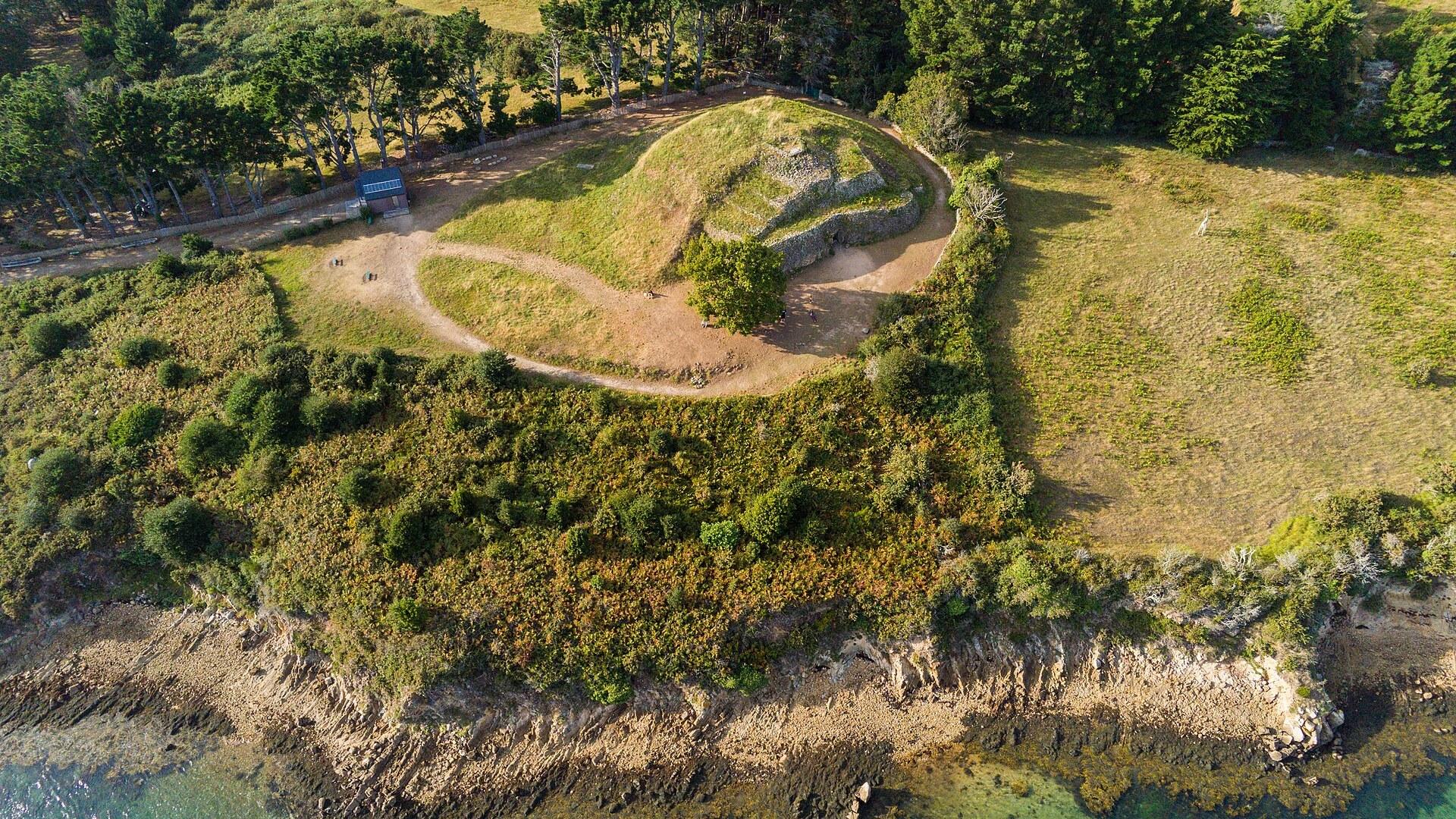
Boats to Gavrinis, a tidal island and oysters at the port
Loguivy-de-la-Mer Guide
Brittany, France
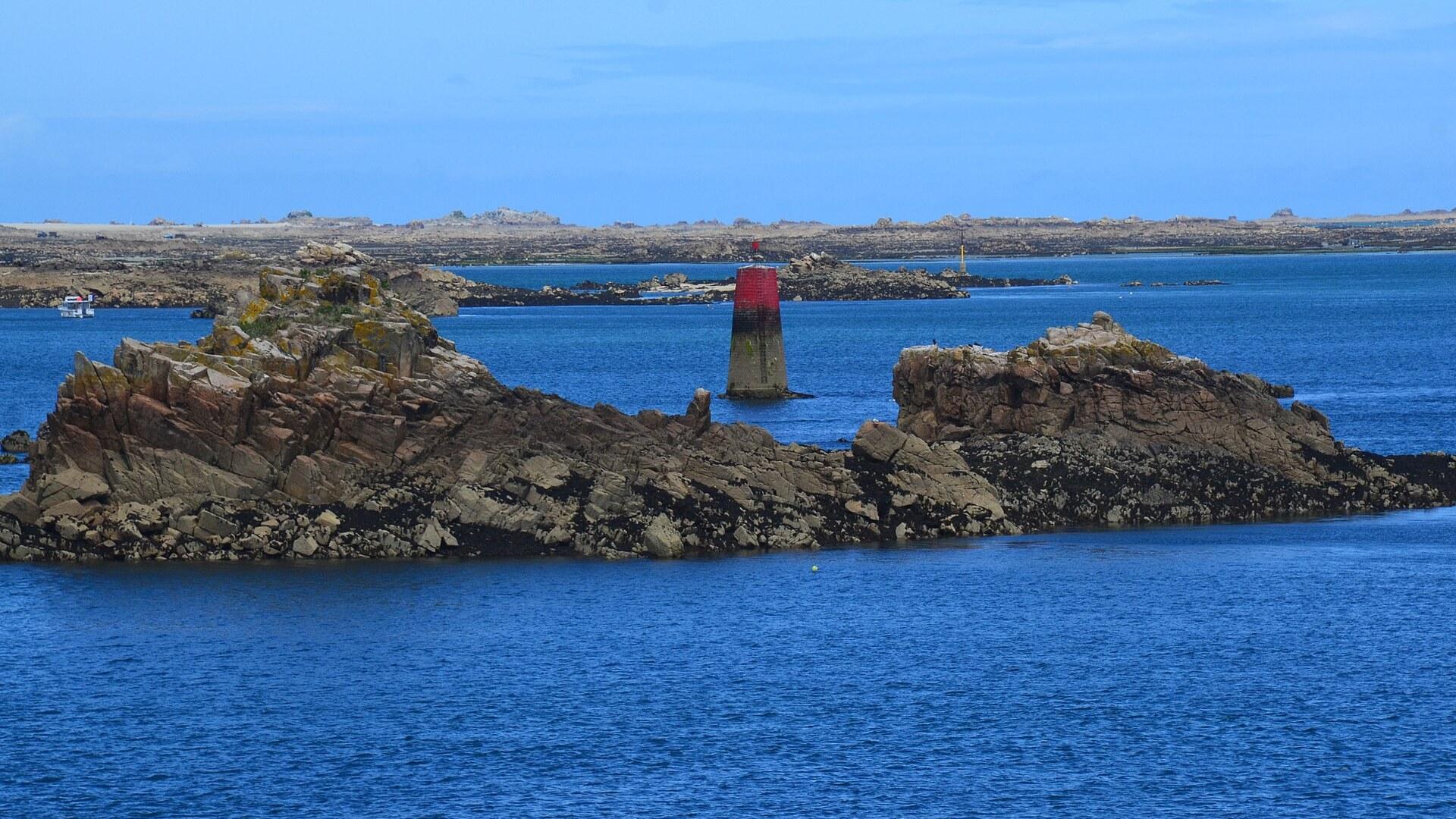
A Breton fishing port that lives by the tides

Cap-d'Ail Guide
Alpes-Maritimes, France
The Riviera's quiet back door to Monaco

Save these places to your list
Copy the spots you picked into your list — maps and notes included.