
Huelgoat Guide
Mossy boulders, a rocking stone and a lake in Brittany
1 selected
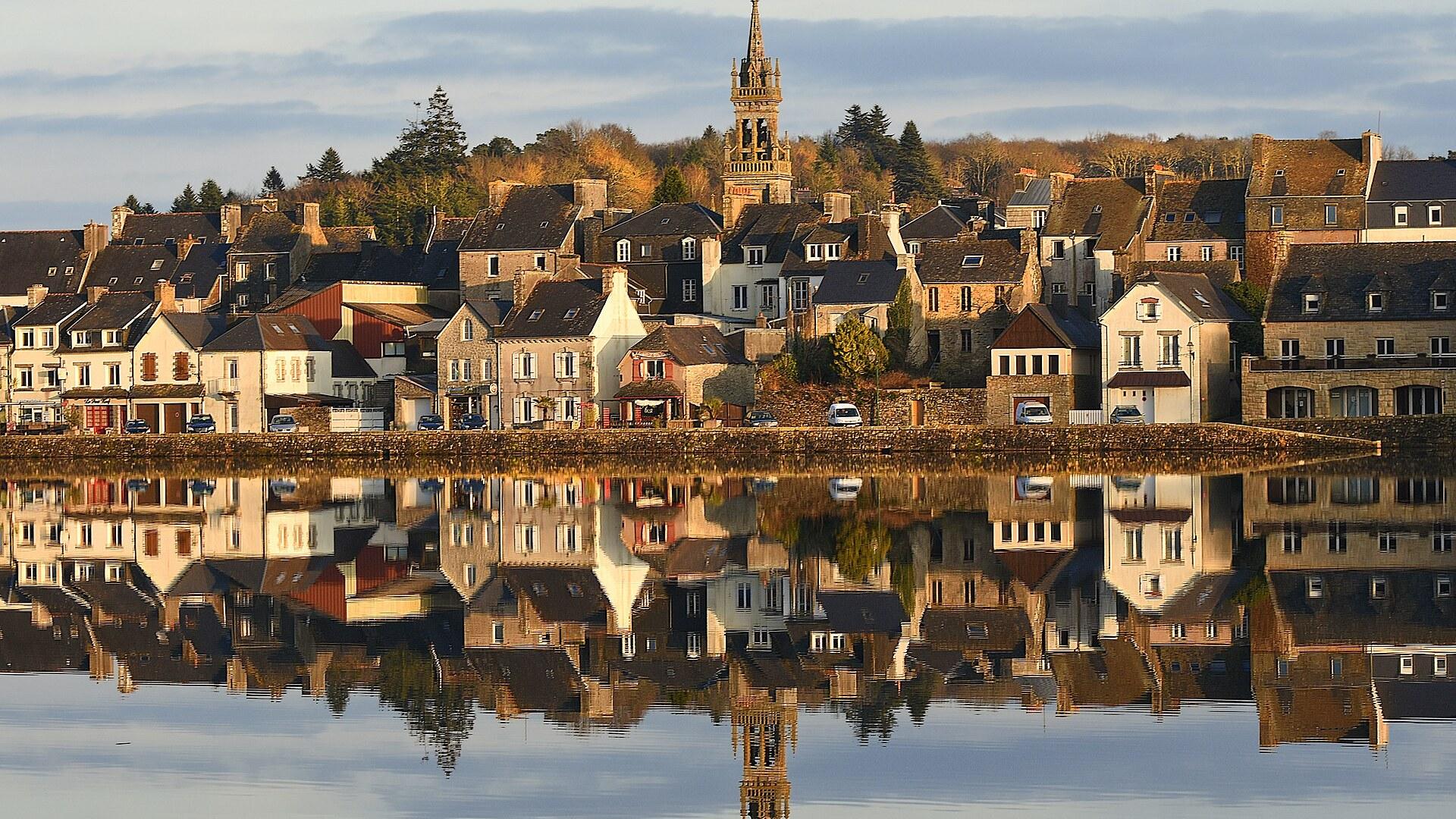
Huelgoat is a village in Finistère, in Brittany, France, on the foothills of the Monts d'Arrée inside the Parc naturel régional d'Armorique. The Breton name, An Uhelgoad, means High Forest, and the forest east of the village is why most people come. The country around it is hilly and heavily wooded, and the beaches are a long way off.
The forest around Huelgoat covers 10 square kilometres, and what makes it odd is the stone. Hundreds of big granite boulders lie piled up below the dammed lake in Le Chaos de Rochers, most of them wearing moss. The river vanishes among them. To see it running again you go down a 10 m stretch of ladders to a dark cave, the Devil's Grotto.
Then there are the rocks with names. Huelgoat's best-known, La Roche Tremblante is a rocking boulder pivoted so that a push at the right point sets it moving. Sources differ on its weight, with figures of about 130 and 137 tonnes. One visitor found the exact spot on the far left, looking down towards the restaurant below; others could not shift it at all. A panel beside it explains why it rocks. Le Champignon, the Mushroom, is a big rock balanced on a smaller one.
Around Huelgoat the trail names read like a fairy tale: La Mare aux Fées, La Mare aux Sangliers, the wild boar pool, and La Grotte d'Artus, a shelter under a roof of jammed rocks. Giants, fairies and korrigans fill the local stories, and children are said to love them. Le Gouffre is a small waterfall in a narrow valley.
Walking is the main thing to do in Huelgoat. Short marked walks start near the village and the Moulin du Chaos, passing the rock formations and river features. The lake has several sections: parking close to the water, a playground, a sandy approach for small children and clear water for swimming at the end near the Merlin hotel.
Huelgoat's famous spots, above all the Moulin du Chaos and the Grotte du Diable, get extremely busy. La Mare aux Sangliers and the Camp d'Artus are calmer, and one walker met nobody just past Le Gouffre. Further afield, the Poërop Arboretum has a nationally recognised maple collection, and Saint-Herbot near Plonévez-du-Faou has a Calvary and a chapel.
Silver mines, a Gaulish refuge and the 1987 storms
The past of Huelgoat shows up in three things you can walk to: a lake made for mines, a Gaulish hillfort and a forest that storms flattened in 1987. The lake was created between the 16th and 18th centuries to supply water to local silver-lead mines, carried along a 3 km leat, which is a canal. That is the only reason the lake exists, and the river you lose among the boulders below it is the same one the miners were after. Older still is Le Camp d'Artus, a promontory hillfort built on a Gaulish oppidum with a murus gallicus rampart. The Osismii Gauls used it as a refuge against the Roman invasion in 57 BC, and it was probably their main settlement before Julius Caesar defeated them. Sir Mortimer Wheeler excavated it. The Arthurian nickname came later, and legends from that saga still cling to the whole area. The forest was once royal and ducal land and is now overseen by the French National Forests Office. On 15-16 October 1987, storms levelled or damaged 3.1 square kilometres of it, and a large replanting scheme has repaired much of the damage since. West of the village, in the hamlet of Le Cloître, stands the Menhir du Cloître. In Huelgoat itself the parish church of St-Yves is classed as a Monument historique. If you want the past without the crowds, aim for the Camp d'Artus rather than the busy boulder field below the lake.
Galettes by the lake and crêpes after the rocks
Food in Huelgoat is mostly crêpes and galettes, served in several crêperies around the lake and the river, with pizza and a café-bookshop as alternatives. Right at the walking end of things, Creperie de la Roche Tremblante is where forest walkers stop for coffee, crêpes and a cold drink. One reviewer suggests having crêpes and a drink at the restaurant below the rock in the summer months, after the walk. That is a good order: the rocks first, the butter second. For a view, Le miroir aux fees is a crêperie with lake views, and a reviewer praised its "la complète" galette. Another crêperie by the river that the lake feeds gets good marks for its crêpes, and it sits next to a walk over the rocks. Crêperie Krampouez Breizh is listed too, and one reviewer recommends original crêpes bretonnes with cider, tea or wine. If you want something other than a pancake, Hotel Restaurant du Lac serves pizza with outdoor seating by the lake, and takeaway pizza is available. Pizzeria Glacier Ar Lec'h Vad is another pizza and ice cream option, and a local pub pours Coreff draft beer. Sur La Route Café-librairie is a cosy café-bookshop where reviewers say the food and drinks are homemade, the owners speak French and English, and there are books in both languages. On a busy day with a fair and a religious procession, a bistro on the market square took in a family of 6 without a booking, serving sharing starters, a courgette quiche and mains. You may still want to arrive early when the village is full.
Getting to Huelgoat from Morlaix, Brest and Rennes
Huelgoat has no railway connection of its own, so the usual route is a train to Morlaix or Carhaix-Plouguer and a bus for the last stretch. Morlaix is the nearest station, about 3 h 20 min from Paris Gare Montparnasse by TGV. It lies 24 km north of the village. Carhaix-Plouguer is also nearby, but fewer trains stop there, only regional ones from Guingamp. Since the final leg is a bus, look up the times from the station before you set off. Drivers have a few reference points. Brest is 53 km to the west. Rennes is 155 km east-southeast, and Paris about 450 km east. Huelgoat lies away from the main traffic routes: the nearest exits on the E 50 expressway between Rennes and Brest are at Morlaix and Landivisiau, which also has a regional station on the parallel railway line. The nearest regional airports are Brest and Rennes. Travellers coming from German-speaking countries are advised to arrive via Rennes and then follow the N12 and N164 roads. If you land off the ferry at the port of Roscoff, it is only about an hour to Huelgoat, so the village makes an easy first or last stop on the way to or from the boat. Huelgoat is also a popular day trip from the seaside resorts on the Brittany coast. Brest and Quimper are the larger cities nearby if you want to combine it with something bigger.
Getting around Huelgoat on foot, with a recent map
Getting around Huelgoat means walking: the sights are strung along forest trails rather than gathered in one spot. Some loops cross roads or follow the road between sights, so a recent map is advisable, and the tourist office offers maps with the different hikes. The Roche Tremblante is by the car park, so it needs no real effort. The walk around the lake is possible with strollers, but the Devil's Cave is not accessible for young children. For a longer outing, one walker did the 9 km discovery circuit. The first 4 km had little to see, but the walk then became very enjoyable, with many more people on that part of the route. Guided visits are listed as available all year round by simple reservation, if you would rather get the legends from someone who knows them, and a guided tour is also said to be available on request around the Roche Tremblante. On the water, the Port du Lac once listed electric cruising boats, pedalos, a miniature steamer and fishing boat hire, but it is marked as permanently closed, and a reviewer says the hire boats were no longer there. The lake still suits people with their own craft. Parking is close to the water, and the Hotel Restaurant du Lac stands on the lake with outdoor seating. It is shallow in parts, only electric engines are allowed although this is not signed, it is good for kayaking, and there is a launch slip.
Euros, supermarkets and patchy signal around Huelgoat
Money in Huelgoat is the euro, and the village keeps two supermarkets where you can buy picnic supplies before you head into the forest. Carrefour Express is listed as open Monday to Saturday from 8:00 to 20:00 and on Sunday from 8:00 to 13:00. Intermarché is listed from 9:00 to 19:15 Monday to Saturday and from 9:00 to 12:15 on Sunday. That gives Carrefour Express about 12 h a day from Monday to Saturday and only 5 h on Sunday, so buy lunch on the way in if you are walking that day. The trails run through woodland, not past shops, apart from the crêperie near the Roche Tremblante. Mobile coverage is the thing to plan around. A reviewer notes that the connection is not available everywhere in the Huelgoat forest, so reaching someone can be difficult. Agree a meeting point before you split up, and do not count on a phone for directions on the trails. The tourist office hands out maps of the hikes, which is the safer way to navigate between the boulders and the lake. The owners of Sur La Route Café-librairie speak French and English, so it is a handy place to ask for directions if you do not speak French, and the Creperie de la Roche Tremblante is the stop close to the rock itself.
Huelgoat practicalities: crowds, footing and weather
Huelgoat is easiest on a quiet weekday morning, in sturdy shoes, with a realistic idea of how rough the forest paths are. The questions below cover timing, footing and who should skip which spot. When should I go to avoid the crowds? One reviewer advises avoiding weekends and school holidays, and another says the area is very busy in the middle of August. The lake was very quiet in early September. Midweek outside August is the safer bet. At the Roche Tremblante, mornings mean fewer people and better light for photos. What should I wear? Sturdy walking boots, because the footpaths are not level. The Roche Tremblante walk is pleasant in any weather, even in overcast drizzle. Is the Grotte du Diable easy to visit? Not really. The way down is about 10 m of ladders, the access is vertiginous, the entrance is low, the paths are irregular and the rock can be slippery. A visitor who came at around 20:45 found it peaceful and almost empty, but it was dark enough that a phone light helped to reach the two viewing plateaus. Can I go with young children or a wheelchair? Reviewers call the forest difficult for people with reduced mobility and young children. The paths around the Roche Tremblante are unsuitable for wheelchairs, as there are several places where you must walk over rocks. The walk around the lake is the easier option. How long should I allow for the Roche Tremblante? At least 2 hours if you want to walk around the rock and the sights close to it, according to one reviewer. A guided tour can be arranged on request.
FAQ
What is covered in the Huelgoat guide?
Explore Huelgoat in Brittany: mossy boulders, the Roche Tremblante rocking stone, a lake and crêperies. Plan your walk and pick the quieter spots. It includes 1 recommendations across 1 gallery.
Next →How many places are in the Huelgoat guide?
The Huelgoat guide lists 1 places: 1 gallery.
Next →Where is Huelgoat?
Huelgoat is in Huelgoat, Brittany, France (48.3650, -3.7436).
Next →How do you get to Huelgoat?
Huelgoat has no railway connection of its own, so the usual route is a train to Morlaix or Carhaix-Plouguer and a bus for the last stretch. Morlaix is the nearest station, about 3 h 20 min from Paris Gare Montparnasse by TGV. It lies 24 km north of the village. Carhaix-Plouguer is also nearby, but fewer trains stop…
Next →What should you eat in Huelgoat?
Food in Huelgoat is mostly crêpes and galettes, served in several crêperies around the lake and the river, with pizza and a café-bookshop as alternatives. Right at the walking end of things, Creperie de la Roche Tremblante is where forest walkers stop for coffee, crêpes and a cold drink. One reviewer suggests havin…
Next →Is there camping in Huelgoat?
No camping listings in this pack yet — we do not invent venues. Entries will appear once verified.
Next →Can you rent a bike in Huelgoat?
No bike rental listings in this pack yet. Verified shops will be added when available.
Next →What are recommended gallery in Huelgoat?
Highlighted gallery in the Huelgoat guide: Huelgoat and its lake.
Next →Highlighted places
- Huelgoat and its lake — Huelgoat village reflected in its lake, Finistère, Brittany.
Explore on the map
Tap a pin to highlight its place card
All
1 spots
Recommended places
Gallery
1 · 1 selected
Huelgoat and its lake
gallery
Related guides
Browse nearby destinations
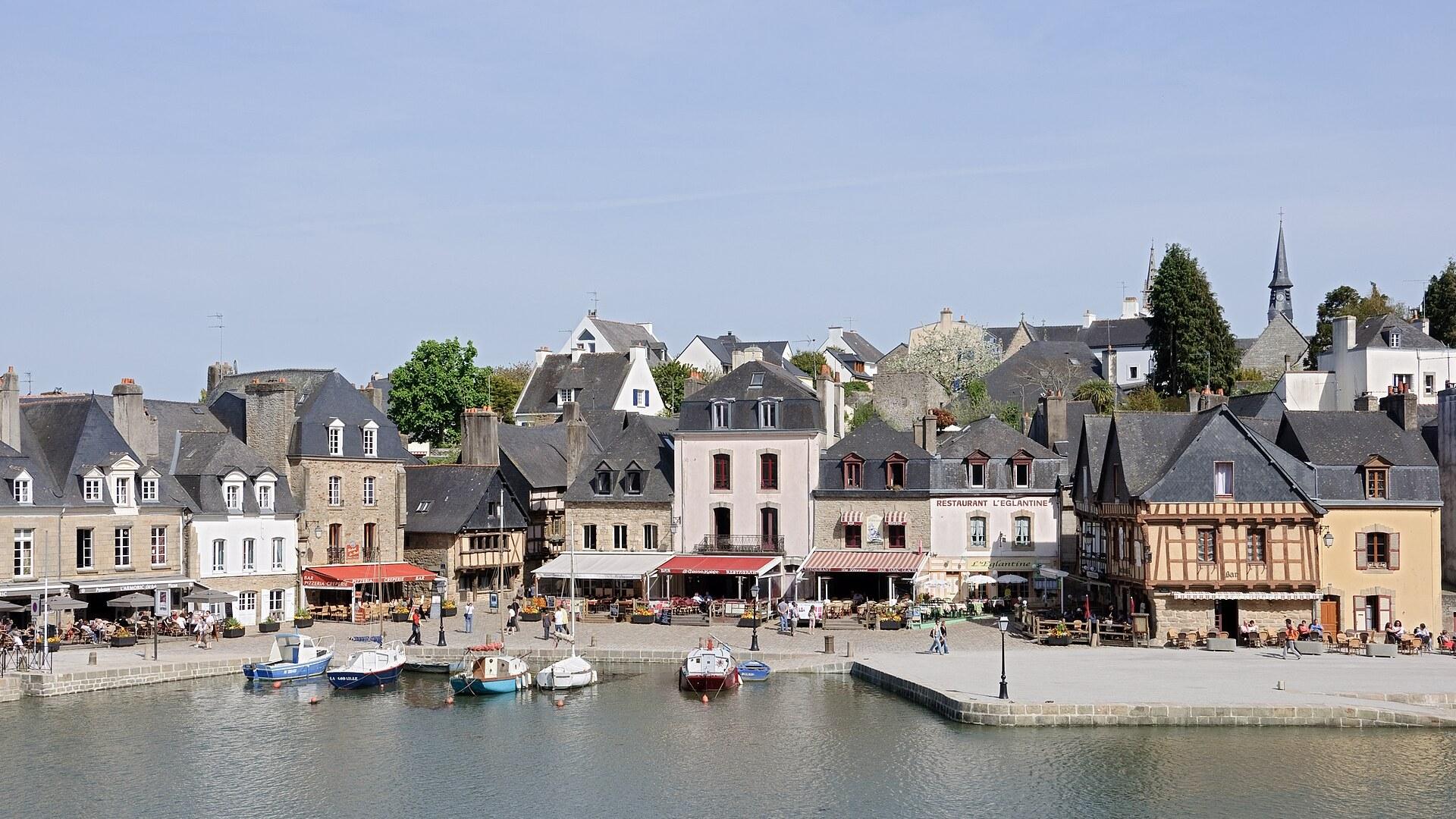
Auray Guide
Brittany, France
Two towns on one river, joined by a stone bridge
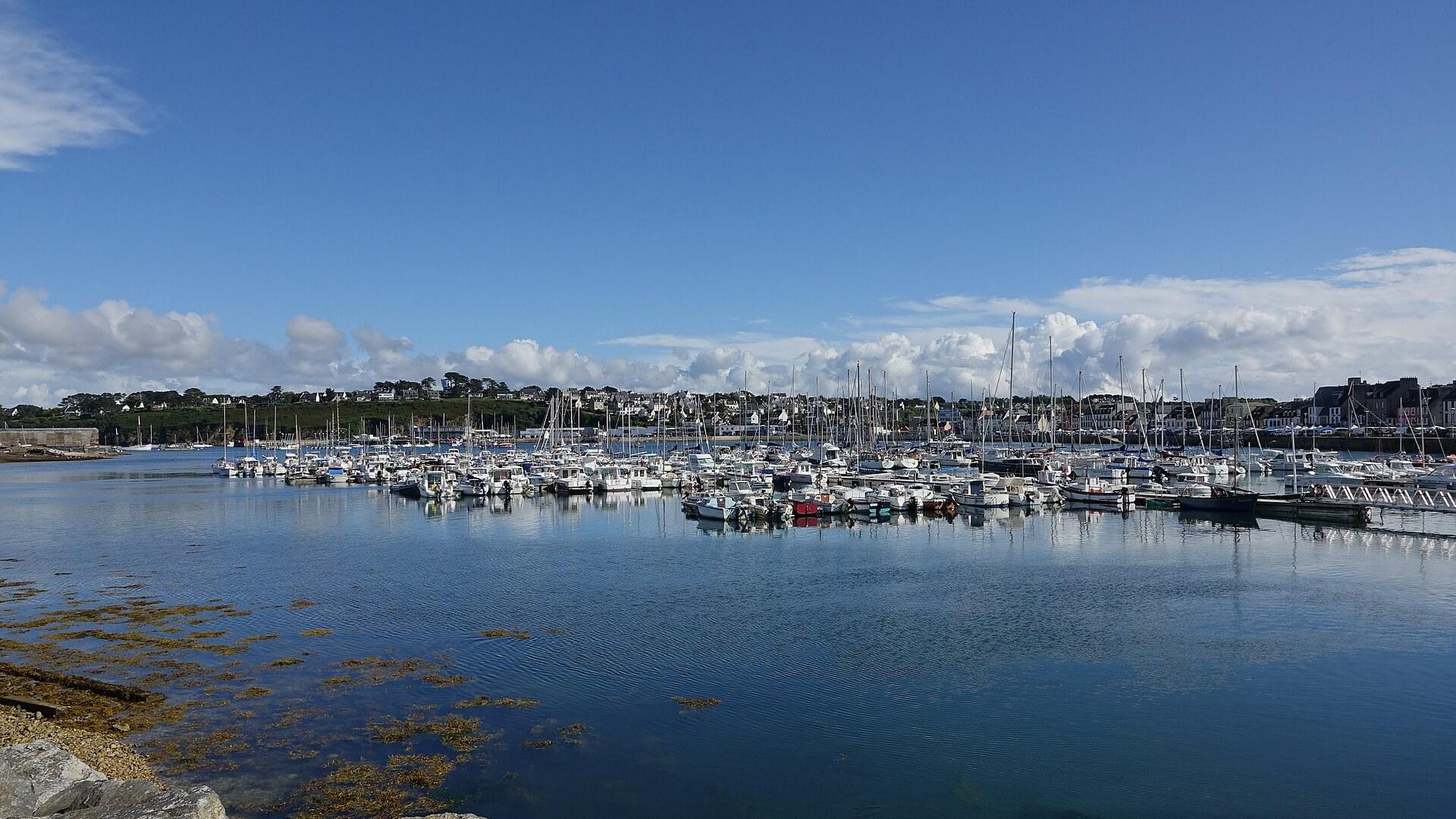
Camaret-sur-Mer Guide
Brittany, France
Fishing harbour, tower and sea stacks at Brittany's western tip
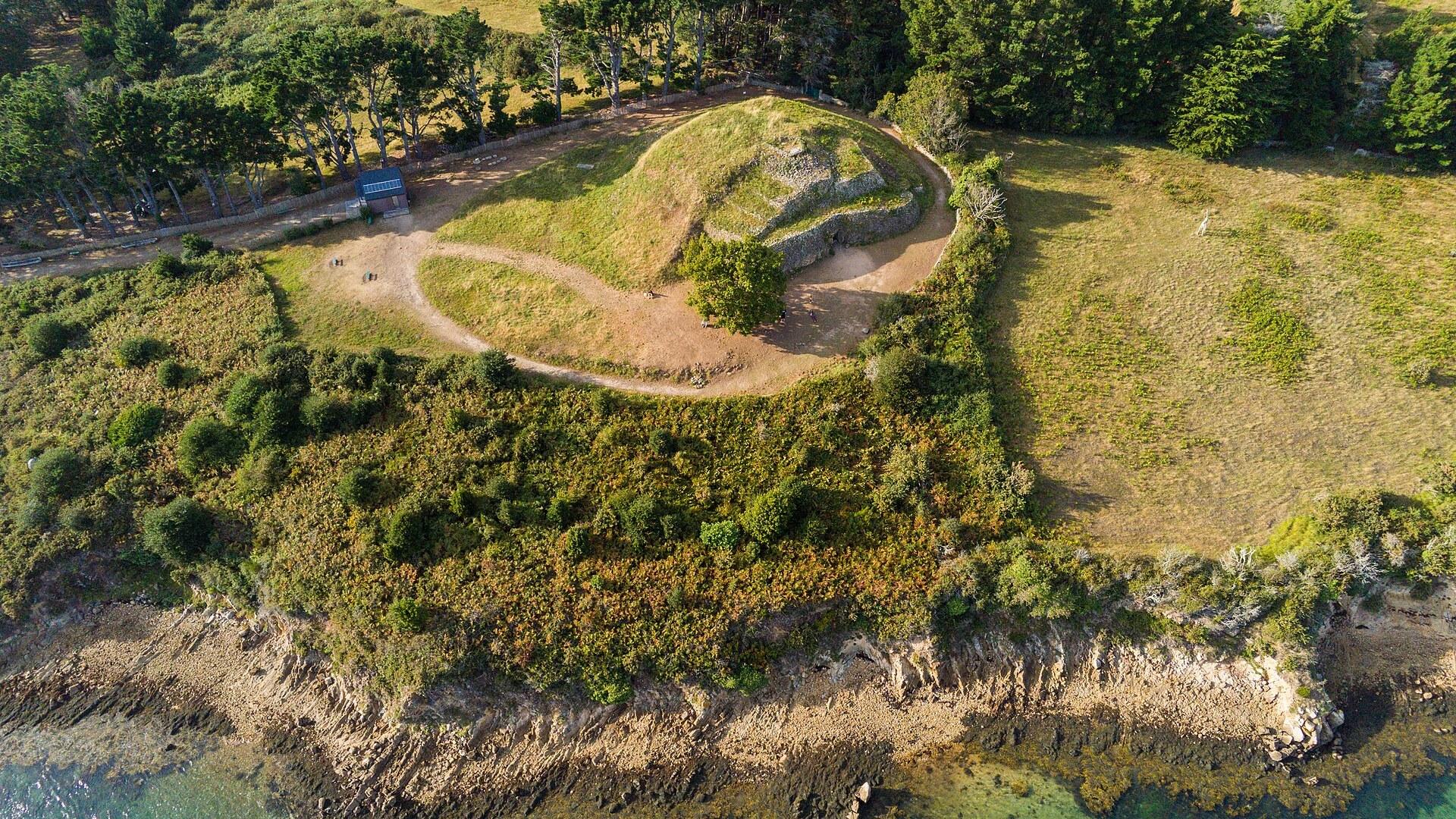
Larmor-Baden Guide
Brittany, France
Boats to Gavrinis, a tidal island and oysters at the port
Locmariaquer Guide
Brittany, France
Megaliths, oysters and the mouth of the Gulf
Loguivy-de-la-Mer Guide
Brittany, France
A Breton fishing port that lives by the tides

Cap-d'Ail Guide
Alpes-Maritimes, France
The Riviera's quiet back door to Monaco

Save these places to your list
Copy the spots you picked into your list — maps and notes included.