
Hubbell Guide
Hungarian Falls and the Torch Lake mining ruins
1 selected
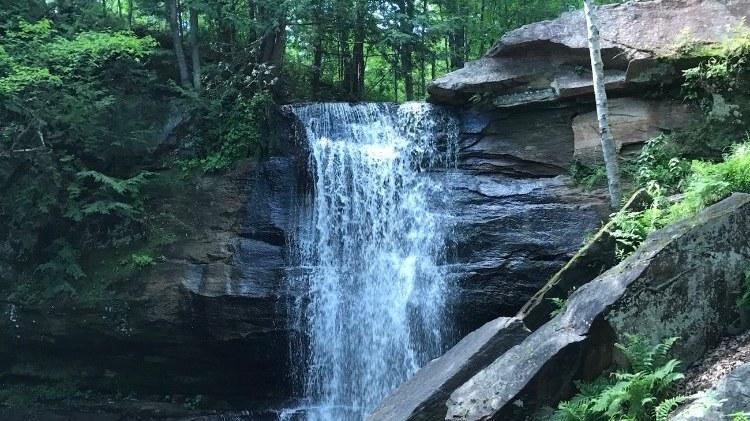
Hubbell is an unincorporated community in Houghton County, Michigan, in the United States, on the west shore of Torch Lake on the M-26 highway. Hungarian Falls near Hubbell is a hike of about 1.7 miles out-and-back with three waterfalls. Hiking to all 3 waterfalls makes it a moderately challenging trail, yet the falls and trails are described as suitable for beginning hikers and little legs.
At Hungarian Falls the upper falls crash over hard black basalt, while the middle and lower falls flow over brittle red sandstone, because the Keweenaw Fault comes to the surface there. The middle falls drop straight off a sandstone ledge into a pool. The lower falls just downstream are barely visible from the top but give huge views towards Torch Lake. Hungarian Falls is described as a local hotspot with moderate to advanced hiking trails along both sides of the falls.
At the T-intersection on the access road, turning right leads to the historic dam, the small reservoir and the upper falls, where a top route is easier and the bottom route gives the best views of the upper falls. Where the trail splits, a left turn goes down the gorge to the Middle and Lower Falls. The whole visit with its three waterfalls can be done in about 1.5 hours. An optional bonus loop on the far side of the valley follows quieter footpaths down to a restored trestle but has a lot of elevation change that adds substantial time.
After hiking Hungarian Falls, visitors can continue to Tamarack Park and the Ahmeek Stamp Mill ruins for a picnic or a quick stop along the area's mining history. The Stamp Mill Ruins of the Ahmeek Mining Company in Tamarack on M-26 show where dozens of stamps in many mills hammered ore to separate the copper from the mined rock. The last of eight stamp ruins of the Ahmeek Mill stands next to the City Children's Park in Tamarack City.
Torch Lake in Houghton County is about six miles long and 1.5 miles wide, with a maximum depth of 120 feet, and is fed by the Traprock River. It lies about five miles east-northeast of Houghton, and a channel drains it south into Torch Bay, which opens into Portage Lake. Lake Linden Park on Torch Lake has a sandy beach, playgrounds and picnic areas by the water.
Lake Linden is a small town along Torch Lake with parks, churches and dining options, and from there M-26 continues about 4 miles to Calumet and the Visit Keweenaw Welcome Center. Calumet has a historic shopping district with unique shops and local foods, and the Calumet Theatre offers guided or self-guided tours. The Houghton County Historical Museum in Lake Linden is a seven-building complex with a museum of artifacts where visitors can ride a historic train.
Copper, stamp sands and the man Hubbell is named after
Hubbell is named after Jay Abel Hubbell, a U.S. Representative from the area from 1873 to 1882, while Lake Linden at the north end of Torch Lake was the site of the largest copper milling operation in North America. About 200 million short tons of copper mill stamp sands were dumped into Torch Lake, filling about 20 percent of the lake's volume. From 1915 the Calumet and Hecla Mining Company reprocessed stamp sands at Lake Linden, recovering 535 million pounds of copper through 1949. From 1869 through 1876 the Calumet and Hecla Mining Company was the leading copper producer in the world, and the town of Red Jacket, now named Calumet, formed next to the mine. By 1897 its Red Jacket shaft reached a vertical depth of 4,900 feet (1,500 m), making it the deepest mine in the world. Annual copper production peaked in 1906 at 100 million pounds. The large plant at Lake Linden that processed the company's ore was shut down in 1968. The small reservoir above Hungarian Falls was built for fire suppression at the mills, and after the mines closed it supplied water to the community's fire hydrant network. The Quincy Dredge No. 2 was built in 1914 by the Calumet & Hecla Mining Company to reclaim milled sand, and it was designated a Michigan Historic Site in 1978. It lies half tipped over in the shallow waters of Torch Lake along M-26 on the way to Lake Linden; two dredges were built to reprocess stamp sands dumped in the lake, with one sinking in 1956 and the second along the shoreline in 1967. In Tamarack City, one crusher was left in place at the Ahmeek Stamp Mill remains next to a small public park, which is a rare chance to see how a stamp mill with machinery operated. A fire destroyed most of Lake Linden in 1887, and part of the village was listed on the National Register of Historic Places as the Lake Linden Historic District in 2009.
Ice cream, whitefish and pasties around Lake Linden
Visitors heading north of Hubbell can stop at the Drive Thru Depot in Lake Linden for ice cream cones, a quick meal or a snack after exploring the waterfalls. The historic Lindell Chocolate Shoppe in Lake Linden has an interior virtually untouched since 1918, with early wood and stained glass decor, and serves breakfast and diner-style lunches. Dreamland Bar and Grill on Bootjack Road near Lake Linden is known for its whitefish dinners and Moscow mules, and it is still owned by the Sarazin family. Quincy Dining Co. on the right side of M-26 in Dollar Bay serves soups, sandwiches, pizzas and dinners in a family-friendly setting with mining-history memorabilia. It is a suggested fuel-up before the Hungarian Falls hike. Cornish families from Cornwall who came to the Upper Peninsula after the 1830s copper news brought the Cornish pasty with them, and the Old Victoria log cabin village recalls Cornish heritage.
Driving to the Hungarian Falls trailhead from M-26 and US-41
Hungarian Falls near Hubbell lies just above Tamarack City, between Dollar Bay and Lake Linden, and from M-26 in Tamarack City you turn west onto 6th St. opposite the remains of the Ahmeek Stamp Mill. About a block along 6th St. in Tamarack City, take a slight left up the hill onto Golf Course Road, follow it 0.5 miles to a rough road on the left, and park along the side of Golf Course Road. The trailhead is about half a mile up 6th St., just after the Ahmeek Stamp Mill Ruins, where the road turns to gravel; two metal posts mark it on the left and there is no parking area, only roadside parking. Coming from the north, Hungarian Falls can be reached from US-41 just south of Calumet via Golf Course Road, which is 3.4 miles to the same access road, with more turns on this side. The Lake Superior Circle Tour is a 1,300-mile self-guided route around Lake Superior. Visitors enter the Keweenaw by US-41 clockwise or by M-26 counter-clockwise, and both highways funnel into Houghton.
M-26 along the Portage Canal and Torch Lake
Hubbell lies about 2 miles (3 km) southwest of the village of Lake Linden along M-26 on Torch Lake, and from the Portage Lake Lift Bridge M-26 runs parallel to the Portage Canal. From the Portage Lake Lift Bridge, M-26 toward Lake Linden passes through Ripley, Dollar Bay, Mason, Tamarack and Hubbell, with canal views continuing until Dollar Bay. Driving north from the bridge, the Quincy Dredge appears on the right a few miles up, about 6 miles north of the Portage lift bridge, and the Ahmeek Mining Company stamp mill ruins are in Tamarack City before the Houghton County Historical Museum at the entrance to Lake Linden. Heading west from the Portage Lake Lift Bridge on M-203 follows the Keweenaw Waterway as a scenic drive, and US 41 and M-26 north lead to Lake Superior's coastline and roadside parks such as Esrey Park. A day around Calumet, Laurium and Lake Linden is a 1 mile walk plus 12 miles of driving and takes 5-7 hours, starting north on 5th Street from the Keweenaw National Historical Park Visitor Center in Calumet. A day in Hancock, Houghton and the sites south covers 80 miles and takes 8 hours.
Free trails and cell service around Hungarian Falls
Hungarian Falls near Hubbell can be explored on foot at no charge, and there is usually decent cell service, though it may cut out deep in the lower gorge. Hungarian Falls is one of the Keweenaw's free trail and wilderness areas. Outside exploration of the Quincy Mine grounds just north of Hancock is free, and underground tours are arranged through the gift shop. The Quincy Mine Hoist Association leads underground mine and hoist house tours, and the Miner's Memorial House is on the surface grounds.
Seasons, rules and footwear at Hungarian Falls
Hubbell has a humid continental climate with warm to hot, often humid summers and cold, sometimes severely cold winters with large amounts of snowfall. Keweenaw waterfalls are calmer and backlit in summer and fall, and form icy frozen displays in winter. When are the waterfalls at their strongest? Keweenaw waterfalls are at their strongest during the spring thaw, from as early as mid-March to late April, when snowmelt raises river volume. What changes at Hungarian Falls in winter? Golf Course Road is not plowed along its steepest stretches, so it is easier to approach the falls from the upper side, which adds roughly 0.3 miles on either end of a snowshoe trip. Are dogs, fires and camping allowed? The Hungarian Falls Nature Area is a Keweenaw Land Trust property open to the public year-round, and dogs are allowed if kept leashed. Fires, camping and littering are forbidden, so pack out all trash. Who owns the gorge? The upper parts of the Hungarian Falls gorge were protected with the help of the Keweenaw Land Trust, which bought 10 acres of land there, while the bulk of the gorge is owned by the Michigan Department of Natural Resources. What should you wear at the mining ruins? Closed-toed shoes are recommended at historic mining sites like the Ahmeek Stamp Mill ruins, where loose rock, rusty metal and broken concrete are often present. Mining ruins in the Keweenaw often lie on private property, so stick to listed locations. Where can you see the Quincy Dredge No. 2? The Quincy Dredge No. 2 on Torch Lake is best viewed from shore, where there is a parking area. Contaminated sediments in Torch Lake are thought to be 70 feet (21 m) thick in some areas, and the lake is listed as an EPA Superfund site and Area of Concern.
FAQ
What is covered in the Hubbell guide?
Plan your trip to Hubbell, Michigan: hike about 1.7 miles to the three Hungarian Falls waterfalls and explore the Torch Lake mining ruins along M-26. It includes 1 recommendations across 1 gallery.
Next →How many places are in the Hubbell guide?
The Hubbell guide lists 1 places: 1 gallery.
Next →Where is Hubbell?
Hubbell is in Hubbell, Michigan, United States (47.1725, -88.4328).
Next →How do you get to Hubbell?
Hungarian Falls near Hubbell lies just above Tamarack City, between Dollar Bay and Lake Linden, and from M-26 in Tamarack City you turn west onto 6th St. opposite the remains of the Ahmeek Stamp Mill. About a block along 6th St. in Tamarack City, take a slight left up the hill onto Golf Course Road, follow it 0.5 m…
Next →What should you eat in Hubbell?
Visitors heading north of Hubbell can stop at the Drive Thru Depot in Lake Linden for ice cream cones, a quick meal or a snack after exploring the waterfalls. The historic Lindell Chocolate Shoppe in Lake Linden has an interior virtually untouched since 1918, with early wood and stained glass decor, and serves brea…
Next →Is there camping in Hubbell?
No camping listings in this pack yet — we do not invent venues. Entries will appear once verified.
Next →Can you rent a bike in Hubbell?
No bike rental listings in this pack yet. Verified shops will be added when available.
Next →What are recommended gallery in Hubbell?
Highlighted gallery in the Hubbell guide: Middle Falls, Hungarian Falls.
Next →Highlighted places
- Middle Falls, Hungarian Falls — The Middle Falls of Hungarian Falls, a waterfall dropping into a pool among rocks and forest near Hubbell.
Explore on the map
Tap a pin to highlight its place card
All
1 spots
Recommended places
Gallery
1 · 1 selected
Middle Falls, Hungarian Falls
gallery
Related guides
Browse nearby destinations
Arnaudville Guide
Louisiana, United States
La Jonction, where two bayous meet in Cajun Country
Confluence Guide
Pennsylvania, United States
Where three waters meet on the Great Allegheny Passage
Crozet Guide
Virginia, United States
Vineyards, orchards and a railroad tunnel under the Blue Ridge
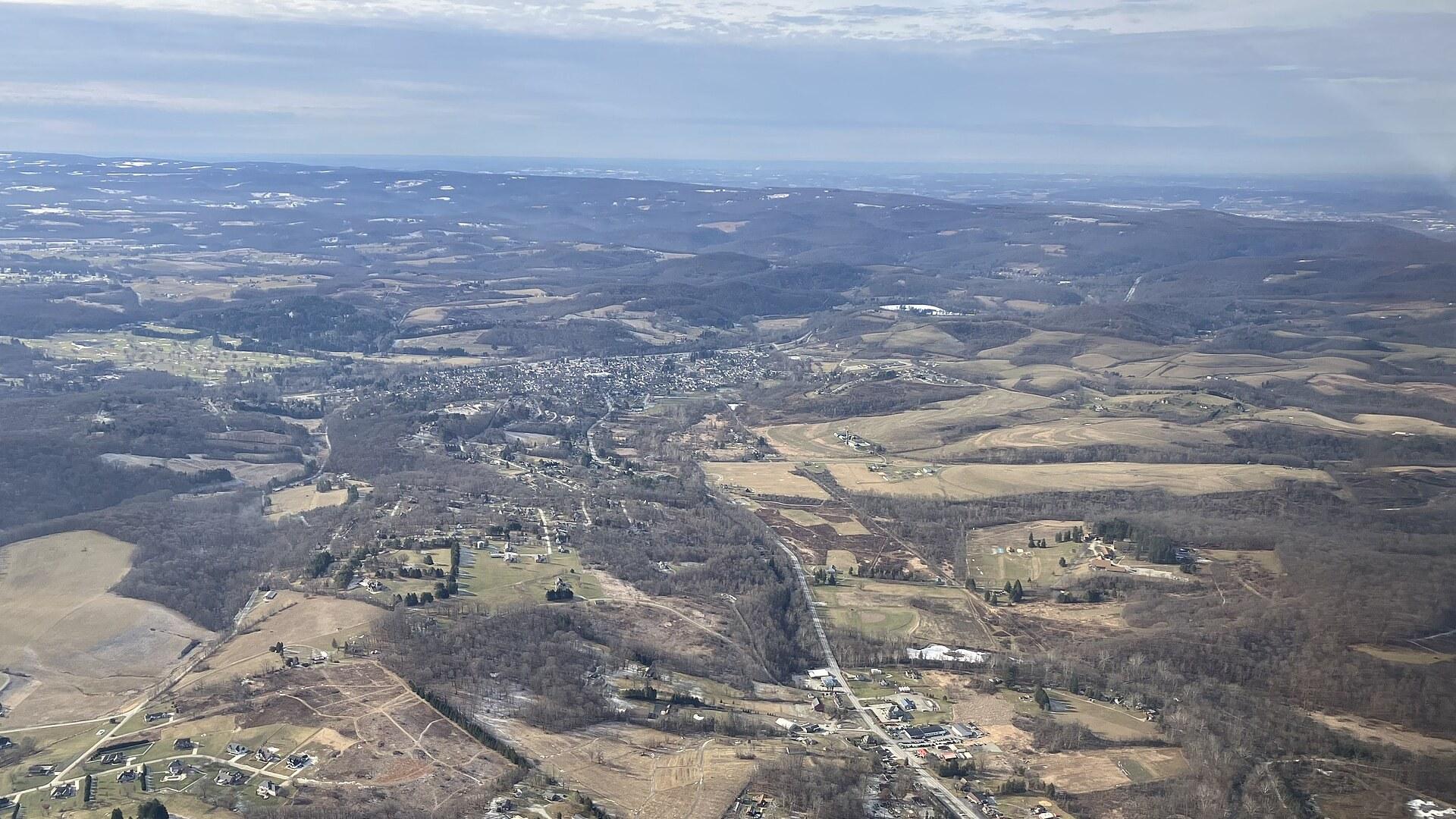
Ligonier Guide
Pennsylvania, United States
A frontier fort, a village green and the Laurel Highlands
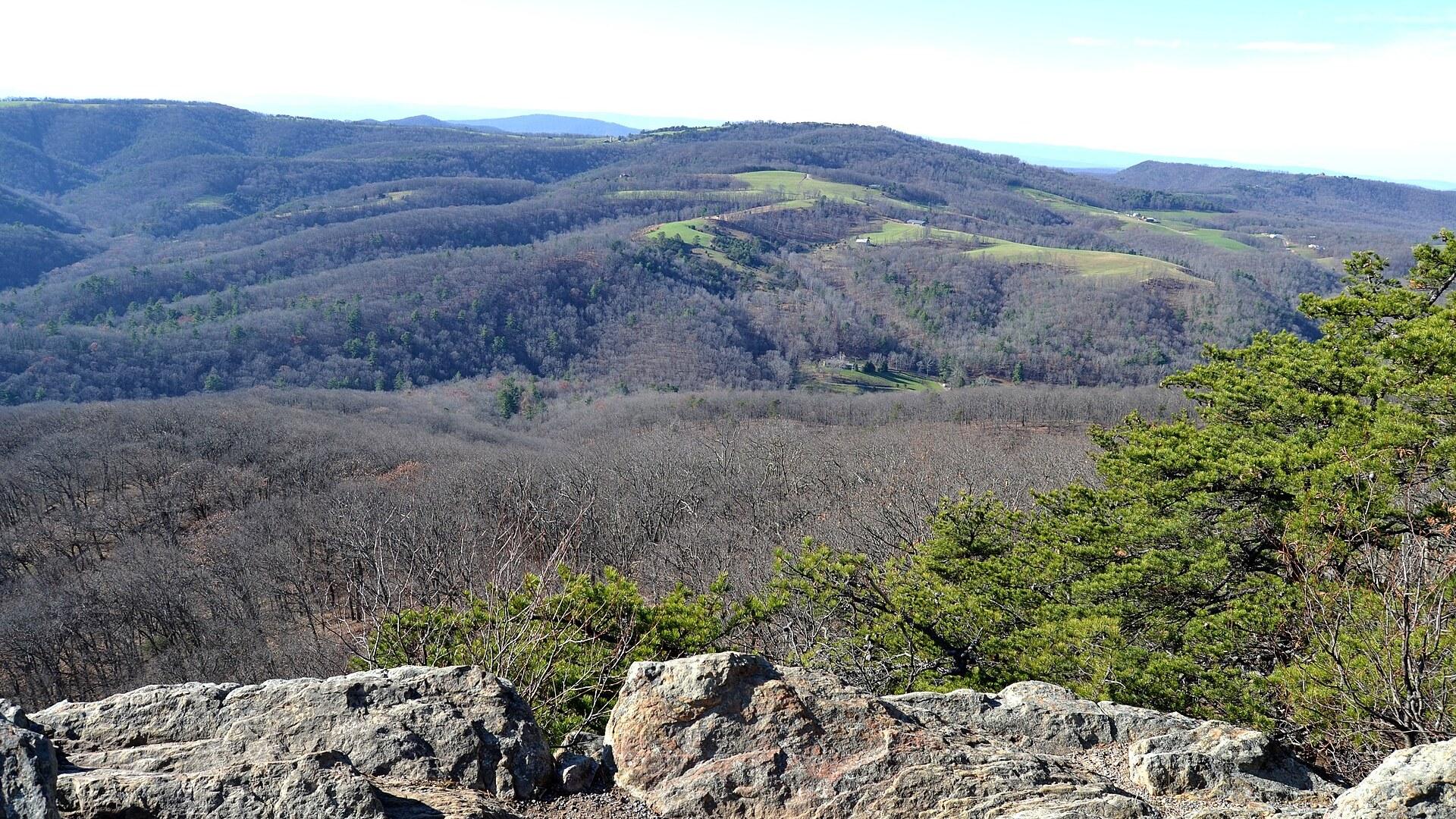
Lost River Guide
West Virginia, United States
Trails, a Lee cabin and a river that goes underground
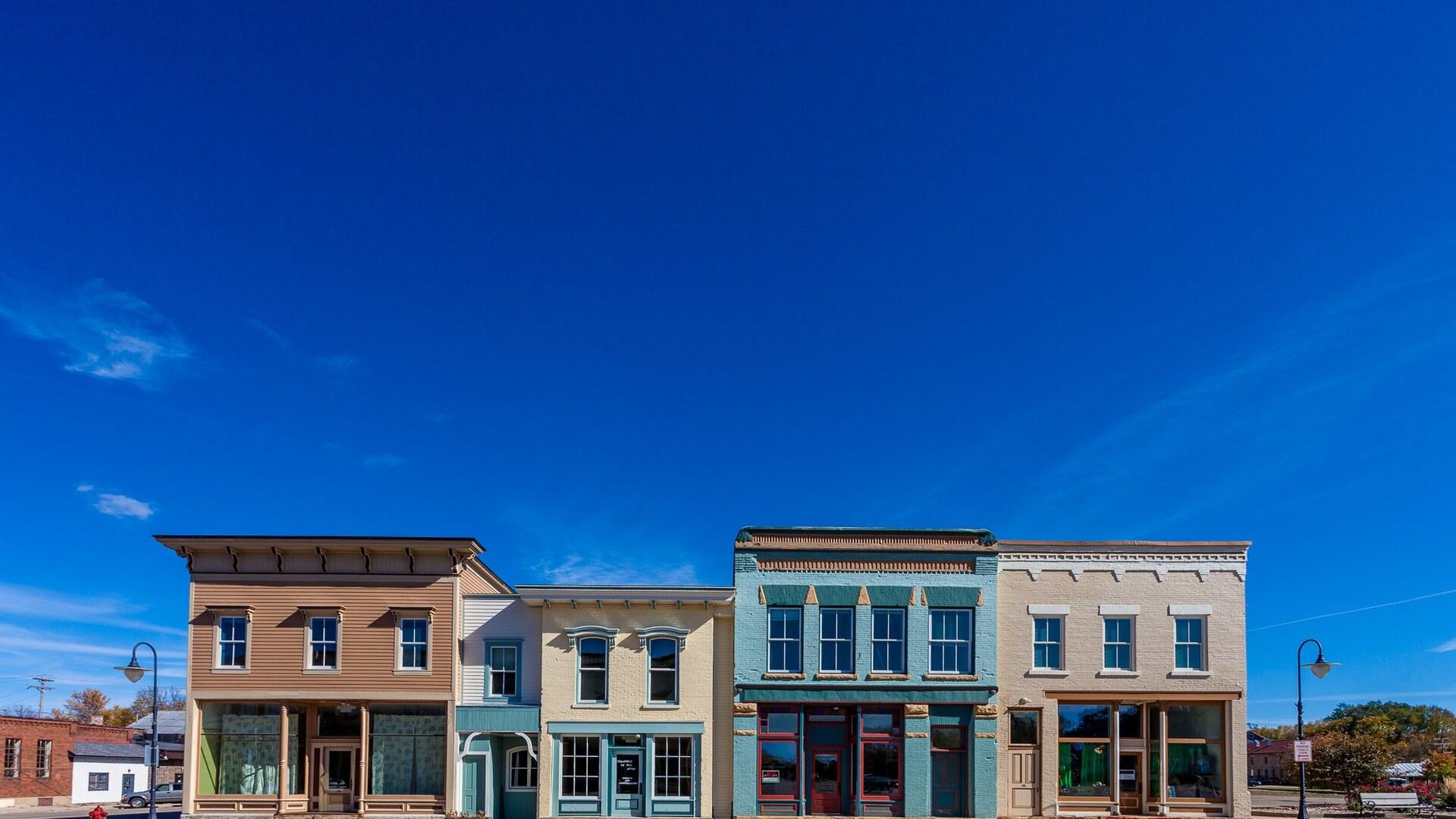
Mazomanie Guide
Wisconsin, United States
Railroad depot, microcars and canoes on the Wisconsin River

Save these places to your list
Copy the spots you picked into your list — maps and notes included.