
Löffingen Guide
Gorge hikes and a pilgrimage church above the Wutachschlucht
1 selected
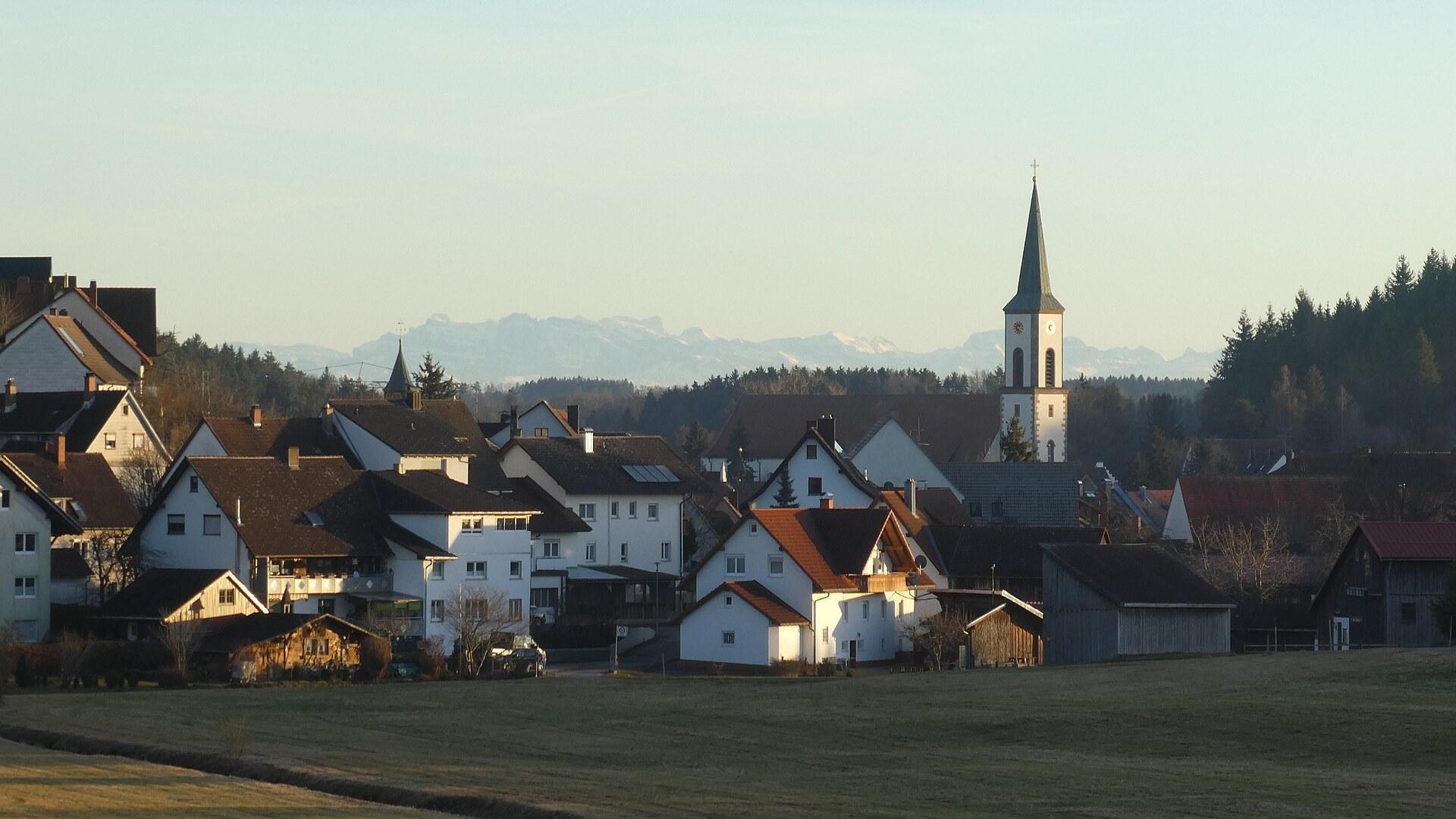
Löffingen is a small town in Baden-Württemberg, Germany, at the transition from the Hochschwarzwald to the Baar. It sits on the edge of the Wutachschlucht and has six districts. The open, hilly landscape of the Baar meets the Black Forest Highlands here, and the town is described as a historic market town above the Wutachschlucht canyon.
Farmland dominates the Westbaar plateau, so forest covers much less of Löffingen than of neighbouring Black Forest municipalities such as Eisenbach, Lenzkirch and Friedenweiler. Coming from Freiburg on the B31, you notice the sudden change from dense Hochschwarzwald forest to open Baar landscape at Rötenbach, 4 km west of Löffingen. To the south, the Wutachschlucht forms the town's edge and the border to the district of Waldshut.
The Wutachschlucht south of Löffingen is very popular with hikers. The gorges are 60 to 170 m deep and stretch over 33 river km, and the Wutachschlucht is part of the Naturpark Südschwarzwald. The nature reserve is home to about 1,200 plant species and 500 species of butterflies, with waterfalls and towering cliffs along its side gorges.
Along the gorge, the Lotenbachklamm joins the Wutach by the Schattenmühle as a granite gorge with four waterfalls up to 8 m high. The Boller Wasserfall drops about 40 m in two stages into the Wutach and is the highest waterfall in the Wutachschlucht, but is hardly accessible today. The Münzloch, at 84 m the longest cave of the gorge, lies near the Tannegg waterfall opposite the Felsenweiher. The Räuberschlössle rocks, also called Nägelefels, with the ruined castle Neu-Blumberg lie north of the Wutach near the Göschweiler district and rise up to 80 m.
Two more sights are worth a visit near Löffingen. The pilgrimage church Witterschnee is visible across the Westbaar west of the town. The Tatzmania amusement park covers 46 ha, with roller coasters, a Freefall Tower, a wave swinger and an indoor playground over 3 levels, and there is a car park right at the park. Tatzmania is run by Rüdiger and Isabel Braun, who also operate the Steinwasen-Park in Oberried, and its roller coasters include the spinning coaster African Spin and the bobsled coaster Gold Rusher.
On foot, Löffingen has 135 km of hiking trails, including the Königsetappe of the Schluchtensteig and a barrier-free path to Unadingen that is 5 km long. An 8 km medicinal herb trail and a Heilkräuterstüble in the town center add a gentler option. In winter the town offers cross-country ski trails and 65 km of groomed winter hiking trails, including a 4 km premium trail.
For swimming, the Freibad Löffingen-Dittishausen is described as the first heatable outdoor pool in all of Baden-Württemberg, and an indoor pool with sauna is available in cooler weather. Löffingen also has tennis courts, beach volleyball courts, bowling alleys and a glider airfield. Families can follow a town rally that takes about 1 to 1.5 h and leads past the Hexenbrunnen.
At carnival time witches, ghosts and devils reign in Löffingen. On Carnival Monday the Löffinger Hexen stage the Alemannic Walpurgisnacht with plenty of noise and fireworks, and their witch pyramid includes 13 witches and 1 devil.
From Neolithic burial mounds to the Löffingen town fires
Löffingen's history runs from Neolithic burial mounds and Alamannic settlers through town rights in 1270 to two great town fires, and the old town still stands largely preserved. Settlement around Löffingen began in the Neolithic period, and about 2,500 stone burial mounds from 1700 to 1300 BC survive in the area. Celts reused these mounds for later burials between 600 and 300 BC. From the 4th century the Alamanni settled the Westbaar, in Löffingen on the Alenberg, a settlement that lasted until about the 6th century. The first documentary mention of Löffingen dates to the year 819. The Fürstenberg family granted town rights in 1270, and Löffingen became the central town of the Westbaar, with a first town extension in 1485. The first of two great town fires broke out in 1534 and destroyed the entire town except the church. Between 1728 and 1772 the town won a forest lawsuit against the Fürstenberg family and received new woodland, and it developed into a significant pilgrimage place with pilgrimages to the Witterschneekreuz. On the northern rim of the Wutachschlucht the historical Bertholdsbaar has its centre at Löffingen, with the village of Rötenbach nearby, while Bonndorf is the centre of the plateau opposite on the south side. Löffingen was connected to the Höllentalbahn in 1901, and the station opened that year. On 23 March 1907 a major fire destroyed 15 houses, spreading along today's Demetriusstraße. The second great town fire, on 28 July 1921, destroyed 36 houses and left 209 people homeless; tight buildings, wind and a lack of water made firefighting difficult. The old town was largely preserved through the Second World War, although the town was not spared bombing. Its historic walking tour covers the medieval core, stepped gables and town gates. The medieval castles Burg Neu-Blumberg and Burg Stallegg once stood within the municipal area and have been largely dismantled apart from small remains. The Weiler chapel near Löffingen, on the site of a vanished farmstead, is according to its preservation society the second-oldest building in the region. The church of St. Bartholomäus in the district of Seppenhofen is a listed monument. The church of Dittishausen received two Romanesque side altars by the Moroder brothers in 1906, and the church of Reiselfingen is first documented in 1275.
Baden cooking at Löffingen's inns and by the Wutach gorge
In Löffingen you can eat at the Landhotel zum Ochsen in the town center or at the Gasthof Linde, and both serve Baden cuisine. The Landhotel zum Ochsen cooks seasonal, good food for lunch. The Gasthof Linde is a traditional inn that has been family-owned for almost 200 years. Inside the Wutachschlucht, south of Löffingen, the Wutachzentrum Schattenmühle information centre has a restaurant. Otherwise there are few places to eat in the gorge and its side valleys. Gastronomy, kiosks and toilets are found mainly at the start and end points, so bring a small snack and plenty to drink.
Reaching Löffingen by Höllentalbahn, B31 and holiday route
Löffingen lies on both the Höllentalbahn and the Bundesstraße 31, 14 km southwest of Donaueschingen and 40 km southeast of Freiburg. Löffingen station sits on the Höllentalbahn, where the Breisgau S-Bahn runs hourly between Freiburg im Breisgau, Titisee-Neustadt, Donaueschingen and Villingen. Titisee-Neustadt has two stations, Titisee and Neustadt, and the Breisgau S-Bahn connects Freiburg with them twice an hour. Every hour the train splits at Titisee, one part going to Seebrugg and the other via Neustadt to Villingen. Donaueschingen is a regional rail hub where four lines meet, and it is the starting point of the Höllentalbahn to Freiburg im Breisgau. It also lies on the Schwarzwaldbahn from Offenburg to Konstanz and is the starting point for Danube Valley Railway trains towards Ulm and the Bregtalbahn to Bräunlingen. By road, the B31 links Löffingen with Freiburg im Breisgau and Donaueschingen and runs through Titisee-Neustadt. The nearest motorway access is junction 38 near Geisingen, 27 km away. Löffingen also lies on the holiday route Grüne Straße, which runs from Contrexéville via Breisach to Donaueschingen.
Wanderbus, line buses and cycle routes around Löffingen
Getting around Löffingen and the Wutachschlucht means the Wanderbus, line buses such as line 7259 to Dittishausen, and an everyday cycle route of the Radnetz Baden-Württemberg. Dittishausen with its Freibad lies about 4 km from Löffingen's town center and can be reached by car or by bus line 7259. An everyday route of the Radnetz Baden-Württemberg connects Dittishausen via Rötenbach and Friedenweiler with Titisee-Neustadt, and via Bräunlingen with Donaueschingen. Around Titisee-Neustadt, buses cover areas not served by trains, for instance from Titisee to Lenzkirch and Todtnau. The Wutachschlucht Wanderbus collects hikers at various stops from 11 April until early October, with four bus lines around the gorges running on Saturdays, Sundays and public holidays. It takes hikers on three different tours to the best entry points of the Wutach Gorge, so you can ride to your starting point and hike back to where you began. On school days the Wanderparkplatz Schattenmühle stop is only served by buses coming from the direction of Löffingen. For the Wutach Gorge, leave the car at the Wutachmühle, Lotenbachklamm or Boll car parks, because the regular line buses run from there on weekdays as well. The suggested tour from the Wutachmühle to Bad Boll starts by parking at the Wutachmühle, and bus line 7344 takes hikers from Bad Boll back to the Wutachmühle. The Ludwig-Neumann-Weg, maintained by the Schwarzwaldverein, runs through the middle Wutachschlucht past the Amselfels, about 70 m high, and the Engländerfels, and is exposed but secured along the rock faces. The middle section of the Wutachschlucht ends at the covered Kanadiersteg bridge, built in 1976 by Canadian engineers near the mouth of the Gauchach. The 3-Schluchten Tour is a varied circular hike through the Wutach Gorge and its two side gorges, the Gauchach and Enge gorges, with many small waterfalls, bridges and walkways. The Gauchach Gorge tour starts at the Döggingen station, passes through the village to the Wassertretstelle at the Kupferbrunnen, and follows the Gauchach downstream back to the Wutachmühle. The Gauchach Gorge hike can be done by train: travel to Döggingen station, walk to the Wutachmühle and take the bus back to Döggingen station. The Rufbus serving this route must be booked by phone at least one hour in advance. Groups using the Wanderbus must register with SBG SüdbadenBus GmbH at least 3 working days beforehand.
Cards, tickets and mobile signal around Löffingen
In Löffingen, free entries come with the Hochschwarzwald Card, free public transport comes with the KONUS card, and mobile reception is not always available inside the Wutachschlucht. With the Hochschwarzwald Card, the Freibad Löffingen-Dittishausen, the Hallenbad Dittishausen and the Tatzmania leisure park in Löffingen can each be visited once free of charge. The KONUS card gives free travel by public transport through the Black Forest, and riding the Wanderbus to the Wutach Gorge is free with it. Single tickets for the Wanderbus can be bought directly on the bus, and the ride is free with certain tickets. Across transport association borders the Baden-Württemberg fare applies.
Opening hours, hiking months and gorge rules for Löffingen
Practical details for Löffingen cover the opening hours of the Info-Punkt and Heimatmuseum, the best months for the Wutachschlucht, and the rules for children and dogs in the gorge. When are the Info-Punkt and the museum open? Löffingen's Info-Punkt is open daily from 8:00 to 17:00. The Heimatmuseum on the floor above the tourist information shows minerals and fossils from the Wutachschlucht and the Reiselfingen gravel pit, and is open Monday to Friday 9:00-12:00 and 14:00-17:30. When is the best time to hike in the Wutach Gorge? The best time is from May to October. Because of weather and frequent rain, the gorge should be avoided in the other months and especially in winter. Early morning is described as the best time to set off, and car parks in the gorge can already be well filled early in the day. Guided hikes through the Wutach Gorge with experienced hiking guides are offered, and tours are published from spring. Guided tours run through both the Wutachschlucht and the Gauchachschlucht, and the hiking area in the nature reserve is 30 km long. What do I need on the gorge paths? Paths in the Wutach Gorge are usually very wet and slippery, so sturdy footwear, a minimum of fitness, a head for heights and sure-footedness are needed. The Wutach between Schattenmühle and Wutachmühle can be paddled by kayak as easy to moderate whitewater (grade I-II) in winter or during snowmelt when the water level is suitable. Can I take children into the gorge? Prams cannot be taken into the Wutach Gorge, and there are narrow sections where children should be held by the hand. Hiking with children is recommended from age 6 for sure-footed children in good shoes. Are dogs allowed in the gorge? Dogs are allowed but must be kept on a leash throughout the nature reserve. Some narrow, steep sections with ladders or grid-floor bridges can be hard for dogs. Whom do I call in an emergency in the gorges? Call the mountain rescue on 112. The gorges are divided into signposted rescue sectors. When is the Städtlefest, and is Löffingen accessible? The Städtlefest takes place every two years in August, in even-numbered years. Löffingen is described as an award-winning barrier-free town, with many entrances, paths and accommodations being accessible.
FAQ
What is covered in the Löffingen guide?
Explore Löffingen in Baden-Württemberg, Germany: hike the Wutachschlucht, visit the Tatzmania park and the Witterschnee pilgrimage church, and plan your trip. It includes 1 recommendations across 1 gallery.
Next →How many places are in the Löffingen guide?
The Löffingen guide lists 1 places: 1 gallery.
Next →Where is Löffingen?
Löffingen is in Löffingen, Baden-Württemberg, Germany (47.8839, 8.3436).
Next →How do you get to Löffingen?
Löffingen lies on both the Höllentalbahn and the Bundesstraße 31, 14 km southwest of Donaueschingen and 40 km southeast of Freiburg. Löffingen station sits on the Höllentalbahn, where the Breisgau S-Bahn runs hourly between Freiburg im Breisgau, Titisee-Neustadt, Donaueschingen and Villingen. Titisee-Neustadt has t…
Next →What should you eat in Löffingen?
In Löffingen you can eat at the Landhotel zum Ochsen in the town center or at the Gasthof Linde, and both serve Baden cuisine. The Landhotel zum Ochsen cooks seasonal, good food for lunch. The Gasthof Linde is a traditional inn that has been family-owned for almost 200 years. Inside the Wutachschlucht, south of Lö…
Next →Is there camping in Löffingen?
No camping listings in this pack yet — we do not invent venues. Entries will appear once verified.
Next →Can you rent a bike in Löffingen?
No bike rental listings in this pack yet. Verified shops will be added when available.
Next →What are recommended gallery in Löffingen?
Highlighted gallery in the Löffingen guide: View of Löffingen.
Next →Highlighted places
- View of Löffingen — Houses and the church spire of Löffingen, with distant mountains on the horizon.
Explore on the map
Tap a pin to highlight its place card
All
1 spots
Recommended places
Gallery
1 · 1 selected
View of Löffingen
gallery
Related guides
Browse nearby destinations
Gutach (Schwarzwaldbahn) Guide
Baden-Württemberg, Germany
Home of the Bollenhut in the Black Forest
Schönwald im Schwarzwald Guide
Baden-Württemberg, Germany
Bog lake, ski jumps and a cuckoo clock legend
Wolfach Guide
Baden-Württemberg, Germany
Where the Wolf meets the Kinzig in the Black Forest
Villingen-Schwenningen guide
Baden-Württemberg, Deutschland
Two towns, one watershed and a Celtic burial mound
Glashütte Guide
Saxony, Germany
Where German watchmaking began, in the Ore Mountains
Harburg (Schwaben) Guide
Bavaria, Germany
A castle town on the Romantic Road

Save these places to your list
Copy the spots you picked into your list — maps and notes included.