
Glashütte Guide
Where German watchmaking began, in the Ore Mountains
1 selected
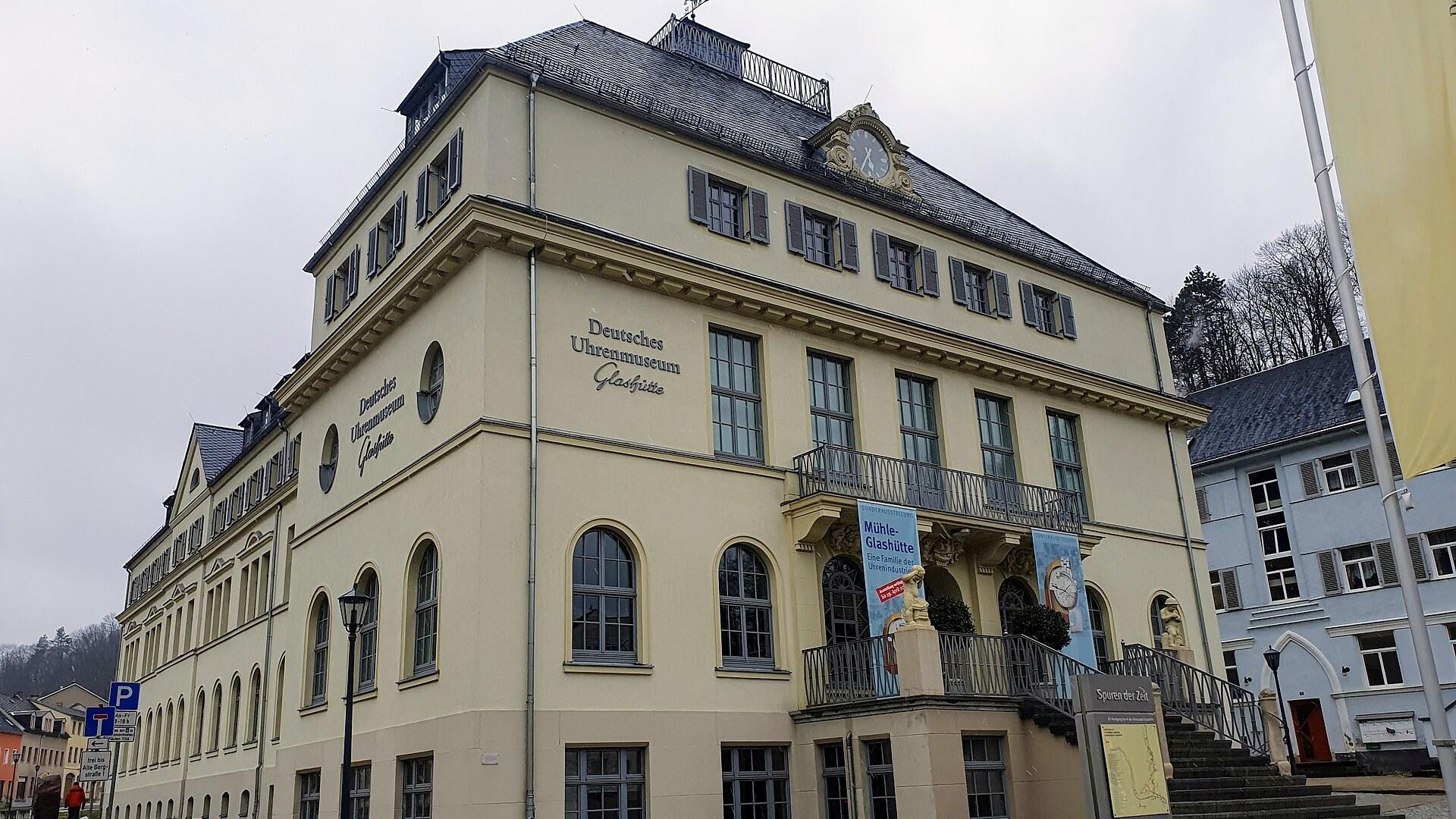
Glashütte is a small town in Saxony, Germany, set in the Müglitz valley of the eastern Ore Mountains, within the Sächsische Schweiz-Osterzgebirge district. Its name is printed on the dials of some of the most respected watches in the world, and that fact shapes almost everything a visitor does here. You come for the watches, and the rest of the day follows from that.
The natural first stop is the Deutsches Uhrenmuseum Glashütte, housed since 2008 in the former German watchmaking school. Its permanent exhibition runs in chronological order from 1845 to the present, with historic timepieces and archival material. Most visitors report spending a little over 2 h inside, helped by English explanations under most displays and several interactive exhibits.
The museum also schedules demonstrations and rotating special exhibitions, and individual guided tours can be arranged. Ask at the counter what is on that day, because a demonstration or a temporary show can change how you spend the afternoon. It is worth deciding this before you start, not after you have already walked through the permanent rooms.
Outside, the town becomes a second exhibit. There is an area of watchmakers and watch shops that is worth walking through, and several manufacturers are based here: A. Lange & Söhne and Glashütte Original, regarded as the two most prestigious, plus Union Glashütte, Mühle Glashütte, Nomos Glashütte, Bruno Söhnle, Tutima and Moritz Grossmann. Looking through the shop windows costs nothing.
Technically minded visitors should look for Wempe Chronometerwerke. It runs the only German chronometer testing office, in the former observatory known as the Sternwarte, and it also produces its own watches. Few small towns can point to a testing office that sits in an old observatory.
When the glass cases start to blur, take the walk to the panorama viewpoint. It starts at the market place in Glashütte and follows green signs. The walk gives you a look at the valley the town sits in, and it makes a calm end to a day otherwise spent indoors. Doing it last, after the museum and the shops, lets the day move from indoors to outdoors.
From glassworks and silver to the home of German watches
Glashütte probably owes its name to a glassworks, and its story runs from medieval destruction through modest silver mining to the watchmaking that made it famous. The settlement was first documented as Glaßehutte in 1445, after the Hussites destroyed it in 1429. Silver ore found around 1490 changed its fortunes, and in 1506 Duke George the Bearded of Saxony granted it town rights. The silver stayed modest. Records for 1525 to 1875 show about 10 tonnes of silver and about 150 tonnes of copper from 140 mines, and mining ended for good in 1875. Ferdinand Adolph Lange had settled here in 1845 as the first master watchmaker, answering a call from the Saxon royal government, and he began training the first watchmakers. From about 1875 the watch and precision-mechanics industry became the economic backbone of the town. The twentieth century was harder. On 8 May 1945, the last day of the Second World War, Soviet aircraft bombed and partly destroyed Glashütte. The town was then stripped of its watchmaking equipment as Soviet reparations and rebuilt afterwards. The watchmakers were expropriated, and from 1951 production was merged into the state-owned VEB Glashütter Uhrenbetriebe, known as GUB, whose automatic movements included the Spezimatic (1960-1978) and the Spezichron (1978-1985). Floods in 1927 and 2002, when the Glashütte retention basin failed, did severe damage as well. Today you can follow all of this on the spot. The Deutsches Uhrenmuseum Glashütte occupies the building of the former German watchmaking school, which operated there from 1878 to 1951, and it covers the war years and the Iron Curtain period. Walk its exhibition in order: the chapters on 1945 land harder after the 1845 beginnings. In 2020 the town celebrated 175 years of watchmaking, and the Walter Lange monument was inaugurated on 18 September 2020.
Where to eat in Glashütte around a museum day
Food in Glashütte is easiest to plan around the Deutsches Uhrenmuseum Glashütte and the market place, because those are the two fixed points of a visit. The museum takes a little over 2 h, so a meal fits naturally before or after it, not in the middle of the exhibition. The market place is also where the panorama walk starts, following green signs. That makes it a practical spot to settle on lunch or coffee: eat first, then walk, and you will not be climbing toward the viewpoint on an empty stomach. Keep the order the other way round if the museum is your priority and you want the afternoon free for the shops. Saxony and the Ore Mountains have their own table traditions, and this is a working watchmaking town rather than a restaurant destination. You will find the best answer on the street itself: the area of watchmakers and watch shops is where you will pass the places that suit your budget and your hunger, and you can compare them on foot between the manufacturers. One useful habit is to make the meal part of the museum plan. If you have arranged an individual guided tour, or you want to catch a scheduled demonstration, ask the counter for the times first and then pick your lunch slot around them. That way you do not spend the best part of the day waiting for a table while a demonstration starts without you.
Reaching Glashütte by train from Dresden
Glashütte is easy to reach by railway from Dresden, a short trip with one change of trains. That makes Dresden the sensible base or starting point, and it means you can see the town without a car. Plan the change of trains with a little margin. With only one change, the journey is simple, but a missed connection in a smaller valley town costs more time than in a big city. Look up the return times before you go in, because the Deutsches Uhrenmuseum Glashütte alone takes a little over 2 h, and the walk and the shops add more on top. The town lies in the eastern Ore Mountains in the Müglitz valley, which is why the rail route feels like a trip into the hills rather than a commuter run. Since merging with Reinhardtsgrimma, the municipality also reaches into the neighbouring Lockwitz valley, so what is called Glashütte on a map is wider than the centre where the museum and the watch shops stand. If you would rather drive, read the section on getting around first. Parking for casual visitors can be a hassle in town, because it requires a local permit displayed on the dashboard. For a day visit the train from Dresden avoids that problem completely. On arrival, the sights are the museum, Wempe Chronometerwerke in the former Sternwarte, and the area of watch shops. The market place is the start of the green-signed panorama walk, and all of these are the reason to make the trip.
Walking Glashütte and parking when you drive
Glashütte is a town for walking between a few clear stops: the Deutsches Uhrenmuseum Glashütte, the area of watchmakers and watch shops, Wempe Chronometerwerke in the former Sternwarte, and the market place where the panorama walk begins. Arriving by rail from Dresden, you do not need any other transport to link them. Driving is where it gets awkward. Parking in town for casual visitors can be a hassle, because it requires a local permit displayed on the dashboard. The museum counter may lend one for the visit, so ask there as soon as you arrive. That is the only parking rule you need to know, and it is a reason to go to the museum first if you came by car. The panorama walk starts at the market place and follows green signs. Follow the signs rather than guessing at a route, since that is the one way described for reaching the viewpoint. Allow time for the walk on top of the little over 2 h most visitors spend at the Deutsches Uhrenmuseum. Remember that the municipality, since merging with Reinhardtsgrimma, also reaches into the Lockwitz valley. The places you want as a visitor are in the centre in the Müglitz valley, so you can ignore that wider area and stay close to the museum, the shops and the market place. Combined, these stops make a loop you can finish on foot.
Euros, shop windows and planning your spending
Money in Glashütte is simple in one sense: Germany uses the euro (€), and the Deutsches Uhrenmuseum Glashütte is the one paid stop that every visit includes. Ask at the museum counter about admission before you queue, and also about guided tours, which can be arranged for individuals. The watch shops are the other place where money matters. Glashütte's brands include A. Lange & Söhne and Glashütte Original, regarded as the two most prestigious, plus Union Glashütte, Mühle Glashütte, Nomos Glashütte, Bruno Söhnle, Tutima and Moritz Grossmann. Looking is free, so treat the shop area as a free part of the day and decide what you want before going in. It is sensible to sort out cash in Dresden before the train, since this is a small town and you do not want to hunt for a machine between the museum and the viewpoint. That is the reason to arrive with euros in your pocket and not rely on finding what you need once you are there. The museum has English explanations under most displays, so you can read your way through the exhibition without a translation app. For anything else, such as tickets, tours or demonstration times, speak to the staff at the counter, who are the most direct source for the visit. With the train from Dresden and the museum as the fixed costs, everything else in the day is optional, and you can let the shop windows decide whether you spend more.
Practical questions about visiting Glashütte
A few questions come up before most trips to Glashütte, and the answers are short because the visit is straightforward. How long should I plan for the museum? Visitors report spending a little over 2 h in the Deutsches Uhrenmuseum Glashütte. Add time if you want a scheduled demonstration or an individual guided tour. Will I understand the exhibits if I do not read German? Mostly yes. The museum has English explanations under most displays and several interactive exhibits, and the permanent exhibition runs in chronological order from 1845 to the present. Can I park in town? Parking can be a hassle, because it requires a local permit displayed on the dashboard. The museum counter may lend one for the visit. The railway from Dresden, with one change of trains, avoids the question. Is there anything to do beyond the museum? Yes. Walk through the area of watchmakers and watch shops, look for Wempe Chronometerwerke in the former Sternwarte, and follow the green signs from the market place to a panorama viewpoint. Which watch brands are based here? A. Lange & Söhne and Glashütte Original are regarded as the two most prestigious, plus Union Glashütte, Mühle Glashütte, Nomos Glashütte, Bruno Söhnle, Tutima and Moritz Grossmann. Is this only a watch town? The story is wider. Glashütte was first documented as Glaßehutte in 1445 and received town rights in 1506, and the museum also covers the Second World War and the Iron Curtain years. The Walter Lange monument, inaugurated on 18 September 2020, belongs to the year the town marked 175 years of watchmaking.
FAQ
What is covered in the Glashütte guide?
Discover Glashütte, the Saxon town where German watchmaking began: a chronological watch museum, famous brands and a panorama walk. Plan your visit here. It includes 1 recommendations across 1 gallery.
Next →How many places are in the Glashütte guide?
The Glashütte guide lists 1 places: 1 gallery.
Next →Where is Glashütte?
Glashütte is in Glashütte, Saxony, Germany (50.8514, 13.7794).
Next →How do you get to Glashütte?
Glashütte is easy to reach by railway from Dresden, a short trip with one change of trains. That makes Dresden the sensible base or starting point, and it means you can see the town without a car. Plan the change of trains with a little margin. With only one change, the journey is simple, but a missed connection in…
Next →What should you eat in Glashütte?
Food in Glashütte is easiest to plan around the Deutsches Uhrenmuseum Glashütte and the market place, because those are the two fixed points of a visit. The museum takes a little over 2 h, so a meal fits naturally before or after it, not in the middle of the exhibition. The market place is also where the panorama w…
Next →Is there camping in Glashütte?
No camping listings in this pack yet — we do not invent venues. Entries will appear once verified.
Next →Can you rent a bike in Glashütte?
No bike rental listings in this pack yet. Verified shops will be added when available.
Next →What are recommended gallery in Glashütte?
Highlighted gallery in the Glashütte guide: Deutsches Uhrenmuseum Glashütte.
Next →Highlighted places
- Deutsches Uhrenmuseum Glashütte — The German Watch Museum in Glashütte, the Ore Mountains town of German watchmaking.
Explore on the map
Tap a pin to highlight its place card
All
1 spots
Recommended places
Gallery
1 · 1 selected
Deutsches Uhrenmuseum Glashütte
gallery
Related guides
Browse nearby destinations
Harburg (Schwaben) Guide
Bavaria, Germany
A castle town on the Romantic Road
Kaub Guide
Rhineland-Palatinate, Germany
A toll castle afloat in the Rhine, and hardly any crowds
Schönwald im Schwarzwald Guide
Baden-Württemberg, Germany
Bog lake, ski jumps and a cuckoo clock legend
Wolfach Guide
Baden-Württemberg, Germany
Where the Wolf meets the Kinzig in the Black Forest

Adrasan
Antalya, TR
A pine-backed bay where the days move slowly
Air Batang
Pahang, Malaysia
A car-free Tioman village for divers and walkers

Save these places to your list
Copy the spots you picked into your list — maps and notes included.